

Apple is pushing through steep price increases across its Mac and iPad lineup as the global memory shortage squeezes its supply chain. The company just bumped the MacBook Air to $1,299 from $1,099, while the Mac Studio saw the sharpest jump – the M3 Ultra model now costs $5,299, up a staggering $1,300 from its previous $3,999 price tag. The moves mark Apple’s most aggressive pricing shift in years and signal how serious the chip shortage has become for even the most powerful tech companies.
Apple just delivered some bad news for anyone eyeing a new Mac or iPad. The company pushed through significant price increases Thursday, blaming the ongoing memory shortage that’s been squeezing tech manufacturers for months. According to Bloomberg, the adjustments hit nearly every product line, with some models seeing jumps of more than 30%.
The newly launched MacBook Neo, which debuted just three months ago, now starts at $699 instead of $599 – a 17% bump that immediately makes the budget-focused laptop less competitive with Chromebooks. The base MacBook Air, long Apple’s volume seller, climbed from $1,099 to $1,299, while the 14-inch MacBook Pro jumped from $1,699 to $1,999. Those are substantial hits for products that already command premium pricing in their respective categories.
But the real sticker shock comes in the professional Mac Studio lineup. MacRumors spotted that the M4 Max Mac Studio now costs $2,499, up from $1,999, while the top-tier M3 Ultra Mac Studio skyrocketed to $5,299 from $3,999. That’s a $1,300 increase – or 33% – on a machine that was already positioned as a professional workstation with pro-level pricing.
The iPad family didn’t escape either. The iPad Air now starts at $749 instead of $599, while the iPad Pro jumped to $1,199 from $999. These moves come as Apple faces intensifying competition from Microsoft and Samsung in the tablet space, where pricing flexibility has traditionally given competitors an edge.
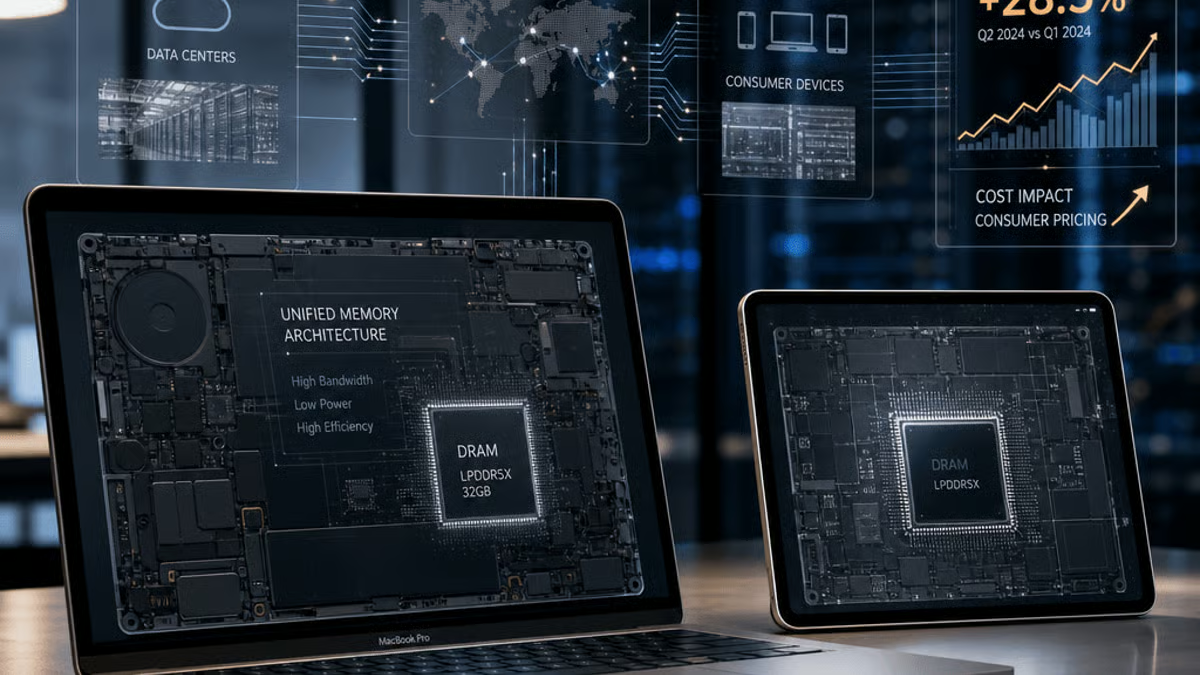
The memory shortage driving these increases has been building since early 2025. Major DRAM manufacturers including Samsung, SK Hynix, and Micron Technology have struggled to keep up with surging demand from AI server deployments, while production capacity hasn’t expanded fast enough to close the gap. Industry analysts at TrendForce reported that DRAM contract prices rose 18-23% in Q1 2026 and are projected to climb another 15-20% this quarter.
Apple’s decision to pass these costs directly to consumers marks a shift from its usual strategy of absorbing supply chain pressures to protect market share. The company typically leverages its massive purchasing power and long-term supplier contracts to insulate itself from component price volatility. That it’s raising prices now suggests the memory crunch is worse than many outside observers realized.
The timing is particularly challenging for Apple. The company is in the middle of transitioning its entire Mac lineup to Apple Silicon, with the M4 generation just rolling out. Higher prices could slow adoption of the new chips right when Apple needs momentum to convince holdouts still running Intel-based Macs to upgrade. Education customers, who often buy MacBook Airs in bulk, will feel the pinch especially hard.
Competitors are watching closely. Dell and HP have both hinted at potential price adjustments in recent earnings calls, though neither has pulled the trigger yet. If Apple’s price increases stick without significant sales impact, it could give other PC makers cover to raise their own prices. That would effectively reset pricing across the entire laptop and desktop market.
The iPad increases also complicate Apple’s tablet strategy. The company has been pushing iPads as laptop replacements for casual users, but at $749 for an iPad Air – before adding a keyboard or Apple Pencil – the value proposition gets murkier. A MacBook Air at $1,299 starts looking more reasonable when an iPad setup approaches $1,000 anyway.
For consumers, the message is clear: if you’ve been thinking about buying a new Mac or iPad, waiting for prices to come down probably isn’t the play. The memory shortage isn’t expected to ease until late 2026 at the earliest, and there’s no indication Apple plans to roll back these increases once component costs stabilize. The company rarely reduces prices mid-cycle except during seasonal promotions.
Apple’s aggressive price increases signal that the memory shortage has moved from supply chain concern to consumer wallet issue. With the Mac Studio seeing a 33% jump and core products like MacBook Air and iPad Air climbing $200 each, the company is betting customers will absorb the pain rather than switch ecosystems. The real question is whether competitors follow Apple’s lead or use this as an opportunity to undercut Cupertino on price. Either way, anyone shopping for a new laptop or tablet just watched their budget requirements jump significantly, and the memory crunch shows no signs of easing before year’s end.







Leave a Reply