

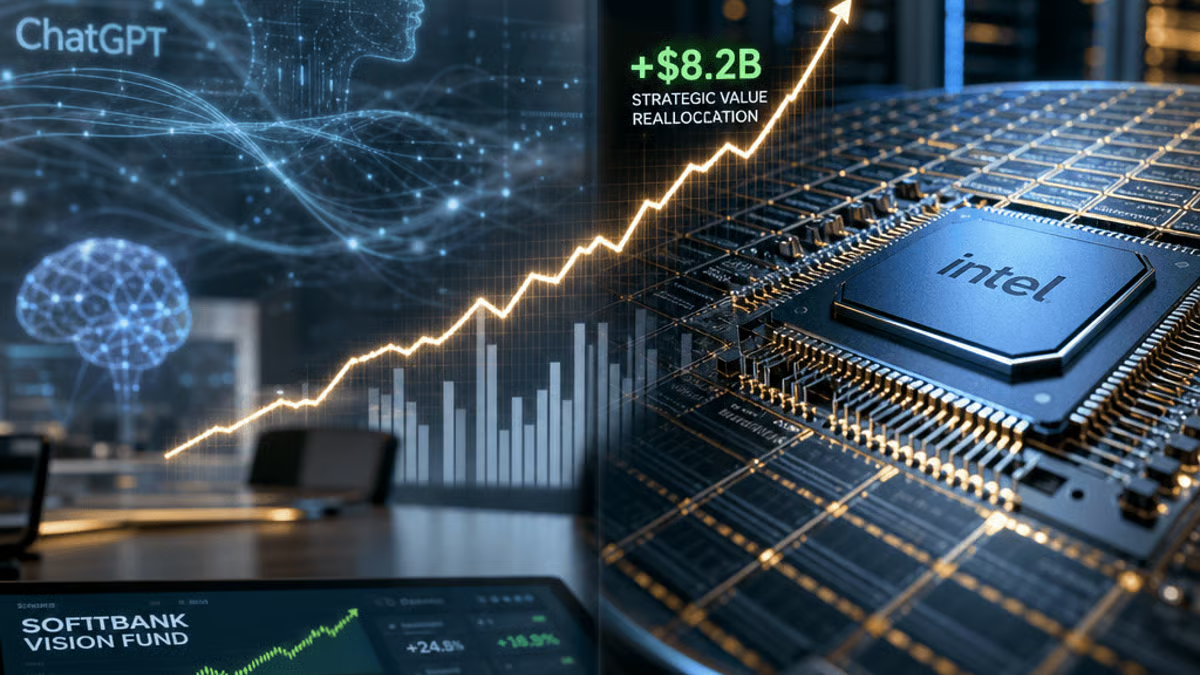
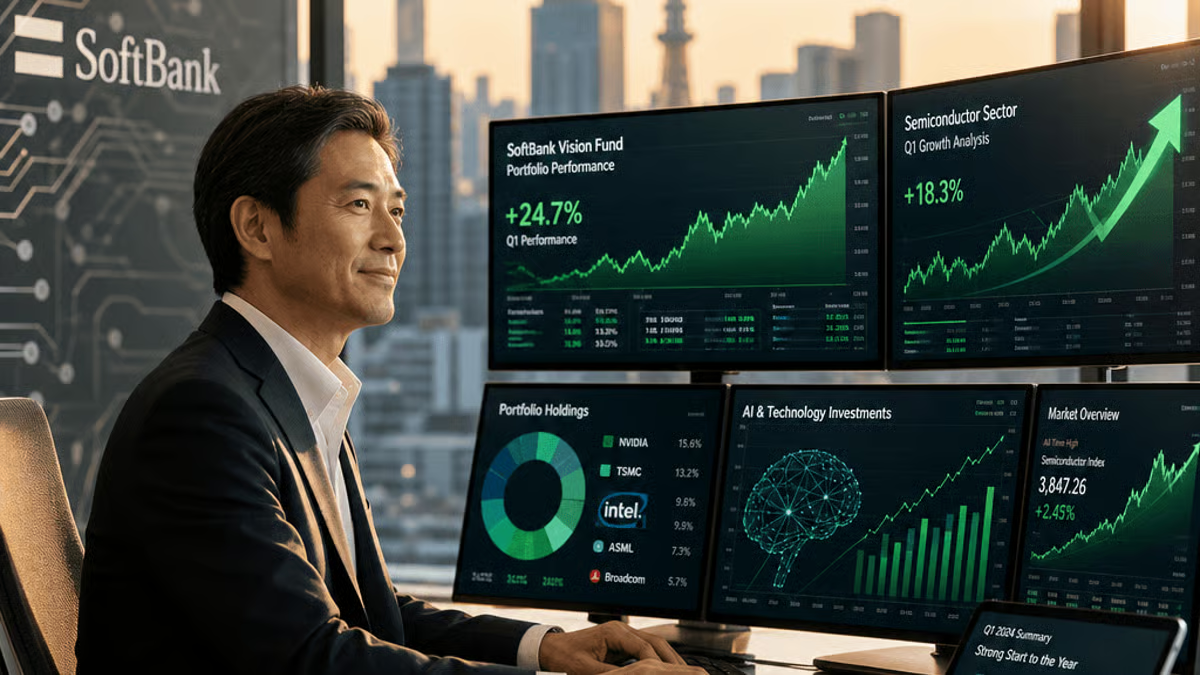
SoftBank just delivered a surprise beat for its fiscal first quarter, powered by an $8.2 billion valuation jump in its Intel stake. The earnings report signals a notable portfolio shift for Masayoshi Son’s investment giant, with the company pulling back from its high-profile OpenAI position while traditional chip bets deliver outsized returns. The results arrive as investors scrutinize SoftBank’s AI strategy amid mounting pressure to prove its vision beyond hype.
SoftBank delivered fiscal first-quarter profits that caught analysts off guard Thursday, but the real story lies in what’s happening under the hood. The Japanese conglomerate’s $8.2 billion paper gain from its Intel stake dominated the earnings picture, while its once-celebrated OpenAI investment quietly receded into the background.
The Intel windfall marks a dramatic turn for a company that’s spent the past two years betting big on AI software and services. CEO Masayoshi Son has repeatedly championed OpenAI and artificial general intelligence as the future, but this quarter’s numbers suggest the real money is coming from old-school semiconductor plays. Intel’s stock has climbed steadily as the chipmaker regains manufacturing momentum and captures AI infrastructure spending – a trend that’s padding SoftBank’s balance sheet faster than any chatbot investment.
SoftBank’s shifting stance on OpenAI raises questions about the firm’s AI strategy. After participating in OpenAI’s funding rounds and talking up the partnership publicly, the company appears to be scaling back its exposure. The move comes as OpenAI faces its own challenges, including leadership turbulence and mounting competition from Google, Meta, and Anthropic. For SoftBank, which burned billions on Vision Fund missteps, a more conservative approach to speculative AI bets makes tactical sense.
The earnings also highlighted SoftBank’s exposure to ByteDance, the TikTok parent company navigating geopolitical headwinds. While the report didn’t break out ByteDance’s specific contribution, the stake represents another major asset that could swing wildly based on regulatory developments in the U.S. and Europe. SoftBank’s portfolio increasingly resembles a barbell strategy – massive positions in a handful of high-profile tech giants rather than the sprawling startup bets that defined the Vision Fund era.
Analysts note the Intel gain is largely unrealized, meaning SoftBank hasn’t actually cashed out. The company holds roughly 4.5% of Intel following a 2022 investment, and liquidating that position at current valuations would flood the market. Instead, the valuation boost provides accounting relief and ammunition for Son’s narrative that SoftBank is positioned for the AI hardware boom, not just software hype.
The fiscal Q1 results arrive as SoftBank attempts a delicate rebalancing act. The company needs to show Vision Fund discipline after writing down investments in WeWork, Katerra, and dozens of other startups that imploded. But it also can’t afford to miss the AI wave entirely. Intel and chip infrastructure offer a middle path – less sexy than backing the next OpenAI, but potentially more profitable as enterprises build out GPU clusters and data centers.
What’s conspicuously absent from the earnings narrative is any major new AI investment announcement. SoftBank talked extensively about AI in its commentary but didn’t unveil fresh bets on par with previous OpenAI commitments. That suggests the firm is taking a wait-and-see approach as AI valuations remain elevated and the technology’s commercial viability stays uncertain for many applications.
The Intel stake’s performance also reflects broader market dynamics. As AI infrastructure spending accelerates, investors are rotating into picks-and-shovels plays like chip manufacturers and cloud providers rather than speculative AI application companies. SoftBank’s portfolio, often criticized for chasing narrative over fundamentals, accidentally landed on the right side of that trade with Intel.
Looking ahead, SoftBank’s ability to sustain profit growth depends heavily on a handful of mega-positions behaving well. Intel needs to keep executing on its manufacturing roadmap. ByteDance needs to navigate TikTok’s regulatory maze without major asset sales. And the Vision Fund portfolio needs to stabilize after years of markdowns. The OpenAI repositioning, while subtle, signals SoftBank may be learning from past excesses – but only time will tell if that discipline holds when the next hot startup emerges.
SoftBank’s Q1 beat tells a story of accidental wisdom. The firm’s Intel stake delivered exactly the kind of steady, infrastructure-based AI exposure that the market rewards right now, while its OpenAI pullback avoids the volatility plaguing high-profile AI startups. But this quarter’s success doesn’t erase SoftBank’s track record of mistimed bets and Vision Fund writedowns. The real test comes in whether Son can resist the siren call of the next buzzy AI deal and stick with the boring, profitable chip plays that actually moved the needle this quarter. For now, investors are getting a SoftBank that’s less visionary and more value-focused – and the market seems fine with that tradeoff.







Leave a Reply