
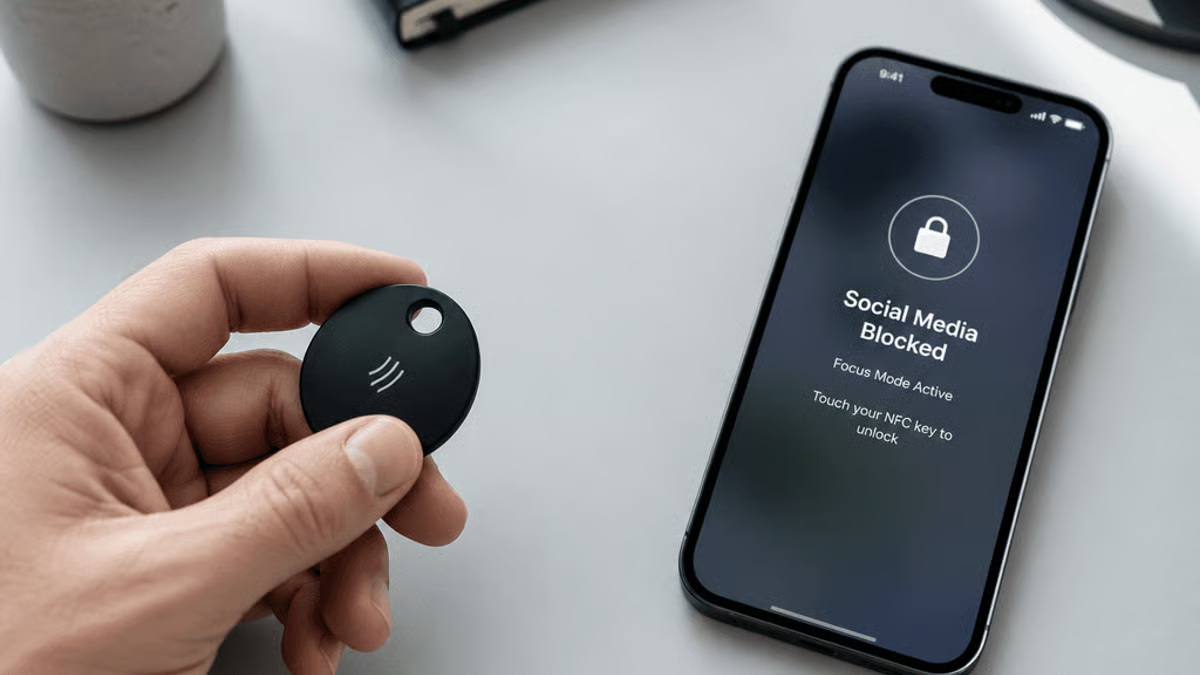
Digital wellness just got analog. A new $9 NFC key is flipping the script on app blocking by making distraction a physical inconvenience rather than a software setting you can easily bypass. Instead of tapping through Screen Time warnings or ignoring app limit notifications, users now have to physically locate and scan a tiny key fob to unlock Instagram, TikTok, or whatever app is eating their productivity. The friction is the feature, and early adopters say that’s exactly what makes it work.
The digital wellness arms race just took an unexpected turn toward the tangible. While tech giants pour millions into AI-powered screen time features and sophisticated app blockers, a $9 piece of hardware is betting that the solution to our phone addiction isn’t smarter software but simple physics.
The NFC key works with any smartphone that supports near-field communication, which covers virtually every iPhone since the iPhone 6 and most Android devices from the past five years. Users configure which apps they want locked, then hide the physical key somewhere inconvenient. Need to check Twitter at 2am? You’ll have to get out of bed, walk to wherever you stashed the key, and physically tap your phone against it. That ten-second journey is often enough to break the compulsion loop.
“We’ve spent a decade making phone interactions as frictionless as possible,” according to digital wellness research from the Center for Humane Technology. “Maybe friction is exactly what we need.” The observation captures why this low-tech approach resonates while sophisticated Screen Time features on iOS and Digital Wellbeing on Android get routinely ignored. Software limitations live inside the device we’re already holding. A physical key forces you to make a deliberate choice.
The timing couldn’t be more relevant. Apple and Google have been locked in a quiet competition to build better digital wellness tools since 2018, each iOS and Android update bringing new focus modes, app timers, and usage dashboards. Yet smartphone addiction metrics keep climbing. Average daily screen time hit 4 hours and 37 minutes in 2025, up from 3 hours and 15 minutes in 2019, according to data tracking firm App Annie.
What makes the NFC approach different is its recognition that willpower is a terrible defense against apps designed by teams of behavioral psychologists to maximize engagement. TikTok’s algorithm, Instagram’s infinite scroll, and Twitter’s notification patterns aren’t accidents – they’re products of hundreds of millions in research and development aimed at keeping eyes on screens. A $9 key can’t compete with that engineering firepower, but it doesn’t have to. It just needs to be annoying enough that reaching for your phone becomes a conscious decision rather than muscle memory.
The device enters a digital wellness market that’s been struggling to find product-market fit. Premium solutions like the Light Phone II cost $299 and require abandoning your smartphone entirely. Subscription app blockers like Freedom and Cold Turkey charge $40-80 annually but live on the device they’re trying to restrict. Somewhere between those extremes, physical friction devices are carving out a niche.
Early reviews from productivity forums suggest the key works best for specific use cases rather than total phone abstinence. Users report success blocking social media during work hours while keeping messaging and email accessible. The physical separation creates what behavioral economists call a “commitment device” – a way to lock your future self into better choices your present self wants to make but struggles to maintain.
The broader trend here is worth watching. As AI makes our devices smarter and more personalized, there’s a counter-movement embracing deliberate dumbness. E-ink tablets, digital detox retreats, and now physical app locks all bet that the solution to technology overload isn’t better technology but strategic inconvenience. Meta can optimize Instagram’s algorithm to be 10% more engaging, but it can’t make you walk across the room to unlock it.
The $9 price point matters too. Digital wellness has historically been a luxury good – something you could afford to care about after basic needs were met. A single-digit hardware solution democratizes access in ways $300 dumb phones and $500 therapy apps never could. If NFC keys gain traction, expect Amazon and other retailers to flood the market with variants, driving prices even lower while adding features like multiple user profiles or time-based auto-locking.
What remains unclear is whether physical friction can compete with the billions spent making our phones irresistible. App developers employ the same psychological techniques that make slot machines addictive – variable rewards, infinite feeds, social validation loops. A physical key is a speed bump, not a roadblock. But maybe that’s enough. Breaking the automaticity of phone checking, even temporarily, could be the edge chronic scrollers need to reclaim a few hours of focus.
The $9 NFC key won’t solve smartphone addiction on its own – no single gadget can counter billions in engagement optimization. But it represents something bigger: a recognition that beating addictive technology might require stepping outside the digital realm entirely. As AI makes our devices more persuasive and personalized, physical friction becomes a valid strategy for those wanting to opt out without going full Luddite. Whether this specific product takes off or fades into obscurity, the principle behind it – that good design sometimes means making things harder, not easier – feels like an idea whose time has come. The real test will be whether users can resist the urge to just keep the key in their pocket, turning physical friction back into digital convenience.






Leave a Reply