
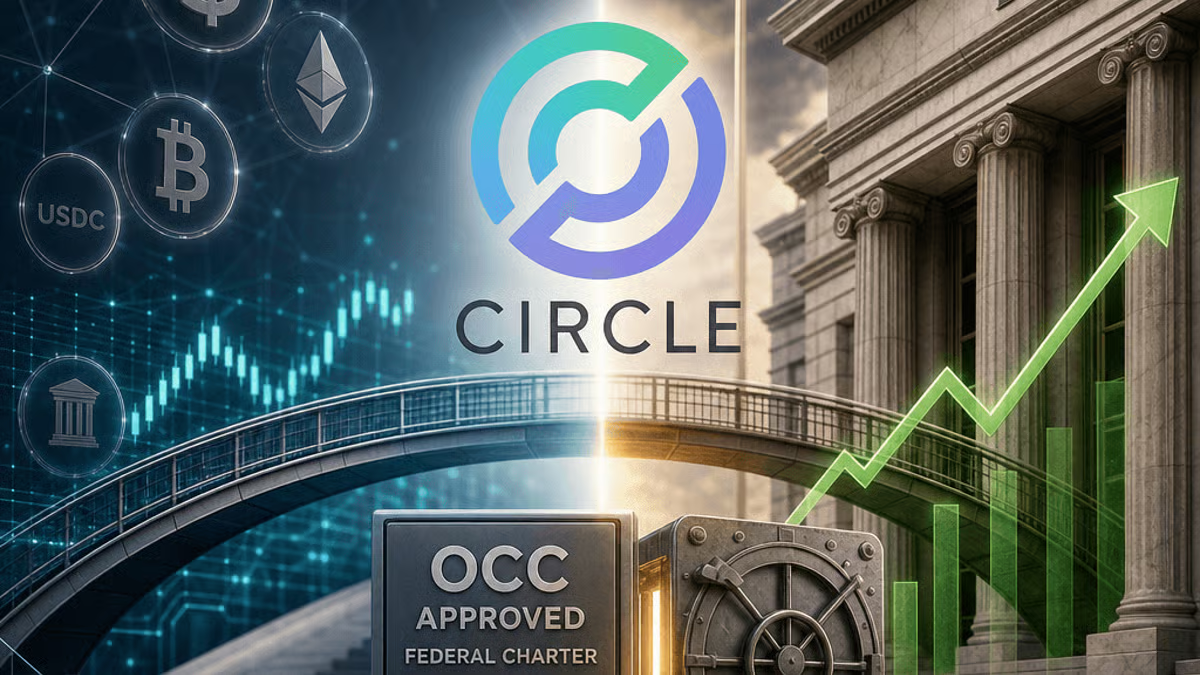
In a landmark move that blurs the line between crypto and traditional banking, Circle just secured approval from the U.S. Office of the Comptroller of the Currency to operate as a federal trust bank. The company’s shares jumped 5% in premarket trading on the news, marking a watershed moment for the stablecoin industry as regulatory acceptance moves from theoretical to concrete. This makes Circle the first major stablecoin issuer to gain this level of banking legitimacy in the United States.
Circle just crossed a threshold that seemed impossible just a few years ago. The company behind USDC, the second-largest stablecoin by market cap, received formal approval from the Office of the Comptroller of the Currency to operate as a federal trust bank. It’s the kind of regulatory stamp that legitimizes an entire industry overnight.
The market’s reacting accordingly. Circle’s shares climbed 5% in premarket trading as investors digested what this means – not just for the company, but for the broader stablecoin ecosystem. This isn’t just another crypto company getting a money transmitter license. This is a federal banking charter that puts Circle in the same regulatory category as institutions that have been around for decades.
What does a trust bank charter actually unlock? For starters, Circle gains direct access to federal payment systems without needing intermediary banking relationships. That’s huge for a company that processes billions in daily transaction volume. The charter also brings enhanced regulatory oversight, which sounds like a burden but actually becomes a competitive advantage when you’re trying to convince institutional treasurers to park millions in your stablecoin.
The timing couldn’t be more critical. Stablecoin competition is heating up across the board. PayPal launched its own dollar-pegged token last year. Traditional payment giants are circling the space. And regulatory clarity around stablecoins has been the missing piece that’s kept many institutional players on the sidelines. Circle just solved that problem for itself.
This marks a fundamental shift in how regulators view crypto infrastructure. The OCC doesn’t hand out bank charters lightly. The application process typically takes years and requires demonstrating robust compliance frameworks, capital adequacy, and operational resilience. Circle’s approval signals that federal regulators now see well-structured stablecoin operations as compatible with the existing banking system rather than a threat to it.
For USDC specifically, this changes the calculus for treasury managers and CFOs evaluating digital dollar options. The token now carries the implicit backing of a federally chartered institution subject to regular examinations and capital requirements. That’s a different risk profile than a stablecoin issued by an unregulated entity, even if the underlying reserves are identical.
The competitive implications ripple outward. Tether, which still dominates with USDT, operates without this level of regulatory integration. That’s been fine for crypto-native users, but institutional adoption is a different game. Circle just raised the bar for what enterprise-grade stablecoin infrastructure looks like. Other issuers will now face pressure to pursue similar regulatory pathways or risk being shut out of institutional deals.
There’s also the question of what Circle does with this new status. Trust banks can offer custody services, wealth management, and fiduciary services beyond just payment rails. Circle could expand into institutional crypto custody or treasury management services for corporations looking to hold digital assets. The charter opens doors that were previously closed.
The approval comes as Congress continues to debate comprehensive stablecoin legislation. While federal lawmakers argue over the details, the OCC just demonstrated that existing banking law can accommodate digital currency issuers. That might accelerate the timeline for other crypto firms pursuing similar charters, or it might make legislators realize the regulatory framework is already adapting without new laws.
What happens next will determine whether this is a one-off milestone or the beginning of a wave. If Circle’s integration into the federal banking system goes smoothly, expect a queue of stablecoin issuers lining up for their own charters. If operational challenges emerge, regulators might pump the brakes on future approvals. Either way, the crypto industry just got its first federally chartered bank that actually looks and operates like a crypto company.
Circle’s OCC approval represents more than just one company’s regulatory victory. It’s proof that the wall between traditional banking and crypto infrastructure is coming down, brick by brick. For institutional players who’ve been waiting for regulatory clarity before diving into stablecoins, this is the signal they’ve been looking for. The question now isn’t whether crypto companies can become banks, but how many will follow Circle’s path and what that means for the financial system that emerges on the other side. The 5% share price bump is just the market’s initial reaction. The real impact plays out over the next several quarters as Circle leverages its new charter and competitors scramble to respond.











Leave a Reply