
Samsung is making its case for the agentic AI era with a philosophy that puts device ecosystems ahead of raw compute power. In an editorial published ahead of Galaxy Unpacked, the company argues that AI’s next breakthrough won’t come from smarter models but from systems that understand users across phones, watches, tablets, and home devices. The pitch: AI that acts on your behalf needs to know you first, and Samsung’s hardware footprint gives it the data advantage to build that contextual intelligence while keeping it secure through Knox.
Samsung just published its manifesto for the agentic AI era, and it’s less about beating OpenAI or Google on model performance and more about owning the context layer that makes AI actually useful. According to the editorial published on Samsung Newsroom, the company believes the industry is asking the wrong question. It’s not who has the smartest AI, but who understands people best.
The timing matters. With Galaxy Unpacked just around the corner, Samsung is framing its entire hardware strategy through the lens of agentic AI – systems that don’t just respond to prompts but take action on your behalf. But here’s the catch: for AI to act for you, it needs to know you. And Samsung thinks its sprawling device ecosystem gives it the data moat to pull that off.
“AI no longer merely answers. It is entering an agentic age, taking action on our behalf while the person carries the final decision,” the company wrote in the editorial. “But to act for someone, it must first know them.”
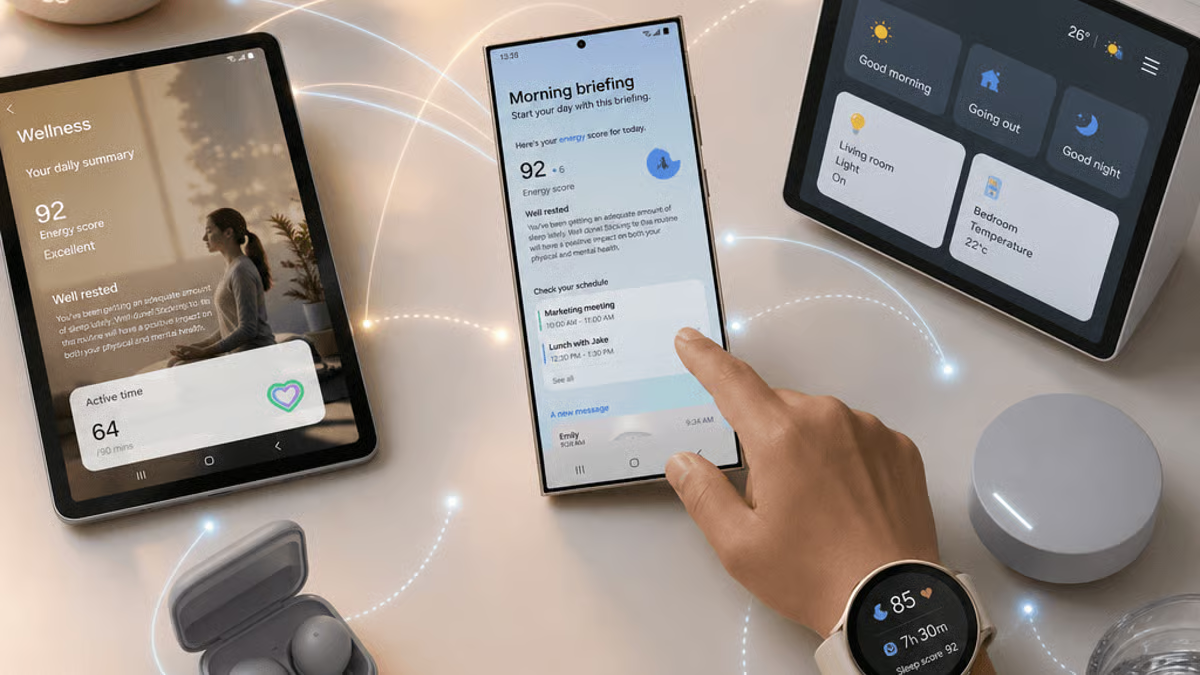
That knowing comes from what Samsung calls “entry points” – the Galaxy phone that tracks your schedule and location, the watch monitoring sleep and heart rate, the tablet where you create, the TV and SmartThings appliances adding context from your home environment. Together, these devices build what Samsung describes as “a fuller picture of a person’s needs.” Sleep data from your Galaxy Watch informs tomorrow’s calendar suggestions. Your fridge knows your eating patterns. Your phone coordinates it all.
It’s a direct challenge to the AI platform plays from Apple, which has been pushing on-device intelligence with Apple Intelligence, and Google, which is embedding Gemini across Android and Pixel devices. But Samsung is betting that breadth of devices matters more than depth of integration. The company has been building out SmartThings for years, signing up appliance makers and home device partners to create an open ecosystem. Now that ecosystem becomes the training ground for personalized AI.
“The platforms that changed the world were the most open,” Samsung argued, positioning its approach against Apple’s walled garden. “With SmartThings, we brought devices, services and partners into one connected experience, shaping industry open standards.” The pitch: Samsung doesn’t just want to be the hardware layer for AI. It wants to be the open platform that third-party AI services plug into, much like Android became the open alternative to iOS.
But there’s a tension here. Building AI that “knows you” requires feeding vast amounts of personal data into models. Samsung’s answer is Knox, its enterprise-grade security platform that now protects both individual devices and the connections between them. The company emphasized that “the most personal data stays on the device” and users “remain in control” of what AI does with their information.
That on-device processing claim is important. It suggests Samsung is leaning into edge AI rather than cloud-based models, keeping sensitive health data, behavioral patterns, and personal context local. It’s a privacy play that mirrors Apple’s approach but applied across a more fragmented, multi-manufacturer ecosystem through SmartThings.
The editorial also teased what’s coming at Unpacked: thinner, lighter, stronger foldables that Samsung says become more valuable as AI helps you “do more at once.” The argument is that flexible screens make sense when AI is juggling multiple tasks simultaneously. Your phone folds open to show AI-generated summaries across work emails, calendar conflicts, and health recommendations all at once. Form factor follows AI function.
Health emerged as another focus area. Samsung highlighted how “daily choices add up” and positioned wearables as the device category closest to understanding wellness patterns. Expect Galaxy Unpacked to showcase AI-driven health insights that connect watch biometrics with phone-based coaching and potentially smart home adjustments. Your watch detects poor sleep, your phone suggests schedule changes, your lights and thermostat adjust automatically tonight.
The bigger story is how Samsung is reframing the AI race. While Microsoft, Google, and OpenAI compete on model capabilities and Nvidia battles for AI chip dominance, Samsung is making the case that the hardware layer is where AI gets personal. The company with the most devices in your life has the most context to make AI useful.
That’s the bet ahead of Unpacked. Samsung isn’t promising breakthrough models or revolutionary algorithms. It’s promising AI that works across the devices you already own, understands your routines because it observes them everywhere, and keeps that understanding locked down through Knox. Whether that resonates with consumers tired of fragmented AI experiences or just sounds like more Samsung ecosystem lock-in will become clear when the company shows its hand at the event.
One thing is certain: Samsung is positioning Galaxy AI as the counterweight to Apple Intelligence and Google Gemini by going wide instead of deep. More devices, more partners, more entry points for AI to learn from. The editorial reads like a strategic roadmap disguised as philosophy. And it signals that Samsung sees the agentic AI era as its opportunity to make the ecosystem play finally pay off.
Samsung’s editorial is a strategic shot across the bow at Apple and Google, arguing that the agentic AI winner won’t be determined by who builds the smartest model but who controls the most contextual entry points into users’ lives. By framing Galaxy devices, SmartThings appliances, and wearables as the data layer that makes AI personal, Samsung is betting its hardware breadth beats platform depth. The Knox security wrapper and on-device processing claims address the obvious privacy concerns, but the real test comes at Galaxy Unpacked when Samsung has to prove this philosophy translates into AI features that feel genuinely useful rather than creepy. If agentic AI is really about understanding users across contexts, Samsung just made the case that it has more contexts than anyone else.









Leave a Reply