
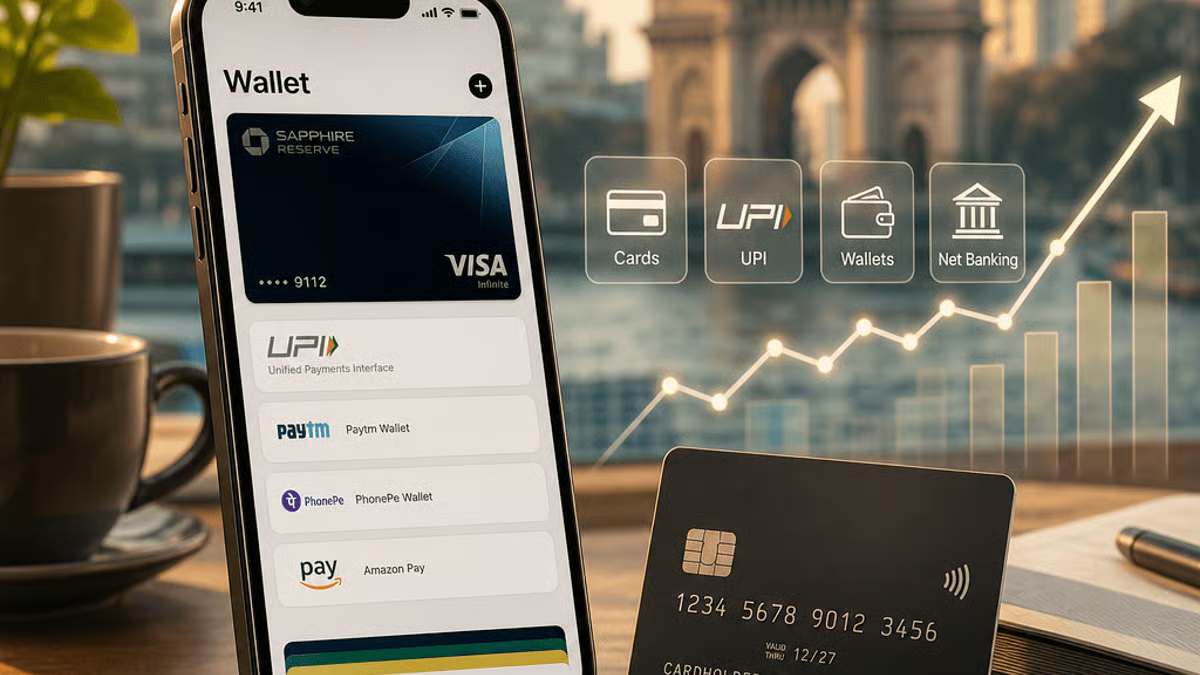
Apple is quietly rolling out card payment options for Apple Account purchases in India, ending a four-year drought that forced millions of users to rely on alternative payment methods. The phased restoration comes after the Cupertino giant adapted its payment infrastructure to comply with India’s strict auto-debit rules and data localization requirements, marking a significant shift in how the company handles transactions in one of its fastest-growing markets.
Apple just flipped the switch on a feature Indian users haven’t seen since 2022. Card payments are trickling back to the App Store, Apple Music, iCloud, and other Apple services in what the company’s calling a “phased rollout” across the subcontinent.
The four-year absence wasn’t a technical glitch – it was a regulatory standoff. Back in 2022, India’s Reserve Bank tightened auto-debit rules, requiring additional factor authentication for recurring transactions above 5,000 rupees (roughly $60). Apple pulled card support entirely rather than implement a half-baked solution, leaving users scrambling for workarounds.
“We had to completely rebuild our payment stack for India,” a source familiar with the integration told TechCrunch. The new system now routes through compliant payment gateways that handle the Reserve Bank’s e-mandate framework, adding an extra authentication layer that wasn’t required in Apple’s original infrastructure.
For the past four years, Indian users have been stuck with a patchwork of alternatives. UPI (Unified Payments Interface) became the de facto standard, with net banking and Apple Account balance filling the gaps. But the workarounds created friction – you couldn’t easily gift apps, family sharing got complicated, and topping up your Apple Account balance meant extra steps most users didn’t want to bother with.
The timing isn’t accidental. Apple is betting big on India. The company saw iPhone sales surge 39% year-over-year in 2025, according to Counterpoint Research, making it the fastest-growing major market for the device. Apple opened two flagship retail stores in Mumbai and Delhi in 2023, started manufacturing iPhone 15 models locally, and has been systematically removing barriers to ecosystem adoption.
Card payments matter because they’re the gateway drug to services revenue. When users can easily subscribe to Apple Music, iCloud storage, Apple TV+, and App Store purchases with a saved card, attachment rates skyrocket. It’s the same playbook Apple ran in China, where services revenue now exceeds $20 billion annually.
The phased approach suggests Apple is being cautious. Some users are seeing card options appear in their payment settings, while others still only have UPI and net banking. This staggered deployment lets Apple stress-test the new payment rails before opening the floodgates to all 100+ million iPhone users estimated to be in India.
But there’s a catch – the new system still carries higher transaction fees than UPI, which is essentially free for consumers and costs merchants a fraction of card processing rates. That’s why Google and Amazon have aggressively pushed UPI adoption in India. Apple offering both gives users choice, but the economics favor UPI for the company too.
The regulatory compliance also sets a precedent. India’s been tightening data localization and payment rules across the board, forcing global tech companies to build India-specific infrastructure rather than treating it as just another market. Meta and Google have both invested heavily in local data centers and payment partnerships to stay compliant.
What’s less clear is whether this move will extend to other markets where Apple has faced similar regulatory pressure. The EU’s Digital Markets Act and various antitrust proceedings have put Apple’s payment monopoly under scrutiny, but those cases focus on third-party payment processors, not card support itself.
For now, Indian users are just happy to have options again. Social media lit up with screenshots of the restored payment methods, with users celebrating the end of UPI-only limitations. The real test comes in the next quarter when we’ll see if card availability actually boosts services attachment rates or if four years of UPI habit formation has permanently shifted user behavior.
Apple’s decision to restore card payments in India isn’t just about convenience – it’s a strategic play for services revenue in a market that’s projected to have 200 million iPhone users by 2028. The four-year gap taught users to live without cards, but it also showed Apple how much friction costs in terms of subscription adoption and ecosystem lock-in. The phased rollout gives Apple room to course-correct if issues arise, but the message is clear: India’s too important to leave features on the table. Watch for services revenue growth in Apple’s next India-specific disclosures – that’s where the real impact of this change will show up.








Leave a Reply