
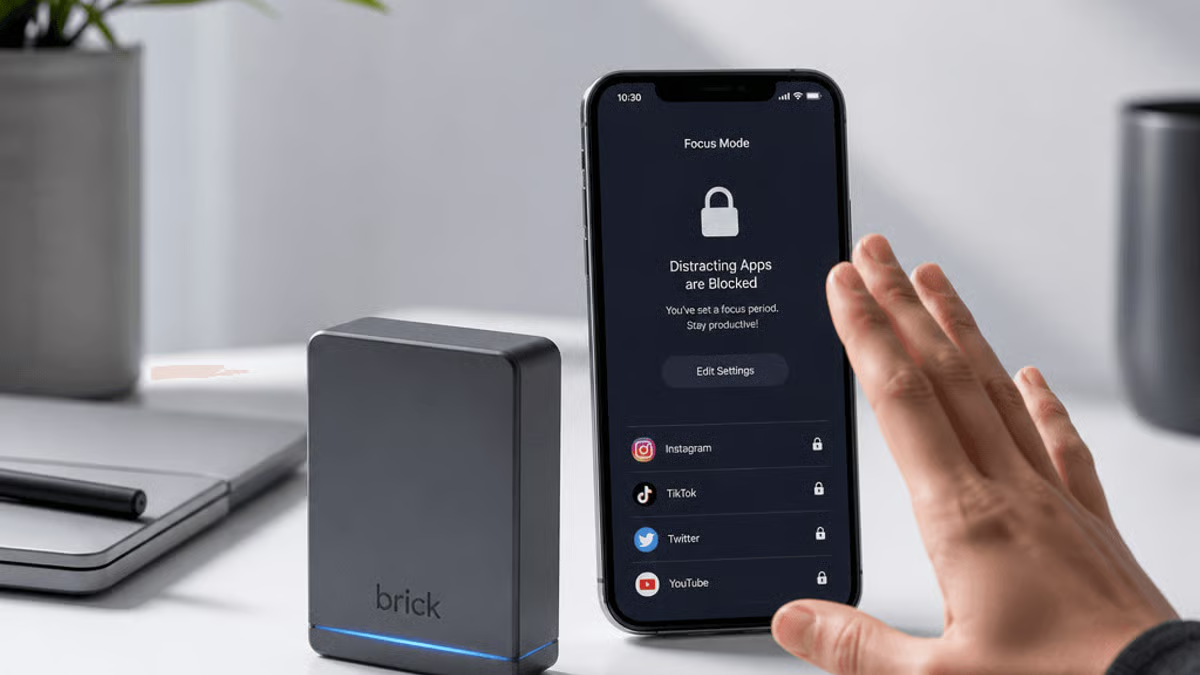
After half a year of testing, a deceptively simple gadget called Brick has done what dozens of screen time apps couldn’t – actually reduced my doomscrolling. The device, which physically locks you out of distracting iPhone apps, just landed on Amazon following months of direct-only sales. And unlike most digital wellness products that gather dust after a week, this one’s still sitting on my desk, doing its job every single day.
There’s a graveyard of good intentions in my iPhone settings. Screen Time limits I’ve overridden. Focus modes I’ve abandoned. App blockers I’ve deleted in moments of weakness. Digital wellness is hard because your phone knows you’ll eventually crack. But Brick takes a different approach – it doesn’t ask for willpower at all.
The concept is almost laughably simple. Brick is a small physical device that pairs with your iPhone and a companion app. When you leave home – or whenever you choose – you tap the Brick, and it locks you out of pre-selected apps. Instagram, Twitter, TikTok, whatever feeds your doomscrolling habit. The only way to get them back is to return to where you left the Brick. Your phone becomes just a phone again.
What makes this work where apps fail is friction. Not the annoying kind that makes you want to throw your device, but the productive kind that gives your brain a moment to realize what it’s doing. According to behavioral psychology research on habit interruption, physical barriers are significantly more effective than digital ones at breaking automatic behaviors. Your muscle memory reaches for Instagram, but instead of a 15-second limit you can dismiss, you hit a wall.
Six months ago, I was skeptical. Another gadget promising to fix my relationship with my phone? But the thing is, it worked. Not perfectly – nothing does – but consistently. My average daily screen time dropped from over four hours to under two within the first month. More importantly, it stayed there.
The device itself costs around $50, positioning it between premium app subscriptions and full digital detox retreats. That pricing seems to be working. While the company hasn’t released official sales figures, the move to Amazon suggests demand exceeded their direct fulfillment capacity. It’s a smart distribution play in the consumer tech space, where Amazon’s logistics and discovery engine can turn niche products into category leaders.
What’s interesting is the timing. Apple has been pushing Screen Time features harder with each iOS update, but adoption remains low and override rates stay high. People don’t want more settings to manage – they want something that just works. Brick capitalizes on that frustration by removing the decision fatigue entirely.
The competitive landscape for digital wellness gadgets is surprisingly sparse. There’s the Light Phone, a $300 minimalist alternative that requires abandoning your smartphone entirely. There are app blockers like Freedom and Opal, which charge $40-80 annually but suffer from the same enforceability issues as built-in tools. Brick sits in a sweet spot – it works with your existing phone, costs less upfront, and can’t be easily circumvented in a moment of boredom.
Is it perfect? No. You can still access blocked apps on other devices. Determined users could disable it. But that’s missing the point. This isn’t about creating an impenetrable fortress – it’s about adding just enough friction to break the automatic reach-for-phone reflex. And for that specific purpose, it delivers.
The Amazon availability changes everything for reach. Direct-to-consumer worked for early adopters, but mainstream adoption requires mainstream distribution. Amazon’s recommendation engine, Prime shipping, and return policy lower the barrier to trying something new. If Brick can maintain quality and customer service at scale, this could be the breakout product the digital wellness category has been waiting for.
What’s next? The digital wellness market is projected to grow significantly as screen time concerns intensify, particularly among parents looking for solutions that don’t require constant monitoring. Hardware solutions like Brick that offer set-it-and-forget-it simplicity could capture substantial market share from subscription app models.
After six months, Brick has earned its permanent spot in my daily routine. It’s not revolutionary technology – it’s just smart product design that understands human behavior better than most apps do. The Amazon launch makes it accessible to anyone frustrated with their screen time, and at $50, it’s worth trying if you’ve failed with every other digital wellness solution. Sometimes the best innovation isn’t adding more features – it’s just adding the right amount of friction.








Leave a Reply