
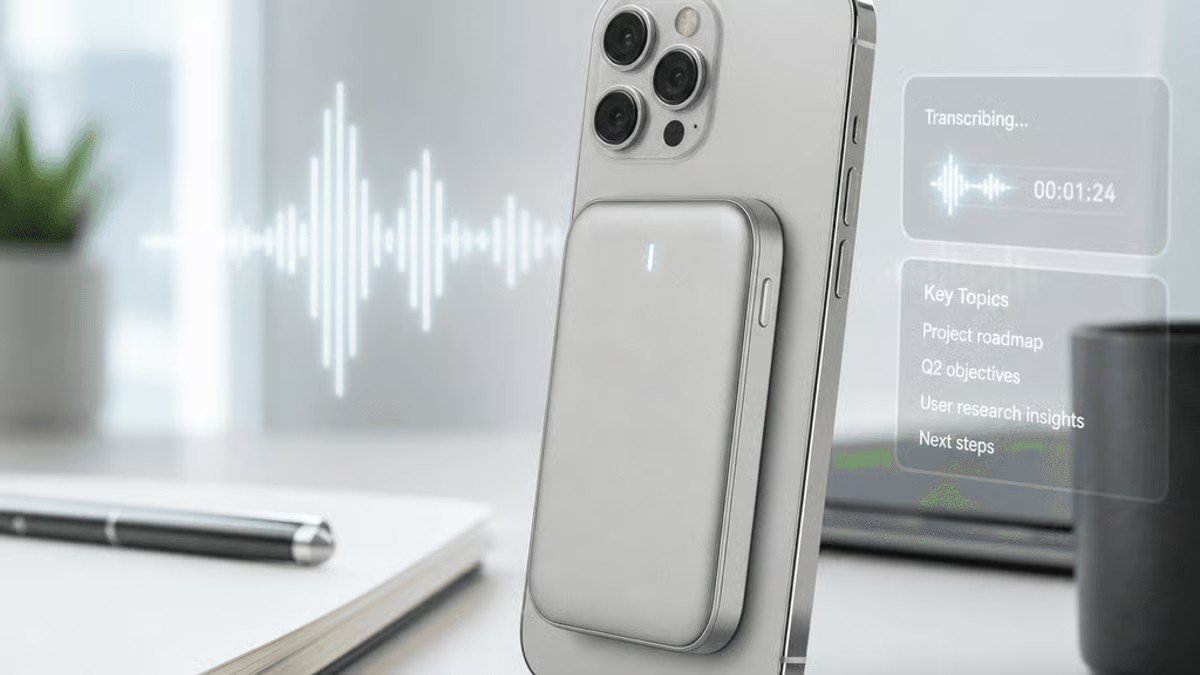
AI note-taking hardware just got a fresh injection of capital. Pocket, a Y Combinator-backed startup selling a $129 credit card-shaped recording device that attaches to smartphones, has closed an $11 million Series A led by Accel. The tiny puck promises to turn any conversation into unlimited transcriptions and automated to-do lists, betting that consumers want dedicated AI hardware instead of just another app.
Pocket just pulled in $11 million to prove that AI note-taking deserves its own hardware. The Y Combinator-backed startup closed its Series A round led by Accel, doubling down on a simple premise: people want to record and transcribe everything without fumbling with phone apps or expensive standalone devices.
The product itself feels almost deceptively simple. For $129, you get a credit card-shaped puck that magnetically attaches to the back of your smartphone. Press a button, and it starts recording. The device promises unlimited recordings, AI-powered transcriptions, and automatic extraction of action items – all without subscription fees eating into your monthly budget. In a market where Otter.ai charges $16.99 per month for premium features and standalone devices like the Plaud Note run $159, Pocket’s positioning looks deliberately aggressive.
What makes this funding noteworthy isn’t just the dollar amount. It’s the timing. Consumer AI hardware has become venture capital’s latest obsession, with everyone from Humane’s AI Pin to Rabbit’s R1 trying to crack the code on what comes after the smartphone. Most have stumbled. Humane’s $700 pin got savaged in reviews and the company is now exploring a sale. Rabbit shipped a device that reviewers said could’ve been an app. Pocket seems to have learned from those failures by keeping things minimal – it’s an accessory, not a replacement.
The device syncs recorded audio to Pocket’s cloud infrastructure, where the company’s AI models process speech into searchable text and structured data. According to sources familiar with the product, the transcription accuracy rivals offerings from established players, likely powered by models similar to OpenAI’s Whisper or Google’s speech recognition APIs. The magnetic attachment system means you’re not carrying yet another gadget, and the lack of a screen keeps manufacturing costs down.
Accel’s involvement signals something bigger than just one startup. The venture firm has been aggressively deploying capital into the AI hardware layer, betting that specialized devices will carve out niches even as smartphones get smarter. This follows Accel’s investments in other AI-forward consumer products and represents a broader thesis that ambient computing needs physical form factors beyond phones and laptops.
Pocket faces serious competition from multiple angles. Software-first companies like Otter, Fathom, and Fireflies.ai already handle meeting transcriptions through web and mobile apps. Smart glasses from Meta and forthcoming products from Apple could incorporate always-on recording. And dozens of Kickstarter-funded recording devices have tried and failed to gain mainstream traction.
But Pocket’s founders are betting on a different user behavior. The company isn’t targeting Zoom meetings or structured conference calls – those are already well-served by software. Instead, they’re going after spontaneous conversations, in-person brainstorms, voice memos to yourself, and the dozens of small interactions where pulling out your phone feels awkward but you still want a record. It’s the difference between scheduled productivity and ambient capture.
The $11 million will reportedly fund manufacturing scale-up, international expansion, and improvements to the AI models processing voice data. Early production runs sold out within weeks, according to sources close to the company, suggesting real consumer demand beyond the usual early adopter crowd. Whether that enthusiasm translates to mainstream adoption remains the billion-dollar question.
Y Combinator’s continued backing through this Series A shows confidence that Pocket has found product-market fit. The accelerator typically sees thousands of hardware startups struggle to reach series funding, making Pocket’s progression noteworthy. The company emerged from YC’s winter batch and moved unusually fast to close institutional capital.
Privacy concerns loom large. Recording devices always raise questions about consent, data storage, and potential misuse. Pocket hasn’t publicly detailed its approach to these issues, but any AI hardware company storing voice data will face intense scrutiny as regulations around biometric information tighten. The company will need bulletproof security and transparent policies as it scales.
The AI note-taking market itself keeps expanding. Enterprise tools from Microsoft, Google, and Zoom now bundle transcription features. Startups like Rewind are building comprehensive digital memory systems. Pocket’s challenge is proving that dedicated, affordable hardware serves needs that software and megacorp integrations can’t match. At $129 with no subscriptions, it’s positioned as an impulse buy rather than a considered purchase – closer to AirPods than iPad in the mental budget.
Pocket’s $11 million bet represents a clear thesis: AI-powered hardware can succeed if it stays focused, affordable, and genuinely useful. The company isn’t trying to replace your phone or reinvent computing – it’s just making it trivially easy to remember conversations. Whether that’s enough to build a sustainable business in a market littered with failed hardware startups depends on execution, manufacturing discipline, and whether consumers actually want another thing stuck to their phones. For now, Accel and Y Combinator are betting yes. The next 12 months will show if pocket-sized AI transcription becomes a category or just another Kickstarter graveyard story.










Leave a Reply