
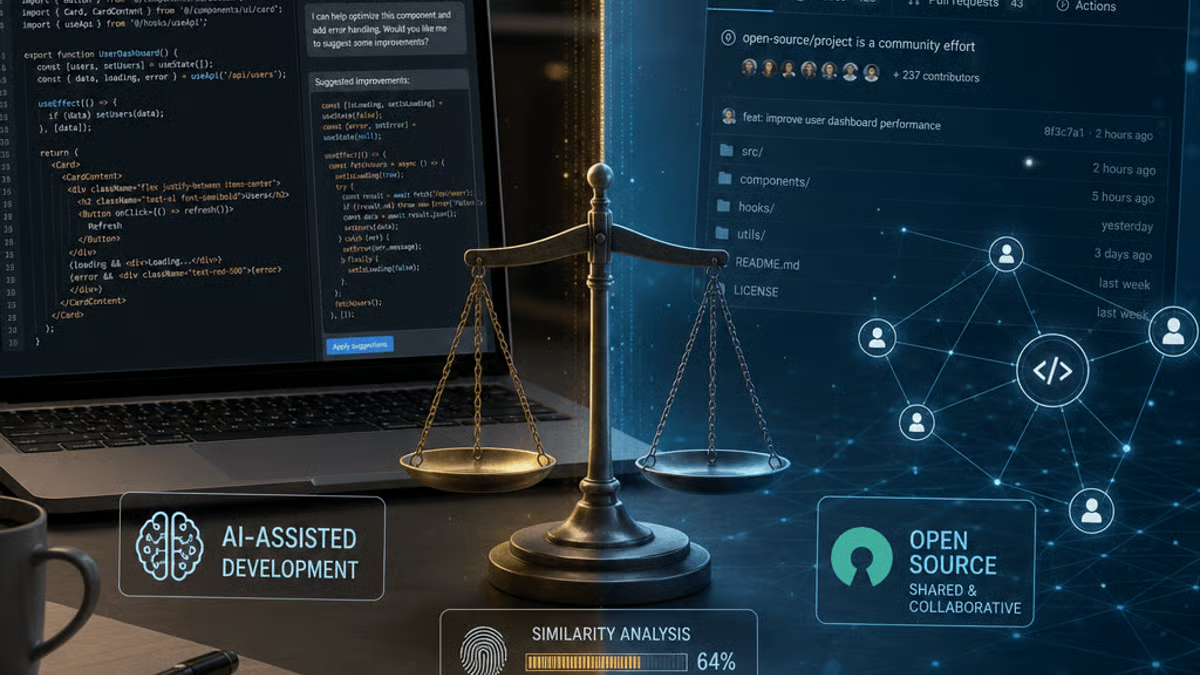
Y Combinator-backed insurance startup Corgi is pushing back hard against accusations that it stole code from open-source document sharing platform Papermark. The controversy has ignited a broader debate about ‘vibe coding’ – the practice of using AI assistants to rapidly build software – and whether startups using these tools can inadvertently reproduce open-source code without proper attribution. The dispute comes as Corgi was gaining momentum in the insurtech space, raising uncomfortable questions about development practices in the age of AI-assisted programming.
The insurtech world didn’t expect its next big scandal to come from a startup named after a dog breed, but here we are. Corgi, a Y Combinator-backed company building insurance infrastructure tools, finds itself at the center of a heated dispute with Papermark, an open-source document sharing platform that’s accusing the startup of essentially ripping off its code.
Papermark’s founders noticed striking similarities between their product and Corgi’s platform, sparking accusations that went public this week. But Corgi isn’t backing down. The company maintains it didn’t steal anything, instead pointing to what’s becoming an increasingly common phenomenon in startup land – they built their product using AI coding assistants, a practice some developers call ‘vibe coding.’
The term itself is revealing. Vibe coding refers to the way founders and developers now build products by describing what they want to AI tools like GitHub Copilot, ChatGPT, or Claude, then patching together the generated code. It’s fast, it’s accessible to non-technical founders, but it’s also creating a legal and ethical minefield. These AI models were trained on massive repositories of open-source code, and they can – and do – reproduce patterns, structures, and sometimes entire chunks of code that look suspiciously similar to existing projects.
‘We used standard development practices and AI-assisted tools that are common across the industry,’ a Corgi representative told TechCrunch. That defense might have worked five years ago, but in 2026, it’s opening up more questions than it answers. If an AI tool generates code that matches an open-source project, who’s responsible? The startup using the tool? The AI company that trained the model? The developers who contributed to the open-source repository?
Papermark isn’t buying Corgi’s explanation. The open-source project’s maintainers have pointed to specific code similarities and architectural decisions that they say go beyond coincidence. In the open-source community, where attribution and licensing are sacred principles, this feels like a betrayal – regardless of whether AI was involved in the process.
The timing couldn’t be worse for Corgi. The startup was riding high after its Y Combinator demo day, attracting interest from investors eager to back the next generation of insurance technology. Insurance is notoriously difficult to modernize, and Corgi’s pitch – making it easier for insurance companies to share and process documents securely – resonated with an industry desperate for better tools. Now that momentum has stalled as the company fights to defend its reputation.
This isn’t just a Corgi problem. It’s a startup ecosystem problem. Y Combinator itself has championed the ‘build fast’ mentality, and AI coding tools have supercharged that approach. Founders who couldn’t code six months ago are now shipping products. But speed comes with risks, and the legal framework hasn’t caught up with the technology. Open-source licenses like MIT, Apache, and GPL were written for a world where humans consciously chose to use and attribute code, not one where AI assistants generate it in milliseconds.
The broader implications are starting to worry both investors and legal experts. If Papermark pursues legal action and succeeds, it could establish precedent that startups are liable for code similarities even when using AI tools. That would force a reckoning across the industry, potentially slowing down the AI-assisted development boom that’s made it cheaper and faster than ever to build software companies.
For now, Corgi is standing firm on its position that it built its platform independently, with the help of modern development tools. Papermark’s team remains unconvinced, and the court of public opinion on developer Twitter is decidedly split. Some see this as a cautionary tale about moving too fast and not respecting open-source norms. Others view it as an inevitable collision between old-school development ethics and new-school AI-powered building.
What’s clear is that this won’t be the last time we see this kind of dispute. As AI coding assistants become more powerful and more widely adopted, the line between inspiration, coincidence, and copying gets blurrier. The tools that promised to democratize software development might also be creating a legal nightmare that could take years to sort out.
The Corgi-Papermark dispute is more than just another startup controversy – it’s a stress test for how the tech industry handles intellectual property in the age of AI-assisted development. Whether Corgi intentionally copied Papermark’s code or inadvertently reproduced it through AI tools, the outcome will likely influence how startups approach development practices going forward. For Y Combinator and the broader accelerator ecosystem that’s embraced rapid AI-powered building, this case represents a potential inflection point. The insurtech startup wanted to move fast and modernize insurance – instead, it might end up helping define the rules for an entirely different kind of risk.











Leave a Reply