

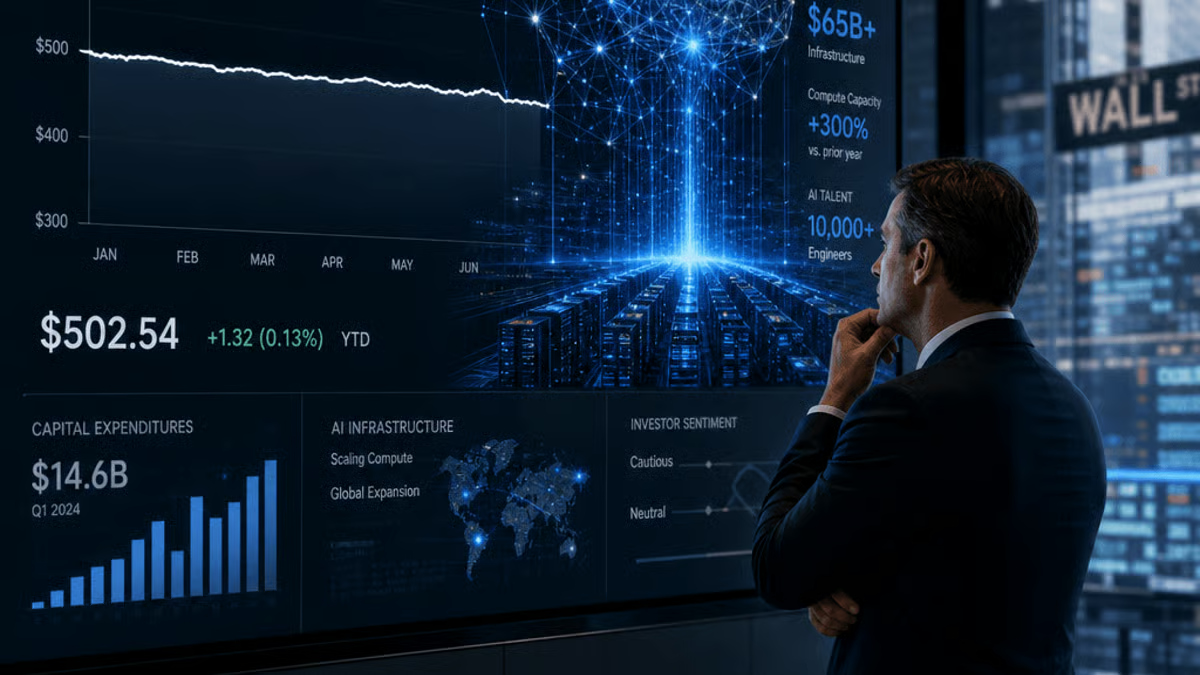
ON Semiconductor is facing a brutal market reckoning. The chipmaker’s stock plummeted 20% following its Synaptics acquisition announcement, wiping out billions in market value as investors voiced sharp skepticism about the company’s sudden pivot into physical AI. CEO Hassane El-Khoury now finds himself defending both the deal and the core business strategy as Wall Street questions whether the promised $30 billion addressable market expansion justifies the risk.
ON Semiconductor just learned a harsh lesson about Wall Street’s appetite for big bets. The Phoenix-based chipmaker watched its market capitalization evaporate by roughly 20% in a single trading session after announcing plans to acquire human interface solutions provider Synaptics, a move CEO Hassane El-Khoury is framing as the company’s entry ticket to the physical AI revolution.
The dramatic selloff suggests investors aren’t buying the transformation story, at least not yet. While ON Semi has built a solid reputation in power semiconductors for automotive and industrial applications, the Synaptics deal represents a significant departure into edge AI processing and human-machine interfaces. That pivot is making shareholders nervous.
“The pivot into physical AI grows ON Semi’s addressable market by an additional $30 billion,” the company said in materials accompanying the deal announcement. But that headline number hasn’t been enough to calm fears about integration risks, valuation concerns, and potential distraction from the core business that’s currently navigating a challenging semiconductor cycle.
El-Khoury is now in full defense mode, emphasizing that the acquisition strengthens rather than dilutes ON Semi’s focus. The Synaptics deal brings capabilities in edge AI inference, advanced touch and display interfaces, and IoT connectivity – all areas the company argues are critical to the next generation of intelligent edge devices. Think AI-powered robotics, autonomous vehicles with sophisticated sensor fusion, and industrial automation systems that process data locally rather than relying on cloud connectivity.
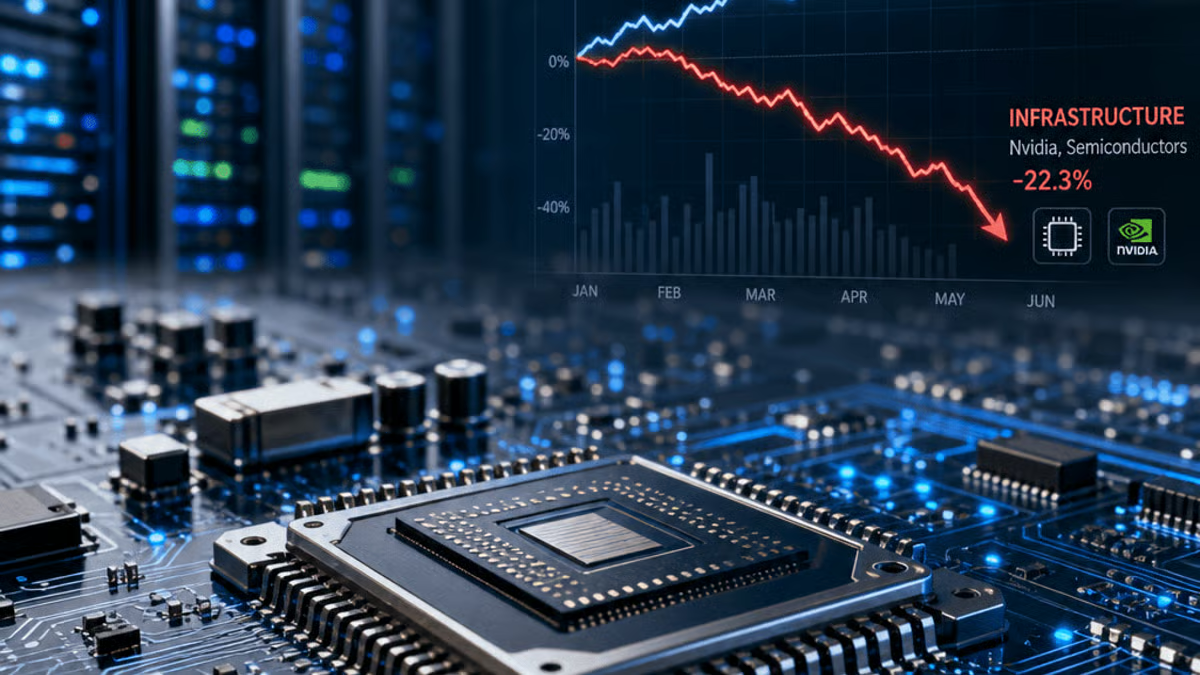
But Wall Street’s brutal reaction reflects deeper anxieties rippling through the chip sector. The AI infrastructure boom has created immense wealth for companies like Nvidia, but it’s also spawned a wave of me-too acquisitions and pivots that investors are starting to view with suspicion. When a company known for power management chips suddenly pivots to physical AI, the market demands proof points, not just addressable market projections.
The timing couldn’t be more challenging for ON Semi. The automotive semiconductor market, which accounts for a substantial portion of the company’s revenue, is facing headwinds as electric vehicle demand moderates and traditional automakers reassess their electrification timelines. Industrial markets are similarly uncertain, with capital equipment spending showing signs of softness across multiple geographies.
Analysts are now questioning whether ON Semi is chasing growth in physical AI because its core markets are stalling, or whether this represents genuine strategic foresight. The distinction matters enormously for valuation. If this is an opportunistic land grab in an emerging category, it could pay off handsomely. If it’s a defensive move to offset weakness elsewhere, the integration challenges could compound existing headwinds.
The Synaptics acquisition itself remains shrouded in limited public details based on the available information, but the market’s instant negative verdict suggests concerns about price, strategic fit, or both. Synaptics has been transitioning from its legacy PC touchpad business toward IoT and edge AI applications, but that transformation has been uneven and the company’s financial performance has been mixed.
For El-Khoury, the pressure is now immense. He’ll need to articulate not just the strategic rationale but concrete milestones that demonstrate the deal is creating rather than destroying shareholder value. That means showing how Synaptics’ technology integrates with ON Semi’s existing product portfolio, identifying specific customer wins that leverage the combined entity’s capabilities, and proving the $30 billion addressable market claim isn’t just consultant math.
The physical AI thesis itself is sound in theory. As artificial intelligence moves from centralized data centers to edge devices, there’s enormous demand for efficient processors that can run inference workloads locally, sensors that can capture and pre-process data intelligently, and power management solutions that enable all of this within tight thermal and energy budgets. ON Semi arguably has pieces of this puzzle, and Synaptics adds others.
But executing that vision while managing a complex integration, maintaining momentum in core businesses, and navigating a uncertain semiconductor cycle is a monumental challenge. The 20% stock crash suggests investors think ON Semi is biting off more than it can chew, at least at the price being paid and given current market conditions.
The market has spoken, and its verdict on ON Semi’s physical AI ambitions is harsh. A 20% single-day decline isn’t just normal volatility – it’s a referendum on strategic direction. El-Khoury now faces the unenviable task of proving Wall Street wrong while simultaneously executing one of the semiconductor industry’s most complex pivots. The $30 billion addressable market opportunity is real, but so are the risks of overpaying, botching the integration, and losing focus on the automotive and industrial businesses that built ON Semi’s reputation. For investors, this is a show-me story now. The CEO’s defense of the deal matters far less than the execution milestones that emerge over the next several quarters. In the AI chip wars, credibility is earned through results, not presentations.








Leave a Reply