
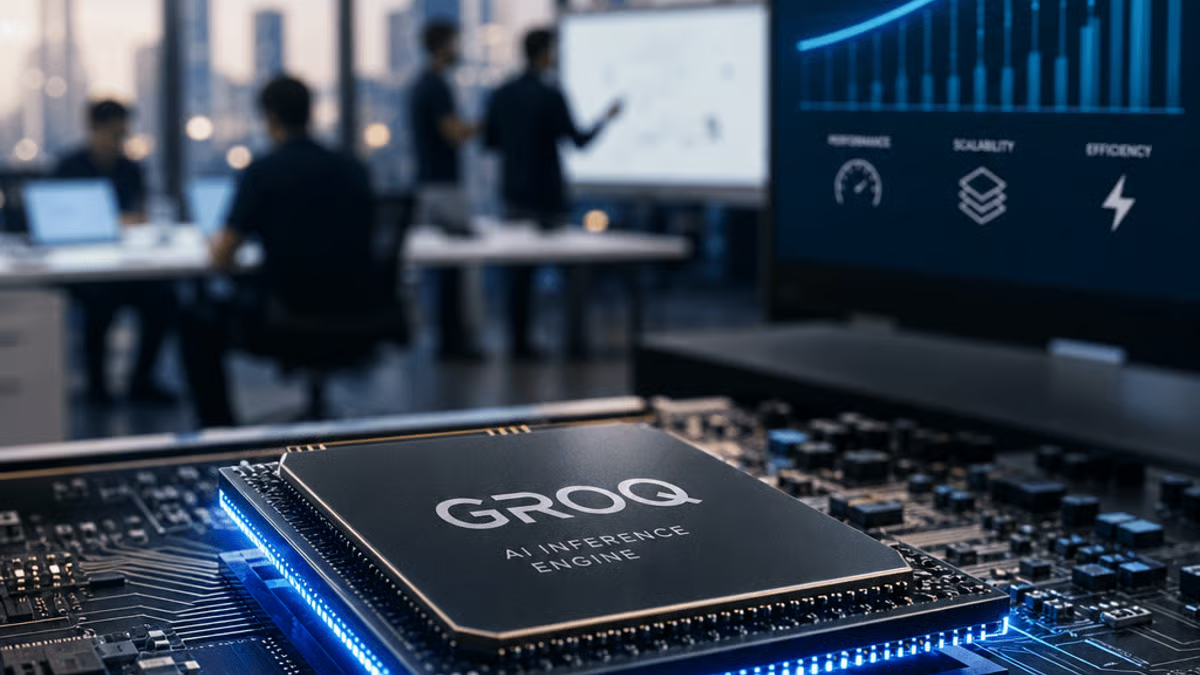
AI chipmaker Groq just closed a $650 million funding round, confirming the company’s resilience after Nvidia poached much of its team in a staggering $20 billion not-acqui-hire deal. The fresh capital signals that investors still believe in Groq’s vision of faster AI inference chips, even as the company pivots harder into its neocloud infrastructure business and scrambles to replace key executives. It’s a rare glimpse into what happens when a promising startup gets talent-raided by a trillion-dollar gorilla – and lives to tell the tale.
Groq isn’t letting a $20 billion talent raid define its future. The AI chipmaker just confirmed it raised $650 million in fresh funding, marking one of the largest AI infrastructure rounds of 2026 and proving that losing your team to Nvidia doesn’t have to be a death sentence.
The timing couldn’t be more dramatic. Just months ago, Nvidia executed what industry insiders are calling one of the most aggressive not-acqui-hire deals in tech history, paying roughly $20 billion to bring Groq’s top engineering talent in-house without actually buying the company. The move left Groq’s chip architecture expertise largely intact but stripped away the people who built it, creating an unprecedented corporate challenge.
Now Groq’s betting that its underlying technology – specialized chips designed to run AI models faster than traditional GPUs – is valuable enough to attract both investor capital and replacement talent. According to sources familiar with the deal, the $650 million round values Groq significantly higher than its previous fundraising, suggesting venture firms see opportunity in the chaos.
The company’s strategic response centers on its neocloud business, a newer infrastructure offering that lets customers access Groq’s chips through cloud services rather than buying hardware directly. It’s a smart pivot that plays to the company’s remaining strengths while requiring fewer on-the-ground chip designers. The neocloud approach also puts Groq in more direct competition with Amazon Web Services, Microsoft Azure, and Google Cloud, all of whom are racing to offer the fastest AI inference capabilities.
But technology alone won’t save Groq – it needs people. The company’s currently on an executive hiring spree, actively recruiting new leadership to fill gaps left by the Nvidia exodus. Job postings reveal openings for senior chip architects, infrastructure engineers, and business development executives, roles that would typically take months or years to fill with qualified candidates in today’s overheated AI talent market.
The not-acqui-hire phenomenon isn’t new in Silicon Valley, but the scale of Nvidia’s Groq raid stands out. Traditional acqui-hires involve buying a struggling startup for its team, shutting down operations, and absorbing everyone. Nvidia’s approach – paying billions to hire away talent while leaving the original company operational – raises thorny questions about competitive tactics and whether deep-pocketed incumbents can simply poach their way past innovative rivals.
Investors in the new round clearly believe Groq can rebuild. The $650 million infusion gives the company runway to hire aggressively, continue chip development, and scale its neocloud infrastructure before the money runs out. It also sends a signal to other AI hardware startups that survival is possible even after catastrophic talent loss, provided the core technology remains differentiated.
Groq’s chips use a different architectural approach than Nvidia’s dominant GPUs, optimizing specifically for inference – running already-trained AI models – rather than the training process itself. As more companies deploy AI models into production, inference speed becomes increasingly critical, a market dynamic that could play to Groq’s favor even without its original team.
The competitive landscape remains brutal. Nvidia controls an estimated 80-90% of the AI chip market, while newcomers like Cerebras and SambaNova fight for scraps. Google builds its own TPUs, Amazon has its Trainium chips, and Microsoft invests heavily in custom silicon through its OpenAI partnership. Breaking through that competition requires not just good technology but exceptional execution.
Groq’s leadership hasn’t publicly disclosed which investors participated in the $650 million round or whether existing backers doubled down. The company previously raised funding from prominent Silicon Valley firms, and this latest round’s size suggests either major new institutional players entered or previous investors showed unusual conviction by increasing their stakes despite the talent crisis.
What happens next will likely determine whether the not-acqui-hire becomes a standard playbook for tech giants. If Groq thrives despite losing its team, it proves that institutional knowledge and technology matter more than individual engineers. If the company struggles, it validates Nvidia’s aggressive strategy and suggests other incumbents should follow suit when threatened by innovative upstarts.
Groq’s $650 million fundraise proves that even devastating talent losses don’t have to kill a company with strong underlying technology. The real test comes in the next 12-18 months as the company races to rebuild its team, scale its neocloud business, and prove its chips can compete in a market increasingly dominated by giants building their own silicon. For other AI hardware startups watching nervously, Groq’s survival offers both hope and a warning – the technology matters, but keeping your team might matter more. Investors betting on this round are wagering that Groq’s architectural advantages and market timing outweigh the chaos of rebuilding from scratch while Nvidia watches from the sidelines with a smirk and Groq’s former employees on its payroll.









Leave a Reply