
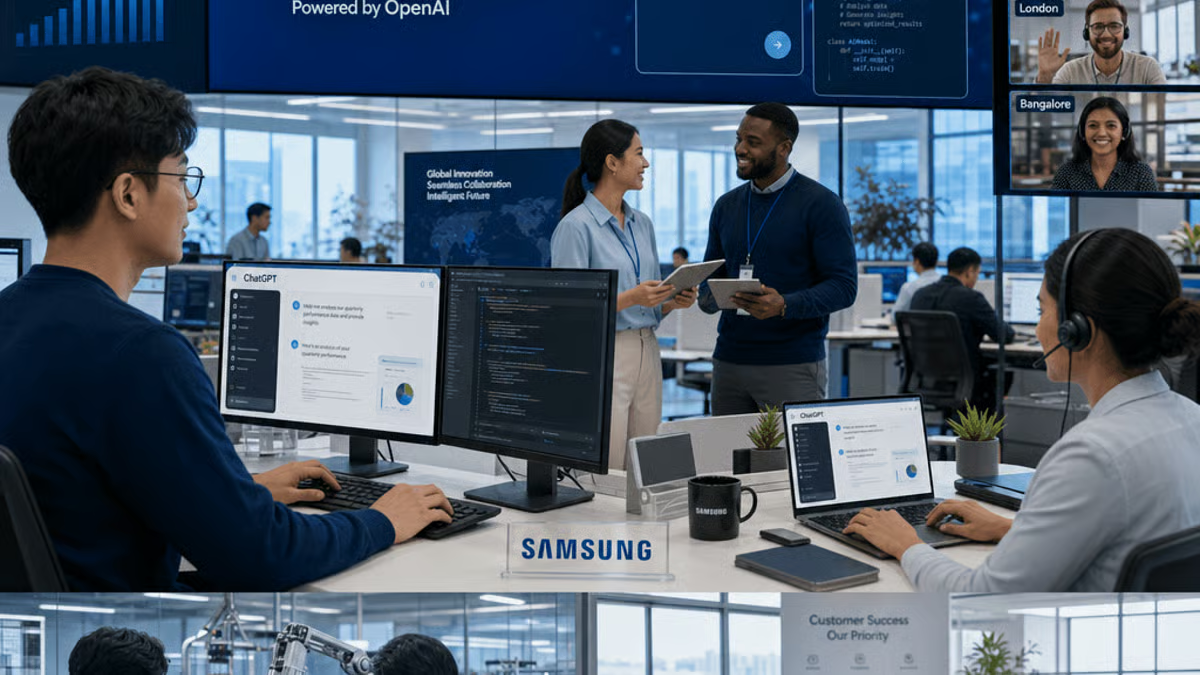
Samsung Electronics just pulled off one of OpenAI’s largest enterprise AI deployments to date, rolling out ChatGPT Enterprise and Codex to its workforce worldwide. The move signals a major bet on AI-powered productivity tools at scale, putting OpenAI’s premium offerings directly into the hands of Samsung’s global employee base. It’s the kind of deployment that reshapes how enterprise AI adoption gets measured – and watched.
Samsung Electronics isn’t tiptoeing into enterprise AI – it’s diving in headfirst. The South Korean tech giant just deployed ChatGPT Enterprise and Codex across its global workforce, marking what OpenAI describes as one of its largest corporate AI rollouts to date. The scale alone makes this noteworthy, but the timing reveals something bigger about where enterprise software is headed in 2026.
The deployment gives Samsung employees worldwide access to OpenAI’s premium conversational AI platform alongside Codex, the AI system designed specifically for code generation and software development tasks. It’s a dual-pronged approach that addresses both general productivity and technical workflows, signaling that Samsung sees AI assistants as fundamental infrastructure rather than experimental tools.
What makes this different from typical enterprise software rollouts is the breadth. Samsung operates across semiconductors, consumer electronics, displays, and telecommunications – each with distinct workflows and technical demands. Rolling out AI tools that span from chip design engineers to customer service teams requires the kind of organizational commitment that usually takes months of internal debate. That Samsung moved this quickly suggests the ROI projections were compelling enough to override the usual enterprise caution.
ChatGPT Enterprise launched as OpenAI’s answer to corporate security and compliance concerns, offering dedicated capacity, enhanced privacy controls, and admin tools that consumer ChatGPT lacks. For a company like Samsung, handling everything from trade secrets in chip manufacturing to customer data, those enterprise-grade protections aren’t optional – they’re table stakes. The Codex integration adds another layer, giving Samsung’s developers AI-powered coding assistance that can speed up software development cycles.
The competitive implications ripple outward immediately. Apple, Google, and Microsoft have all made enterprise AI plays, but Samsung’s deployment scale puts pressure on rivals to show similar adoption internally. If Samsung’s workforce gains productivity advantages from AI-assisted workflows, competitors face a choice – match the investment or risk falling behind on output efficiency.
OpenAI benefits from the validation that comes with landing one of the world’s largest electronics manufacturers as a showcase customer. Enterprise sales have become critical to OpenAI’s business model as it balances compute costs against revenue growth. A deployment this size provides both recurring revenue and proof points for other Fortune 500 prospects evaluating similar moves.
The deployment also reveals how quickly AI coding assistants have moved from novelty to necessity in 2026. Codex, which powers GitHub Copilot among other tools, has evolved from a research project into infrastructure that major corporations now consider essential for developer productivity. Samsung’s decision to bundle it with ChatGPT Enterprise suggests the company views AI assistance as a unified capability rather than separate tools for different departments.
What remains unclear is how Samsung plans to measure success. Enterprise AI deployments often struggle with adoption metrics – rolling out tools is one thing, getting employees to actually use them effectively is another. Samsung will need to navigate change management across cultures, languages, and technical skill levels. The company hasn’t disclosed specifics on training programs or adoption targets, but those details will determine whether this becomes a model deployment or a cautionary tale.
The timing coincides with broader enterprise software trends where AI capabilities are rapidly becoming expected features rather than premium add-ons. Companies that spent 2024 and 2025 experimenting with AI pilots are now making company-wide commitments. Samsung’s deployment represents that shift from experimentation to operational integration, where AI tools get embedded into daily workflows rather than remaining side projects.
For OpenAI, the Samsung win validates its enterprise strategy at a moment when competition from Anthropic, Google’s Gemini, and Microsoft’s Azure AI services intensifies. Landing customers at Samsung’s scale provides leverage in future enterprise negotiations and demonstrates that ChatGPT Enterprise can handle the technical and security requirements of global manufacturers.
Samsung’s ChatGPT Enterprise deployment marks a turning point where AI assistants transition from pilot programs to core infrastructure at Fortune 500 scale. The combination of conversational AI and coding tools across Samsung’s global workforce sets a benchmark that competitors will struggle to ignore. Whether this gamble pays off depends on execution – getting hundreds of thousands of employees to actually adopt and benefit from AI tools requires more than just rolling out software. But the signal is clear: enterprise AI has moved from the experimental phase to operational reality, and the companies moving fastest are betting that productivity gains will justify the investment. What happens when Samsung’s engineers start shipping features faster, or its customer service teams handle more queries – that’s when the competitive pressure really kicks in for everyone else.








Leave a Reply