
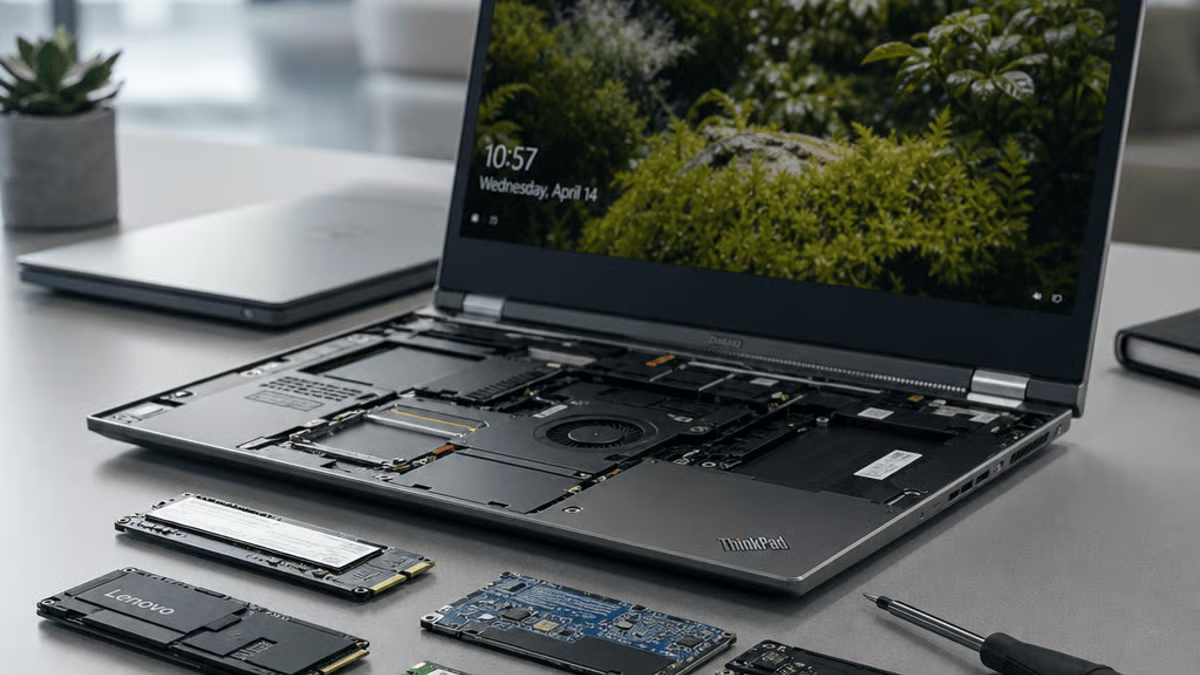
Lenovo just threw down the gauntlet in the right-to-repair movement. The company’s 14th-generation ThinkPad X1 Carbon Aura Edition, unveiled at CES and now hitting reviewers’ desks, features a revolutionary double-sided motherboard and fully modular components that users can swap without specialized tools. It’s the kind of design overhaul that could force the entire laptop industry to rethink planned obsolescence, and early hands-on impressions suggest Lenovo isn’t sacrificing performance for repairability.
Lenovo is betting that the future of premium laptops isn’t thinner bezels or flashier marketing—it’s the ability to fix them. The 14th-generation ThinkPad X1 Carbon Aura Edition represents the most significant internal redesign of the iconic business laptop in over a decade, and it’s all about making repairs accessible to anyone with a screwdriver.
The centerpiece is a radical double-sided motherboard architecture that breaks from decades of integrated design philosophy. Instead of soldering components directly to a single board, Lenovo’s engineering team created a system where memory, storage, and even ports live on modular daughterboards that snap into place. According to ZDNet’s hands-on testing, swapping out a failed SSD or upgrading RAM takes less than five minutes with nothing more than a standard Phillips head screwdriver.
This isn’t just about DIY enthusiasts tinkering in their garages. Corporate IT departments spend billions annually managing device lifecycles, and extending laptop longevity by even 18 months translates to massive cost savings. Lenovo clearly sees an opening as enterprises face increasing pressure to meet sustainability commitments. If a single failed component no longer means replacing an entire $2,000 laptop, the math changes dramatically for CIOs evaluating refresh cycles.
The timing is strategic. Right-to-repair legislation has been gaining serious traction, with New York passing the Digital Fair Repair Act and the EU implementing sweeping repairability requirements. Apple and other manufacturers have been fighting these measures, but Lenovo appears to be running toward regulation rather than away from it. By building modularity into its flagship business line, the company positions itself as the repair-friendly option when corporate buyers start checking compliance boxes.
What’s surprising is that Lenovo didn’t compromise on the ThinkPad’s traditional strengths. The Gen 14 maintains the same build quality and durability standards the line is known for, while actually reducing internal complexity. Fewer proprietary connectors mean fewer potential failure points, which could ironically make these more reliable than their predecessors despite being easier to service.
The modular approach does add minor bulk—about 0.1 pounds and 2mm of thickness compared to the Gen 13, according to the review. But for enterprise buyers already prioritizing the ThinkPad’s legendary keyboard and trackpoint over MacBook Air thinness, that’s unlikely to be a dealbreaker. The real test will be whether consumers who’ve been trained to view laptops as sealed appliances embrace the concept of user-serviceable components.
Framework has been championing modular laptop design since 2021, but as a startup with limited distribution, its impact has been more philosophical than market-moving. Lenovo bringing these principles to the ThinkPad line—which commands significant enterprise market share—changes the equation entirely. If corporate buyers start demanding modular designs, competitors will have to respond or risk losing lucrative fleet contracts.
The Aura Edition branding signals Intel partnership on the silicon side, though Lenovo hasn’t disclosed which specific chips are powering the lineup. What matters more for the repairability story is that the modular architecture theoretically allows for processor upgrades down the line, though Lenovo hasn’t committed to offering CPU modules separately. That would be the ultimate test of how serious the company is about long-term device support.
Early reactions from IT departments have been cautiously optimistic. The ability to stockpile common failure components like SSDs and RAM could simplify field repairs and reduce downtime. But enterprise buyers will want to see Lenovo commit to multi-year parts availability before betting refresh strategies on modularity. The worst outcome would be designing for repairability but discontinuing component supply after 24 months.
For context, Dell has offered some modular features in its Latitude line for years, but nothing approaching this level of user-serviceability. HP has similarly dabbled with upgradeable business laptops without making it a core selling point. Lenovo appears to be making repairability a primary value proposition rather than a checkbox feature, which could force the entire segment to evolve.
Lenovo’s modular ThinkPad represents more than a clever engineering exercise—it’s a strategic bet that the laptop industry’s next competitive battleground will be longevity rather than specs. If corporate buyers embrace the concept and demand similar designs from competitors, we could be looking at the beginning of a genuine shift away from disposable computing. The Gen 14’s success won’t be measured in quarterly sales figures but in whether it’s still getting component upgrades and repairs three years from now. That’s when we’ll know if Lenovo’s commitment to repairability was genuine or just savvy positioning ahead of inevitable regulation.











Leave a Reply