
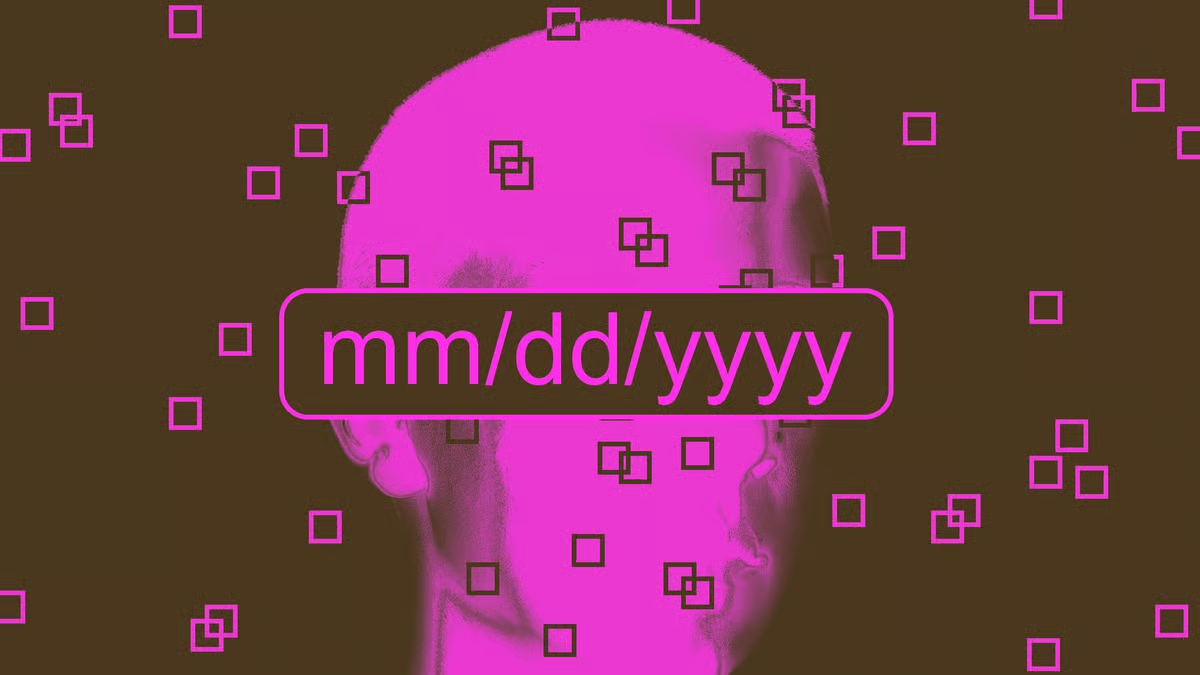
Roblox is abandoning the honor system. The gaming platform’s VP of safety product policy, Eliza Jacobs, just told NBC News that “ticking a box to say you’re 13 or older, it’s not enough anymore” as the company rolls out AI-powered facial age estimation technology. In a live demo with kids, the new video selfie system successfully blocked attempts to fool it with fake mustaches, marking a significant shift in how platforms verify user ages amid mounting regulatory pressure.
Roblox is making a bet that AI can solve what self-reporting couldn’t – keeping kids safe online. The company’s new facial age estimation technology, now rolling out across its massive gaming platform, represents a fundamental shift in how tech companies approach age verification.
“Ticking a box to say you’re 13 or older, it’s not enough anymore,” Eliza Jacobs, Roblox’s vice president of safety product policy, told NBC News in an exclusive interview and demo. The blunt admission reflects what the industry has known for years but struggled to fix – self-reporting doesn’t work when kids are motivated to lie.
The timing matters. Roblox first announced plans in April 2026 to deploy video selfie age estimation technology to sort players into age brackets, with users under 16 facing stricter content restrictions. Now, according to Jacobs, the system can typically pinpoint a user’s age within 1.4 years of their actual age. That’s a meaningful improvement over the binary “yes I’m 13” checkbox that preceded it.
NBC News put the technology through its paces, inviting a group of kids to attempt workarounds. Fake mustaches didn’t fool the system. Neither did other simple disguises the network tested. The demo suggests Roblox’s facial estimation tech is more sophisticated than basic liveness detection, potentially using bone structure and facial geometry rather than surface-level features that can be easily manipulated.
The company says it’s “optimistic” the technology will continue improving, but didn’t disclose which AI vendor powers the system or what training data was used. That opacity is becoming standard practice as platforms deploy biometric tools, raising questions about accuracy across different demographics and potential bias in age estimation algorithms.
Roblox isn’t alone in this pivot. The broader gaming and social media industry is scrambling to implement more robust age verification as regulators worldwide tighten rules around child safety online. The UK recently moved to ban social media access for users under 16, while several U.S. states have passed laws requiring parental consent for minors. Traditional ID verification creates friction and privacy concerns, making AI-based estimation an attractive middle ground.
But the technology isn’t without critics. Privacy advocates worry about platforms collecting biometric data on children, even if companies claim the facial scans are processed in real-time and not stored. There’s also the accuracy question – a 1.4-year margin of error could mean a 14-year-old gets sorted into the 16+ bracket or vice versa, with real consequences for content access.
For Roblox specifically, the stakes are enormous. The platform has faced intense scrutiny over child safety, including reports of predatory behavior and inappropriate content reaching young users. With over 70 million daily active users, many of them children, getting age verification right isn’t just about compliance – it’s existential to the platform’s reputation and business model.
The video selfie requirement also represents a significant change in user experience. Players who previously created accounts in seconds by checking a box now face a multi-step verification process. How that affects signup conversion rates and user growth remains to be seen, though Roblox appears willing to accept some friction in exchange for better safety controls.
Industry watchers are paying close attention to how users respond. If Roblox can deploy facial age estimation at scale without major backlash or technical failures, expect other platforms to follow quickly. If the rollout hits privacy concerns or accuracy problems, it could slow adoption across the industry and push regulators toward mandating government ID verification instead.
Jacobs’s comment that checkbox verification “isn’t enough anymore” feels like an industry inflection point. For years, platforms relied on users to self-report ages knowing full well kids would lie. Now, with AI tools available and regulatory pressure mounting, that era appears to be ending. The question is whether facial estimation technology can thread the needle between effectiveness, privacy, and user experience – or if it’s just trading one set of problems for another.
Roblox’s shift from checkbox self-reporting to AI-powered facial age estimation marks a turning point for platform safety and digital identity verification. While the technology promises greater accuracy – within 1.4 years according to the company – it also introduces new questions about biometric data collection, algorithmic bias, and privacy trade-offs. For the broader tech industry watching this rollout, Roblox is essentially beta testing whether AI can solve the age verification problem at scale. The answer will shape how platforms balance child safety, user experience, and regulatory compliance for years to come.









Leave a Reply