

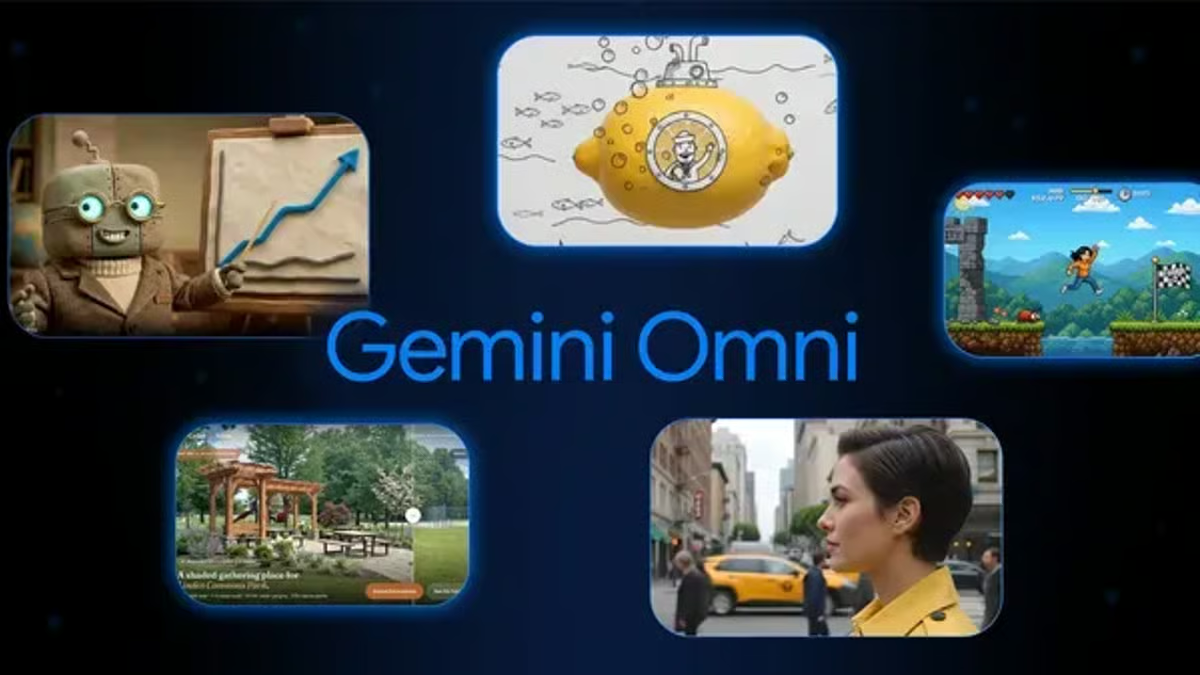
Google just dropped Gemini Omni, a multimodal AI that transforms video creation into a simple conversation. The new model lets users generate and edit videos through natural language commands, marking a significant leap in Google’s push to make professional-grade creative tools accessible to anyone. Five early builders are already using it to visualize ideas and streamline workflows, according to Google’s official announcement.
Google is making a bold play for the creative AI market. The company’s new Gemini Omni model transforms video editing from a technical skill into something closer to having a conversation with a collaborator. Instead of wrestling with timelines and effects panels, users can simply describe what they want – and the AI handles the heavy lifting.
The timing couldn’t be more strategic. While competitors like OpenAI focus on text and image generation, Google’s betting that multimodal video capabilities will become the next battleground in generative AI. According to the company’s blog post, Gemini Omni makes creating videos “as easy as having a conversation.”
Five builders got early access, and their use cases reveal where this tech could head. Content creators are using it to prototype video concepts without touching editing software. Educators are visualizing complex ideas through quick video explanations. Small business owners are generating marketing materials that would’ve required hiring videographers just months ago.
What sets Gemini Omni apart is its conversational interface. You’re not learning a new tool – you’re describing what you want in plain language. Need to trim a clip, add transitions, or adjust color grading? Just ask. The model understands context, remembers previous edits, and can iterate on your vision through back-and-forth dialogue.
This builds on Google DeepMind’s research in multimodal AI, where models process text, images, audio, and video simultaneously. But turning that research into a consumer-friendly product is where Google’s making its move. The company’s clearly positioning Gemini as more than a chatbot – it’s becoming a creative suite.
The implications ripple across the creative software industry. Adobe’s spent decades building professional video tools. Canva democratized design. Now Google’s suggesting that natural language might replace both traditional interfaces and simplified drag-and-drop editors. If you can describe what you want, why learn software at all?
Early builders aren’t just editing existing footage, either. They’re generating original video content from text descriptions, then refining it through conversation. That workflow – imagine, generate, refine – mirrors how people already work with text-based AI tools like ChatGPT. Google’s betting video creation will follow the same pattern.
The launch comes as tech giants race to own the AI creative stack. Meta recently showcased its video generation research. Microsoft integrated AI editing into Clipchamp. OpenAI partnered with creative apps for integration. But Google’s approach feels more aggressive – build the model, prove the use cases, then scale through its massive distribution network.
What’s not clear yet is how professional creators will respond. Democratizing tools sounds great until you’re competing with people who just discovered video editing yesterday. The software might lower barriers to entry, but it also floods the market with content. Quality, creativity, and storytelling still matter – though Gemini Omni makes the technical execution less of a bottleneck.
Google’s also staying quiet on pricing and availability. The announcement focuses on what five builders created, not when everyone else gets access. That suggests a controlled rollout, possibly through Google Workspace or as a premium feature in the existing Gemini ecosystem. The company learned from past launches that managing demand matters almost as much as the technology itself.
For developers and creators watching this space, Gemini Omni represents a shift in how we interact with creative tools. The command line gave way to graphical interfaces. Touch screens simplified mobile computing. Now conversational AI might become the primary interface for complex creative tasks. Google’s betting it will be – and it’s moving fast to own that future.
Google’s Gemini Omni isn’t just another AI feature – it’s a signal of where creative software is heading. When conversation becomes the interface, the barriers between imagination and execution collapse. That’s powerful for newcomers and potentially disruptive for professionals who’ve spent years mastering traditional tools. As Google rolls this out to more users, watch how the creative software market responds. Adobe, Canva, and every video platform will need to answer whether their interfaces can compete with simply talking to an AI. For now, five builders are showing what’s possible. Soon, we’ll see if the rest of the world agrees that video editing should feel like a conversation.







Leave a Reply