
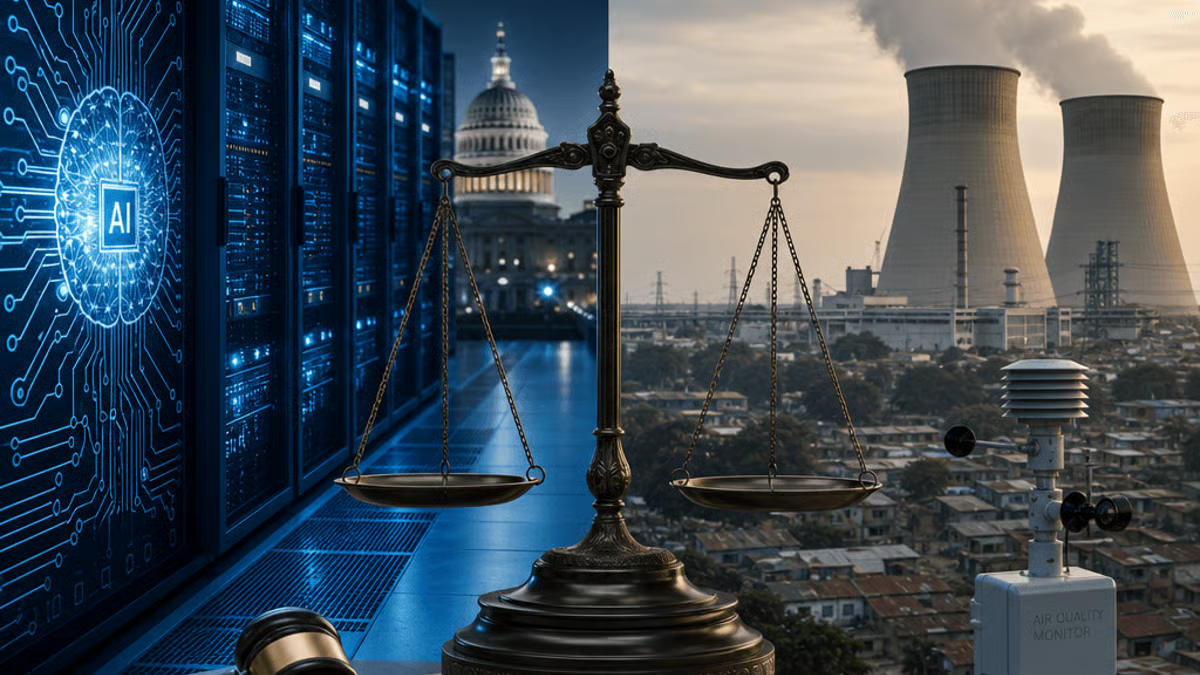
The Justice Department just threw a national security shield around Elon Musk’s xAI, claiming the company’s AI systems are critical to military operations in the Iran War. The filing, part of DOJ’s bid to dismiss an NAACP lawsuit over xAI’s polluting gas turbines, marks a striking escalation in how deeply AI companies have embedded themselves in defense infrastructure. It’s also a revealing glimpse into the government’s willingness to prioritize AI development over environmental concerns.
xAI, Elon Musk’s artificial intelligence venture, just became the latest tech giant to claim national security immunity from environmental regulations. Justice Department lawyers filed a motion arguing that the company’s polluting gas turbines are too critical to military operations to face legal challenges, including support for ongoing operations in the Iran War.
The extraordinary defense comes in response to a lawsuit filed by the NAACP, which alleges that xAI’s gas turbine infrastructure violates environmental regulations and disproportionately harms communities near its facilities. But instead of addressing the environmental claims head-on, DOJ lawyers pivoted to national security, arguing that any disruption to xAI’s operations could compromise military effectiveness.
The filing marks one of the clearest acknowledgments yet of how deeply private AI companies have woven themselves into defense infrastructure. While OpenAI and Google have publicly disclosed some military contracts, xAI’s defense work has remained largely under the radar until now. The DOJ’s motion reveals that xAI’s computing infrastructure directly supports military AI applications, though specific details remain classified.
“We’ve been preparing for this shift since Q2,” one defense industry analyst told Wired, noting that AI companies have increasingly sought government contracts as commercial revenue growth slows. The revelation positions xAI alongside traditional defense contractors like Palantir, which has long argued that its data analytics platforms deserve special legal protections.
The NAACP’s lawsuit focuses on xAI’s gas turbines, which the organization claims violate Clean Air Act provisions and disproportionately impact minority communities. Environmental groups have tracked elevated pollution levels near xAI facilities, raising concerns about respiratory health impacts. But the DOJ’s filing suggests the government sees AI infrastructure as too strategically important to subject to normal environmental review processes.
This isn’t the first time AI companies have bumped up against environmental regulations. Meta faced similar scrutiny over water usage at its data centers, while Microsoft has struggled to reconcile its climate commitments with the massive energy demands of AI training. But xAI’s case takes the conflict to new territory by invoking active military operations as justification for regulatory exemptions.
The Iran War reference is particularly notable. While the administration has acknowledged using AI for intelligence analysis and logistics, the DOJ filing suggests xAI’s systems play a more direct operational role. Defense experts have speculated that this could include everything from autonomous surveillance to predictive targeting systems, though the government has released few details about AI’s battlefield applications.
Legal observers say the DOJ’s strategy is risky. By tying xAI so explicitly to military operations, the government has essentially confirmed that private AI companies are now critical defense infrastructure. That could invite more scrutiny from Congress and civil liberties groups concerned about the outsourcing of military decision-making to commercial tech firms.
The case also raises thorny questions about environmental justice and national security priorities. Civil rights advocates argue that low-income communities and communities of color shouldn’t bear the environmental costs of AI development, regardless of claimed security benefits. “You can’t just declare pollution a matter of national security,” one NAACP legal director might argue, though the DOJ’s filing suggests that’s exactly what the government is attempting.
For xAI, the DOJ’s intervention is a double-edged sword. While it could shield the company from the immediate lawsuit, it also publicly ties Musk’s AI venture to controversial military applications at a time when AI ethics concerns are reaching fever pitch. The company has said little publicly about its defense work, and the forced disclosure could complicate its relationships with researchers and commercial partners wary of military entanglements.
The broader AI industry is watching closely. If DOJ successfully argues that AI infrastructure deserves national security exemptions from environmental law, it could set a precedent that other companies quickly exploit. Amazon and Nvidia both operate massive data center networks that could theoretically claim similar protections if they can demonstrate military uses.
The xAI case is shaping up as a defining test of whether AI companies can claim special status that exempts them from environmental oversight. The outcome will signal how much latitude the government is willing to give tech firms in the name of military advantage, and whether communities near AI infrastructure have any recourse when pollution becomes a national security matter. As AI systems become more deeply embedded in defense operations, expect more companies to discover they’re suddenly too vital to regulate.










Leave a Reply