
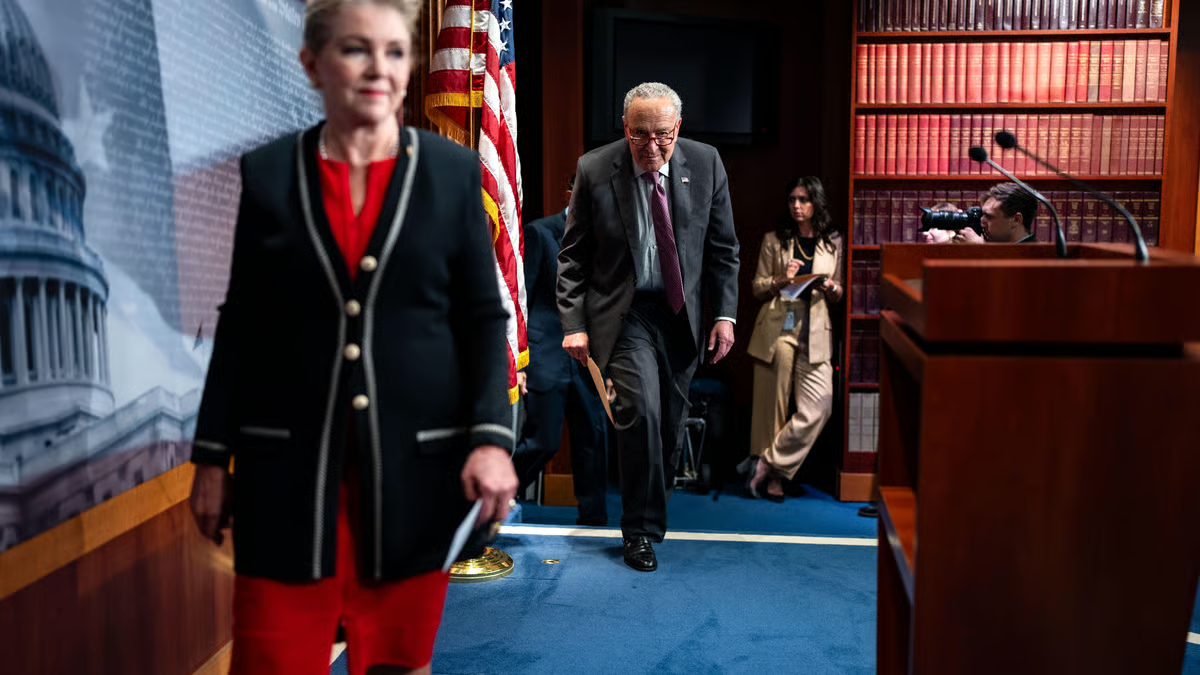
Silicon Valley’s lobbying machine is making a last-ditch attempt at passing federal AI legislation that would override state regulations, racing against a ticking political clock. Big Tech companies face a potential Democratic takeover after midterms that could slam the door on their preferred regulatory framework. Now they’re attaching AI preemption language to child safety bills in what industry insiders are calling a desperate final gambit to lock in favorable federal rules.
The clock is running out for Big Tech’s most ambitious regulatory play of the year. After months of failed attempts to pass comprehensive federal AI legislation, companies like Meta, Google, Microsoft, and Amazon are now attaching AI preemption language to child safety bills in a high-stakes bet to avoid a patchwork of state regulations.
The strategy represents a dramatic shift from earlier lobbying efforts. Instead of pushing standalone AI bills, tech companies are now trying to bundle AI regulatory frameworks with legislation like the Kids Online Safety Act (KOSA), which has broad bipartisan appeal. The goal is simple: create one unified set of federal rules that would prevent states like California, New York, and Colorado from imposing their own AI restrictions.
The Verge reports that Washington lobbyists have spent months chasing what they call the “holy grail” of AI policy – federal preemption that applies uniform rules across all 50 states. But the approach has generated significant political blowback, with privacy advocates and progressive lawmakers accusing the industry of trying to water down consumer protections.
The timing couldn’t be more critical. With midterm elections looming, tech executives and their policy teams are acutely aware that a Democratic-controlled Congress would likely take a far more skeptical view of industry-friendly AI legislation. Current polling suggests Democrats could gain significant ground, potentially ending the window for compromise deals that Big Tech has been negotiating behind closed doors.
Senators Marsha Blackburn and Chuck Schumer have emerged as key players in the debate, having previously collaborated on the Online Privacy Protection Act. But the AI preemption push is testing those bipartisan relationships. Child safety advocates are questioning whether tech companies are genuinely committed to protecting kids online or simply using popular legislation as a vehicle for regulatory relief.
The state-by-state approach that tech companies are desperately trying to avoid has already begun taking shape. California passed groundbreaking AI transparency requirements earlier this year. Colorado enacted rules around algorithmic discrimination. New York is considering legislation that would require AI impact assessments for high-risk applications. Each new state law creates compliance headaches for companies trying to deploy AI systems nationally.
Industry insiders say the preemption strategy is a calculated risk. Attaching AI language to child safety bills could accelerate passage, but it also opens tech companies to accusations of exploiting child welfare concerns for corporate gain. Several advocacy groups have already begun pushing back, arguing that comprehensive AI regulation deserves standalone consideration rather than being rushed through as an amendment.
The lobbying blitz involves not just the tech giants but also trade associations like the Chamber of Progress and TechNet, which have been meeting with congressional staffers multiple times per week. These groups argue that inconsistent state regulations will stifle innovation and put American AI companies at a disadvantage against Chinese competitors. It’s an argument designed to appeal to national security hawks on both sides of the aisle.
But the political landscape has shifted dramatically since these lobbying campaigns began. Public concern about AI safety has intensified following several high-profile incidents involving generative AI systems. Lawmakers who might have been sympathetic to industry arguments six months ago are now facing constituent pressure to take a harder line on AI regulation.
The next few weeks will determine whether Big Tech’s preemption gambit succeeds or fails. If the strategy works, companies will have secured regulatory certainty and avoided the nightmare scenario of complying with dozens of different state laws. If it fails, they’ll face an increasingly hostile Congress and a growing patchwork of state regulations that could fundamentally reshape how AI systems are developed and deployed in the United States.
Big Tech’s federal AI preemption push represents the industry’s most significant regulatory gamble in years. By tying AI rules to child safety legislation, companies are betting they can overcome months of political resistance and lock in favorable federal standards before potential Democratic control of Congress makes that impossible. But the strategy carries real risks – both in terms of public perception and the possibility that the entire effort collapses, leaving tech companies facing the very state-by-state regulatory fragmentation they’ve been fighting to avoid. The next few weeks will show whether Silicon Valley’s lobbying machine can still muscle through comprehensive legislation, or whether the political winds have shifted too far against the industry’s preferred approach.










Leave a Reply