
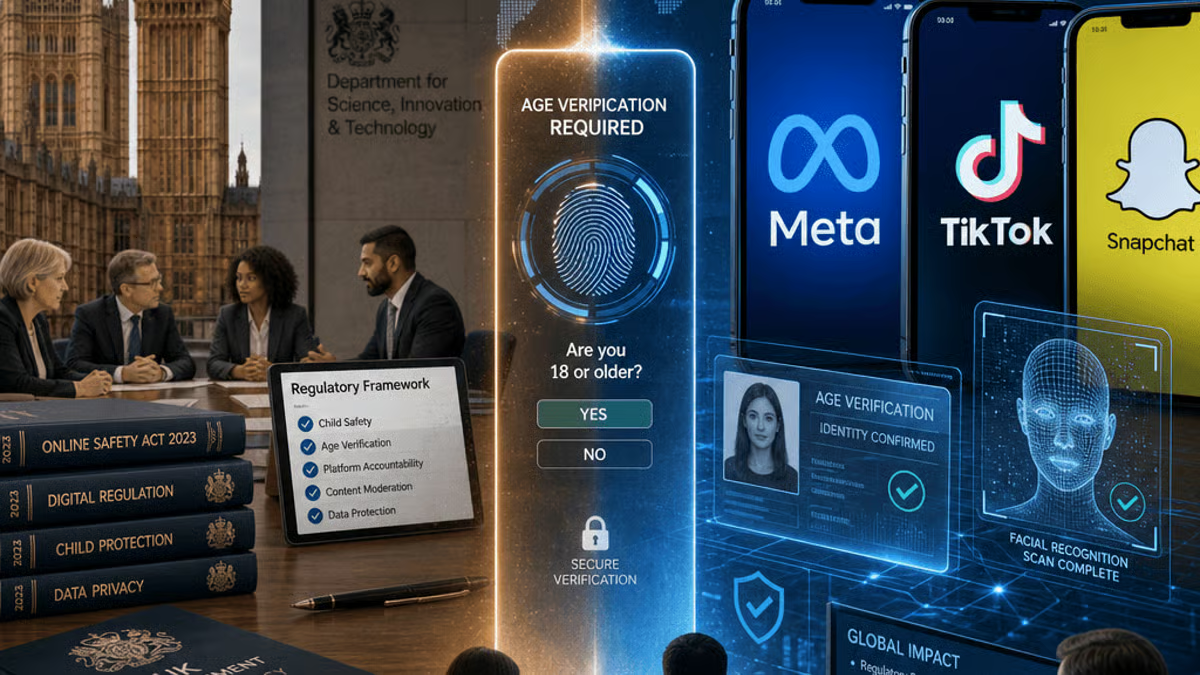
The UK is preparing to follow Australia’s controversial playbook by potentially banning social media access for children under 16, a move that could force Meta, TikTok, and Snapchat to overhaul their platforms or face being locked out of the youth market entirely. Prime Minister Keir Starmer’s government is weighing legislation that would mirror Australia’s sweeping age verification requirements, setting up a major showdown with Silicon Valley over child safety versus digital rights.
The UK government is seriously considering a blanket ban on social media access for anyone under 16, taking direct inspiration from Australia’s groundbreaking legislation that sent shockwaves through the tech industry last year. The proposal, championed by Prime Minister Keir Starmer’s administration, marks a dramatic escalation in the ongoing battle between regulators and social media companies over youth safety online.
According to TechCrunch, the UK is examining Australia’s model, which became the world’s first comprehensive social media age ban when it passed in late 2024. That legislation required platforms including Meta’s Instagram and Facebook, TikTok, and Snapchat to implement robust age verification systems or face hefty fines for allowing underage access.
The timing couldn’t be more significant for the social media giants. Meta has already invested hundreds of millions in developing age verification technology across its platforms, while simultaneously fighting similar regulatory efforts in the EU and several US states. A UK ban would represent the second major Western democracy to impose such restrictions, potentially creating momentum for a global regulatory wave.
Australia’s approach has been both praised and criticized since implementation. The law gives platforms a one-year grace period to develop verification systems that don’t compromise user privacy – a technical challenge that has proven extraordinarily difficult. Current methods range from government ID verification to AI-based age estimation using selfies, but privacy advocates have raised alarm bells about the data collection implications.
TikTok CEO Shou Zi Chew previously called Australia’s legislation “blunt and poorly designed” during testimony before the Australian Parliament, arguing that parental controls and content moderation offer better protection than blanket bans. But lawmakers in both Australia and now potentially the UK have grown skeptical of the industry’s ability to self-regulate after years of child safety scandals.
The UK has been gradually tightening its grip on social media companies through its Online Safety Act, which came into force in 2024. That legislation already requires platforms to prevent children from accessing harmful content and to verify user ages for certain features. But a full under-16 ban would go much further, essentially treating social media like age-restricted substances such as alcohol or tobacco.
For Snap, which derives significant engagement from teenage users, a UK ban could be particularly damaging. The company has positioned Snapchat as a safer alternative to rivals through features like disappearing messages and limited content recommendation algorithms. Losing access to the 13-15 demographic in a major market would force the company to pivot its growth strategy substantially.
Meta faces similar pressures but with deeper pockets to weather the storm. The company has been beta-testing various age verification technologies, including partnerships with identity verification firm Yoti. However, implementing these systems at scale across Instagram’s massive UK user base – estimated at over 30 million active users – presents both technical and user experience challenges.
The regulatory domino effect is what really has Silicon Valley nervous. If the UK follows through, other European nations are likely to consider similar measures. France and Germany have already floated proposals for stricter age controls, while the European Commission is reviewing whether existing Digital Services Act provisions adequately protect minors.
Critics of the ban approach argue it could push young people toward less regulated corners of the internet or encourage them to lie about their ages, potentially exposing them to greater harm. Digital rights groups have also warned that robust age verification inevitably creates privacy risks for adults, who may need to submit sensitive identification documents just to access social platforms.
The UK proposal comes as Starmer’s government faces mounting pressure from parents and child safety advocates following a series of high-profile cases linking social media use to teen mental health crises and cyberbullying incidents. Public polling in Britain shows growing support for tougher platform regulation, with recent surveys indicating over 60% of parents favor some form of age restrictions on social media.
Tech policy experts are watching closely to see whether the UK proposal includes exemptions for messaging apps or educational platforms – details that could make or break the legislation’s effectiveness. Australia’s law contains certain carve-outs for services deemed to have educational value, though the definitions remain contested.
The UK’s potential social media age ban represents more than just another regulatory headache for tech giants – it’s a fundamental challenge to the business model that has powered a decade of social platform growth. If Britain joins Australia in imposing under-16 restrictions, the regulatory landscape shifts from isolated experiments to coordinated global action. For Meta, TikTok, and Snap, the choice is becoming clearer: invest heavily in age verification infrastructure that satisfies regulators without alienating users, or accept being locked out of youth markets in major democracies. The tech industry’s response over the coming months will likely determine whether age-gating becomes the new normal for social media worldwide.









Leave a Reply