
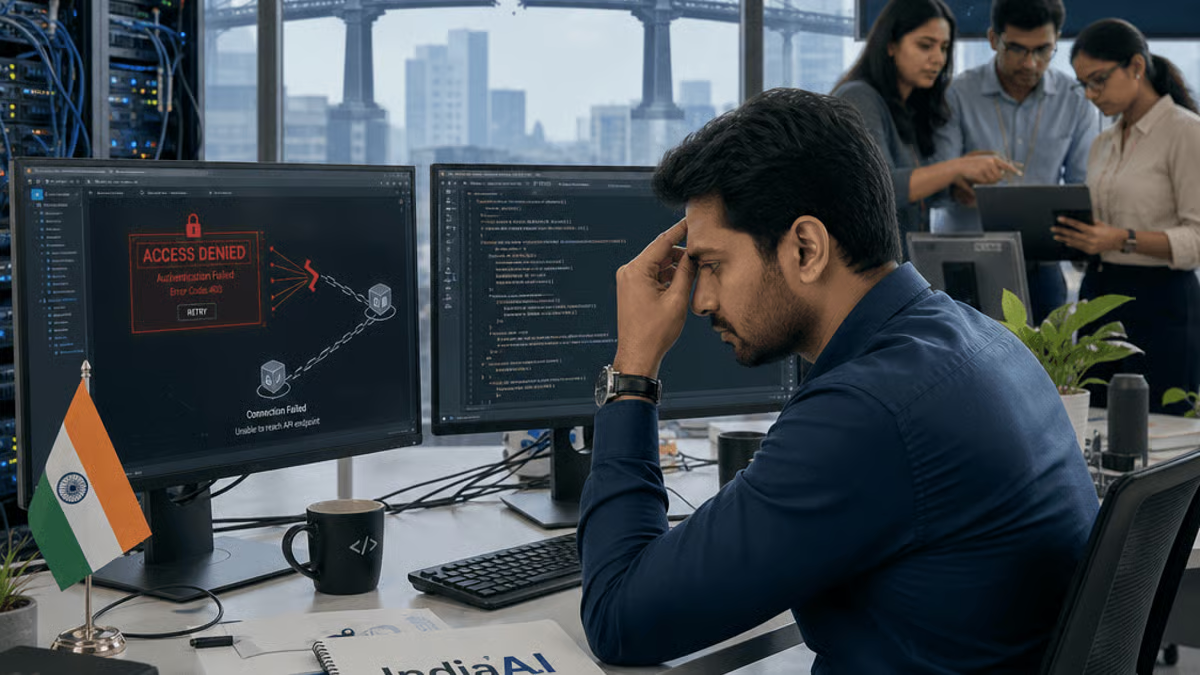
India’s tech ecosystem is reeling from Anthropic’s sudden decision to suspend access to new AI models in the region, sparking an urgent debate about the country’s reliance on Western AI infrastructure. The move, which caught Indian developers and startups off-guard, has become a rallying cry for tech leaders pushing for homegrown large language models and questioning whether India can afford to depend on foreign AI providers for its digital ambitions.
Anthropic’s decision to cut off Indian access to its latest AI models has ignited a fierce conversation about technological sovereignty in the world’s most populous nation. The suspension, confirmed earlier this week, left thousands of developers scrambling to migrate applications and forced startups to pause product rollouts that depended on Claude’s capabilities.
The timing couldn’t be worse for India’s AI ambitions. The country has positioned itself as a global AI hub, with Prime Minister Narendra Modi’s government announcing billions in investments for digital infrastructure and AI research. But Anthropic’s move exposes a critical vulnerability – India’s heavy reliance on American AI companies for the foundational models powering its innovation ecosystem.
“This is our Sputnik moment for AI,” one prominent Indian tech executive told TechCrunch, speaking on condition of anonymity. The comparison to the 1957 satellite launch that shocked the US into action resonates across India’s startup scene, where founders are questioning whether they built their businesses on rented ground.
The suspension affects a sprawling ecosystem. Indian startups have integrated Claude into everything from customer service chatbots to medical diagnosis tools, while enterprises deployed Anthropic’s models for document processing and data analysis. The sudden cutoff has forced companies to either freeze AI features or hastily switch to alternatives like OpenAI’s GPT models or open-source options – raising questions about whether those providers might make similar moves.
India’s government has been investing heavily in indigenous AI capabilities, but the efforts remain years behind American and Chinese counterparts. The country’s ambitious IndiaAI initiative aims to develop sovereign large language models, but progress has been slow compared to the rapid deployment of foreign models by Indian companies. Anthropic’s suspension has become ammunition for advocates pushing to accelerate these domestic programs, regardless of cost.
The episode also reveals the geopolitical complexities of AI access. While Anthropic hasn’t publicly explained the suspension’s rationale, industry observers point to growing US concerns about AI technology transfer and potential dual-use applications. India finds itself caught between its strategic partnership with the United States and its need for unfettered access to cutting-edge AI technology to maintain economic competitiveness.
Competitors are already circling. Google, with its significant India presence and Gemini models, has reportedly reached out to affected startups offering migration support. Microsoft-backed OpenAI is similarly positioning itself as a more reliable partner. But the underlying question remains – can India trust any foreign provider, or does technological sovereignty demand building from scratch?
The debate extends beyond just access to models. Indian technologists argue the country needs the full stack – from chip fabrication to model training infrastructure to deployment platforms. The Anthropic suspension has galvanized support for investments that seemed extravagant months ago, including proposals for massive GPU clusters and training facilities that would cost billions of dollars.
Some voices urge caution against kneejerk nationalism. India’s AI talent pool is globally integrated, and cutting ties with Western AI research could hamper the very innovation the country seeks to promote. The challenge is finding a middle path – maintaining access to frontier models while building genuine domestic capabilities that can serve as both backup and eventual replacement.
What’s clear is that Anthropic’s decision has fundamentally shifted India’s AI conversation. The suspension transformed abstract debates about AI sovereignty into an immediate crisis affecting real businesses and real users.
The Anthropic suspension may be remembered as the moment India’s AI ambitions collided with geopolitical reality. Whether the country responds by doubling down on sovereign technology development or finding diplomatic solutions to ensure access remains to be seen. But for the thousands of Indian developers who woke up to find their API keys suddenly worthless, the lesson is clear – in the age of AI, access is power, and relying on others for that access comes with risks no amount of innovation can fully mitigate. The question now is whether India can move fast enough to build alternatives before the next disruption hits.







Leave a Reply