
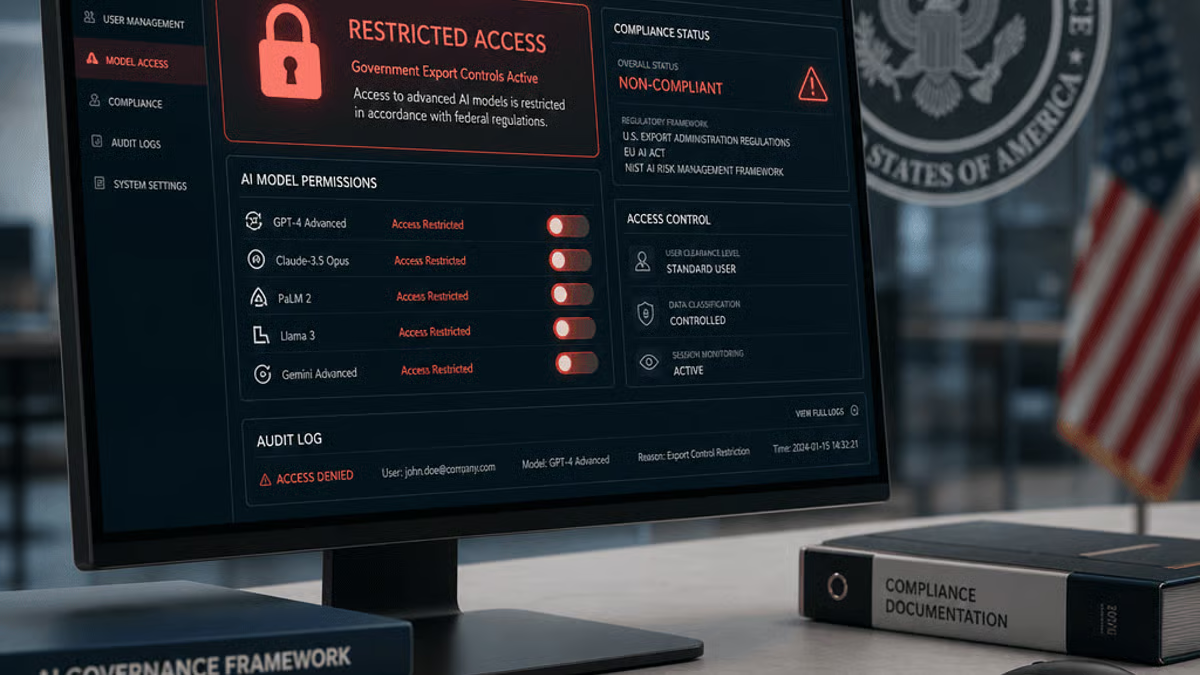
In a stunning escalation of AI regulation, Anthropic just pulled the plug on two of its most advanced models. The San Francisco-based AI startup disabled access to its Fable 5 and Mythos 5 systems overnight to comply with a new U.S. government export control directive, according to a statement reported by CNBC. The move marks the first time a major AI lab has been forced to shut down flagship products under regulatory pressure, sending shockwaves through an industry already grappling with mounting government scrutiny.
Anthropic confirmed late Friday it’s disabling access to two of its most advanced AI models, Fable 5 and Mythos 5, in response to what the company described as an export control directive from the U.S. government. The abrupt shutdown, first reported by CNBC, represents an unprecedented regulatory intervention in the AI sector and raises immediate questions about Washington’s appetite for controlling cutting-edge AI technology.
The timing couldn’t be more dramatic. Just months after the Biden administration floated new frameworks for AI safety, federal authorities appear to be flexing regulatory muscle in ways the industry hasn’t seen before. While export controls have long restricted semiconductor technology and certain software from reaching adversarial nations, applying them directly to AI model access marks a significant escalation.
Anthropic, backed by Google and founded by former OpenAI executives, has positioned itself as the safety-conscious alternative in the AI race. The company’s Claude assistant has gained traction among enterprise customers precisely because of its emphasis on responsible AI development. But even that reputation couldn’t shield it from this regulatory crackdown.
The Fable 5 and Mythos 5 models – details of which Anthropic has kept relatively quiet compared to its public-facing Claude products – likely represent some of the company’s most capable systems. The fact that these specific models triggered government action suggests they crossed some threshold of capability that regulators deemed too sensitive for unrestricted access. Whether that’s related to cybersecurity applications, biological research capabilities, or something else entirely remains unclear.
This isn’t happening in a vacuum. The move comes as the U.S. ramps up efforts to maintain its AI leadership while simultaneously preventing advanced technology from bolstering rivals like China. Recent semiconductor export restrictions from the Commerce Department already showed Washington’s willingness to use export controls as a strategic weapon. Now that playbook is extending directly to AI models themselves.
For the broader AI industry, Anthropic’s forced shutdown is a wake-up call. If one of the most safety-focused labs can have models yanked offline with little public warning, no company is immune. OpenAI, Microsoft, Google, and Meta all operate frontier AI systems that could theoretically fall under similar restrictions. The lack of clear public guidance about what triggers these controls creates a regulatory minefield.
The export control designation also raises thorny questions about enforcement. Does this mean international customers lose access? What about API integrations already running in production? Companies building on top of these models could find themselves scrambling to migrate to alternative systems, potentially disrupting critical business operations.
From a competitive standpoint, the shutdown could paradoxically benefit Chinese AI labs, which operate under different regulatory frameworks. While U.S. companies face access restrictions, state-backed Chinese AI efforts like those from Baidu, Alibaba, and ByteDance continue pushing forward. Some industry observers worry that overly aggressive domestic controls could kneecap American innovation without meaningfully slowing foreign adversaries.
Anthropic hasn’t disclosed how many customers or use cases will be affected by the Fable 5 and Mythos 5 shutdown. The company’s flagship Claude products remain operational, suggesting the directive specifically targets these more advanced or specialized systems. But the precedent is now set – the government can and will force AI companies to disable models deemed too risky for broad access.
What happens next will set the tone for AI regulation going forward. Will the administration release clear guidelines about what capabilities trigger export controls? Will other companies face similar directives? And perhaps most critically, will Congress step in with comprehensive AI legislation, or will this continue as an ad-hoc regulatory approach driven by executive agencies?
For now, the AI industry is left parsing tea leaves, trying to reverse-engineer what red lines Anthropic crossed and how to avoid tripping the same wires. The lack of transparency around the directive’s specifics creates massive uncertainty for companies investing billions in frontier AI research. Nobody wants to be the next lab forced to shut down a flagship product with little notice.
Anthropic’s forced shutdown of Fable 5 and Mythos 5 isn’t just a compliance story – it’s a preview of the regulatory battles ahead as AI capabilities accelerate faster than policy frameworks can keep up. The industry now faces a delicate balance: building increasingly powerful systems while navigating an unpredictable regulatory landscape where the rules can change overnight. For companies racing to achieve artificial general intelligence, the message is clear – technical breakthroughs alone won’t determine who wins the AI race. Government policy will have just as much say in which models see the light of day and which get shut down before they can prove their value. The scramble to understand these new restrictions and adapt development roadmaps accordingly starts now.










Leave a Reply