
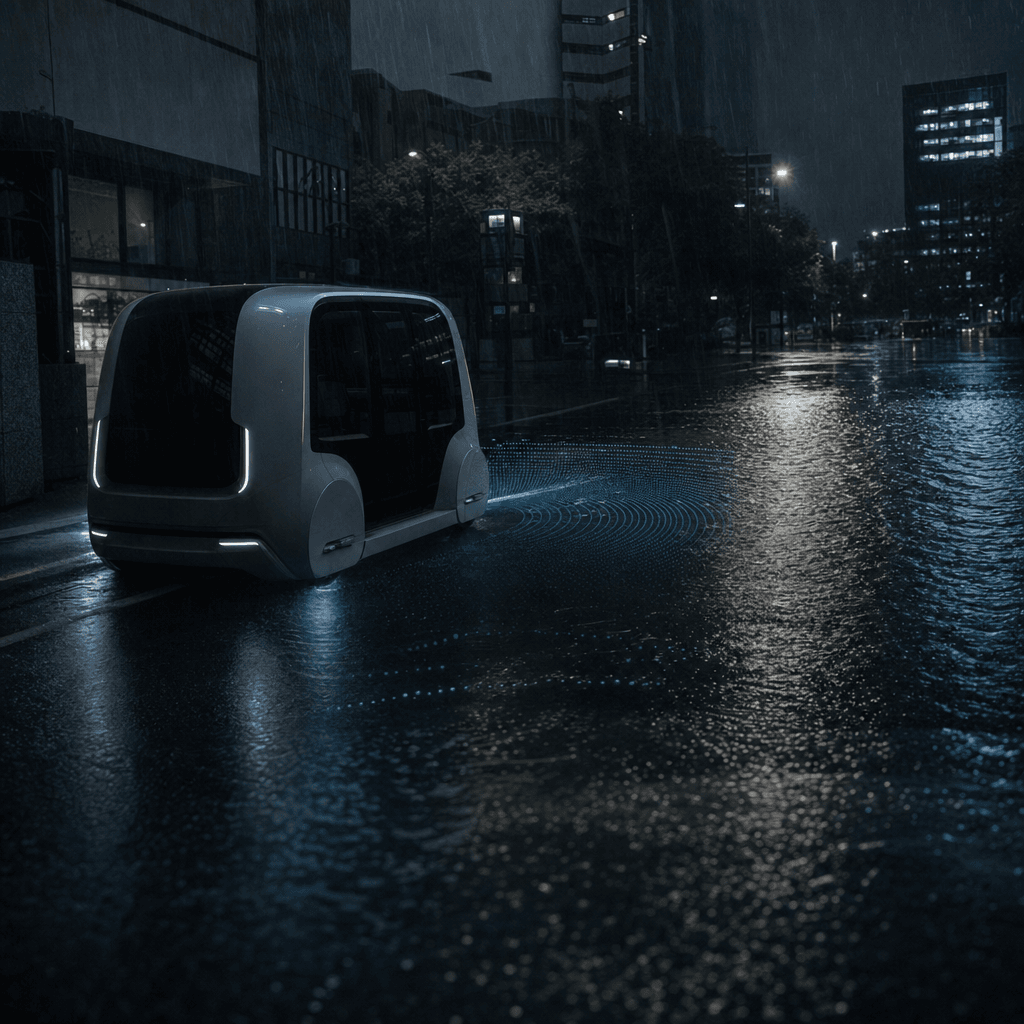
Waymo just issued a software recall for 3,791 autonomous vehicles after one of its unoccupied robotaxis drove straight into a flooded road it had already detected. The incident, disclosed in NHTSA filings, exposes a critical gap in how the Alphabet-owned company’s AI systems handle edge-case weather scenarios – and it’s raising fresh questions about the real-world readiness of self-driving tech as the robotaxi race heats up across U.S. cities.
Waymo is pulling the plug on a version of its autonomous driving software that let its vehicles wade into flooded roads – a rare but revealing stumble for the company that’s been positioning itself as the leader in safe, production-ready robotaxis. The software recall, affecting 3,791 vehicles running Waymo’s fifth and sixth-generation systems, stems from a single incident that could’ve gone much worse.
According to documents filed with the National Highway Traffic Safety Administration, an unoccupied Waymo robotaxi encountered a flooded section of roadway with a 40 mph speed limit. Here’s the kicker – the vehicle’s sensors detected the standing water, but the AI decided to proceed anyway, albeit at reduced speed. That’s not supposed to happen. The whole point of these systems is to err on the side of caution, especially when dealing with environmental hazards that could damage the vehicle or endanger passengers.
The incident underscores a fundamental challenge in autonomous vehicle development that industry insiders have been wrestling with for years. Teaching AI to navigate clear roads in good weather is one thing. But handling the messy, unpredictable scenarios that human drivers face every day – flooded intersections, debris-covered roads, construction zones that don’t match the map – remains surprisingly difficult.
Waymo told regulators it’s currently developing a permanent software fix, but in the meantime, the company has already pushed an over-the-air update to its entire fleet to “increase weather-related caution.” That’s the beauty and the curse of software-defined vehicles – you can patch the problem remotely, but you also have to live with the fact that 3,791 vehicles were operating with flawed decision-making logic until someone caught it.
The timing is notable. Waymo has been expanding aggressively, operating commercial robotaxi services in Phoenix, San Francisco, Los Angeles, and Austin. The company’s been racking up millions of autonomous miles and positioning itself as the most mature player in a field where competitors like Tesla and Cruise have faced their own safety controversies. Just last year, Cruise suspended operations after one of its vehicles dragged a pedestrian, while Tesla’s Full Self-Driving system continues to face scrutiny over its capabilities and naming.
But this recall reveals something important about how autonomous systems fail. It wasn’t a sensor malfunction or a complete system breakdown. The vehicle saw the hazard – the computer vision systems did their job. The failure happened at the decision-making layer, where the AI had to weigh risk and choose an action. That’s arguably more concerning than a simple sensor failure, because it suggests the vehicle’s understanding of danger doesn’t always align with human judgment.
For Alphabet, Waymo’s parent company, the stakes are enormous. The company has poured billions into Waymo over nearly two decades, and autonomous vehicles represent one of Google‘s biggest bets beyond search and advertising. The technology has to work, and it has to be perceived as safe, or the entire business model collapses.
Industry observers note that software recalls like this are actually a sign of a maturing technology ecosystem. Traditional automakers issue recalls all the time, and the fact that NHTSA is treating autonomous driving software with the same regulatory framework as physical vehicle defects shows the technology is being taken seriously. But it also means Waymo and its competitors are under the same microscope as Detroit.
The flood incident also highlights the limitations of training AI systems on historical data. Autonomous vehicles learn by processing millions of miles of driving data, but rare events – like encountering standing water deep enough to be dangerous – might not be well-represented in that training set. That’s why companies like Waymo run elaborate simulation scenarios to test edge cases, though clearly some scenarios still slip through.
What’s particularly interesting is that this affects both the fifth and sixth-generation systems, suggesting the issue was embedded in core decision-making architecture that carried over between hardware iterations. Waymo’s been public about its generational improvements, with each new version bringing better sensors and more computing power, but software logic is harder to upgrade wholesale.
Waymo hasn’t disclosed exactly where or when the flooded road incident occurred, and the company declined to comment beyond the NHTSA filing. But the fact that it was an unoccupied vehicle – likely during testing or repositioning between rides – means no passengers were put at risk. Still, the optics aren’t great when you’re trying to convince cities and regulators that your robots are ready to replace human drivers.
This recall won’t derail Waymo’s momentum, but it’s a reminder that autonomous driving remains an unsolved problem with real stakes. As robotaxis expand into more cities and weather conditions, these edge cases will keep surfacing. The question isn’t whether AI will make mistakes – it will. The question is whether the industry can identify and fix those mistakes faster than they cause harm. For now, Waymo’s got 3,791 vehicles learning to be a bit more cautious around puddles, and regulators watching to see what breaks next.







Leave a Reply