
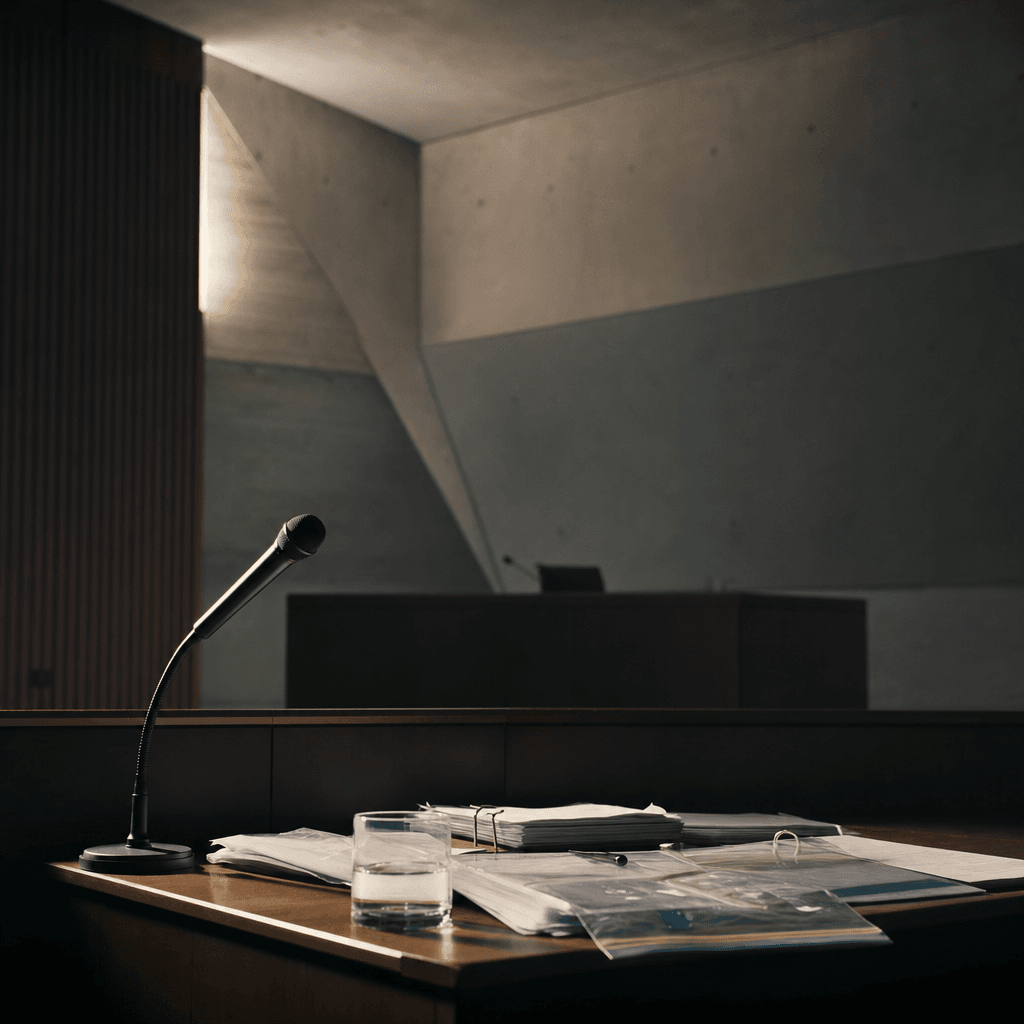
After two weeks of witnesses painting him as dishonest, OpenAI CEO Sam Altman finally took the stand in the blockbuster trial with Elon Musk. In a dramatic moment, Altman flipped the script on accusations he stole a charity, claiming instead that “Mr. Musk did try to kill it, I guess. Twice.” The testimony marks a pivotal turn in a case that could reshape AI’s most powerful company and determine whether its transformation from nonprofit to capped-profit violated fiduciary duties to its billionaire co-founder.
OpenAI CEO Sam Altman finally got his moment in court, and he came out swinging. After enduring two weeks of testimony portraying him as a duplicitous operator who hijacked a charity for profit, Altman took the stand to defend both himself and the company that’s become the face of the AI revolution.
The most dramatic exchange came when his lawyer William Savitt asked how it felt to be accused of stealing a charity. Altman’s response cut straight to the heart of the case: “We created, through a ton of hard work, this extremely large charity, and I agree you can’t steal it. Mr. Musk did try to kill it, I guess. Twice.”
It’s a bold counter-narrative. While Elon Musk has spent weeks painting OpenAI’s transformation from nonprofit to capped-profit entity as a betrayal, Altman positioned himself as the protector who saved the organization from Musk’s attempts to destroy it. The claim that Musk tried to kill OpenAI twice suggests a pattern of interference that goes beyond the governance disputes already aired in court.
According to The Verge’s courtroom coverage, Altman adopted what observers described as “nice kid from St. Louis” mode, a carefully calibrated performance designed to project bewilderment rather than calculation. He presented himself as someone perplexed by the accusations, not as the cunning strategist Musk’s legal team has spent two weeks describing.
The testimony represents a critical inflection point in a trial that’s captivated Silicon Valley. At stake is not just OpenAI’s corporate structure, but fundamental questions about how AI companies should be governed and whether early investors can claim ownership over organizations that pivot from their original missions.
Musk co-founded OpenAI in 2015 as a nonprofit research lab dedicated to developing artificial general intelligence for the benefit of humanity. But the relationship soured as OpenAI created a for-profit subsidiary in 2019 to attract the massive capital needed to train large language models. Musk departed the board in 2018, and his lawsuit alleges that Altman and co-founder Greg Brockman violated fiduciary duties by transforming the charity into what’s now valued at over $80 billion following Microsoft’s multi-billion dollar investment.
The two-week buildup to Altman’s testimony featured a parade of witnesses dissecting emails, board meeting minutes, and internal communications. Musk’s legal strategy has focused on establishing a pattern of deception, arguing that Altman always intended to commercialize OpenAI’s technology despite public commitments to keep it open and nonprofit.
But Altman’s appearance shifts the dynamic from documentary evidence to personal credibility. His performance on the stand, complete with the stack of evidence binders he carried when stepping down, seemed designed to project transparency and good faith. The question is whether the jury buys it.
Legal experts watching the case suggest the outcome will hinge on interpreting OpenAI’s early governance documents and whether the capped-profit structure genuinely preserves the nonprofit mission or represents a fundamental betrayal. Musk’s team needs to prove not just that OpenAI changed, but that the change violated specific legal obligations to early stakeholders.
Altman’s claim that Musk tried to kill OpenAI introduces a new wrinkle. If substantiated, it could reframe the narrative from one of betrayal to one of self-preservation. It suggests that OpenAI’s transformation wasn’t opportunistic greed but a necessary evolution to survive Musk’s interference.
The timing couldn’t be more significant. OpenAI sits at the center of the AI boom, with ChatGPT becoming the fastest-growing consumer application in history and enterprise deals worth billions. A verdict favoring Musk could force organizational changes, financial settlements, or even governance restructuring that impacts OpenAI’s ability to compete with rivals like Google’s DeepMind and Anthropic.
As Altman left the stand, the courtroom dynamics had shifted. Two weeks of accumulated accusations now face a counter-story of entrepreneurial perseverance against a vindictive billionaire. Whether that narrative holds up under cross-examination will determine the outcome of Silicon Valley’s highest-stakes legal battle.
Altman’s testimony marks the trial’s turning point, transforming it from a documentary case about corporate governance into a credibility contest between two of tech’s most influential figures. His claim that Musk tried to destroy OpenAI twice reframes the entire dispute, but he’ll need to back it up under cross-examination. With billions in valuation and the future of AI governance hanging in the balance, the jury’s assessment of who’s telling the truth will ripple far beyond this courtroom. The question isn’t just whether OpenAI violated its founding mission, but whether that mission was ever viable in the face of the computational resources needed to lead the AI race.








Leave a Reply