

Thinking Machines, the AI startup founded by former OpenAI CTO Mira Murati, just broke its silence. The company announced Monday it’s building “interaction models” – a new breed of AI that continuously processes audio, video, and text simultaneously, responding in real time rather than waiting for users to finish speaking or typing. It’s Murati’s first major reveal since leaving OpenAI last September, and it signals she’s betting big on rethinking how humans and AI collaborate from the ground up.
Thinking Machines is finally showing its cards. The AI startup founded by Mira Murati, who spent years as OpenAI‘s chief technology officer before her high-profile departure last fall, announced Monday it’s working on what it calls “interaction models” – AI systems designed to collaborate with humans the way people actually work together, not through the stilted back-and-forth that defines today’s chatbots.
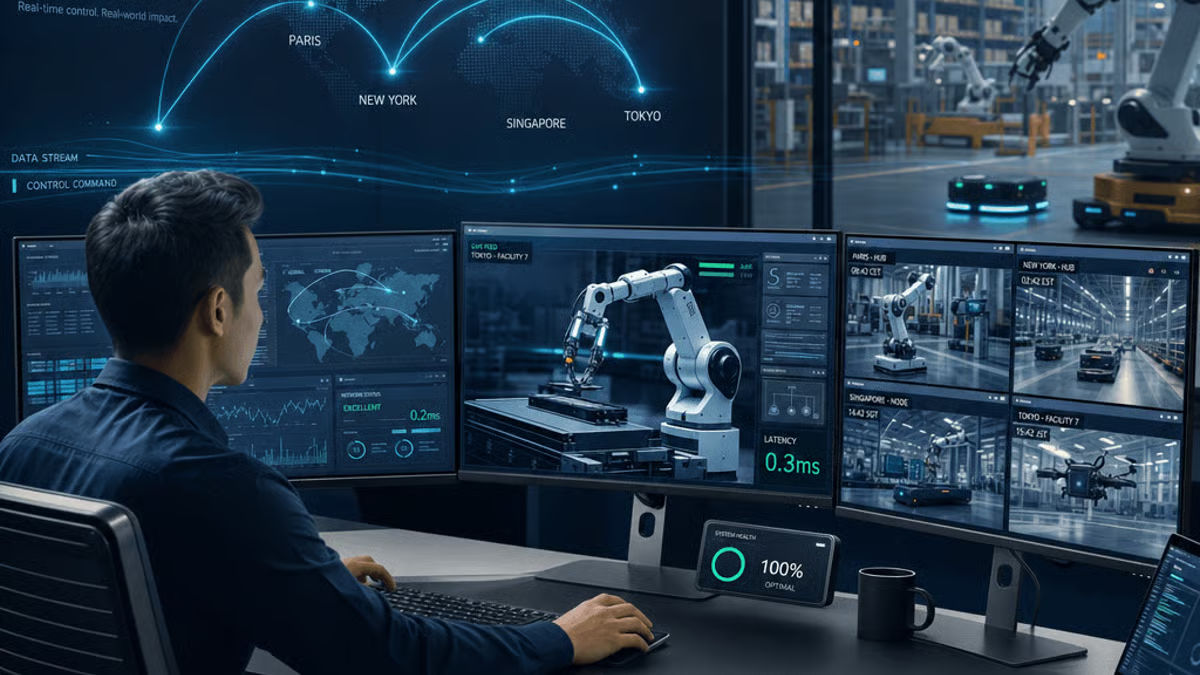
The pitch is deceptively simple but technically ambitious. According to the company’s announcement, these models will “continuously take in audio, video, and text, and think, respond, and act in real time.” That’s a fundamental departure from how systems like ChatGPT or Claude operate today, where the AI essentially sits idle until you hit send.
“Today’s models experience reality in a single thread,” Thinking Machines explains in the blog post. “Until the user finishes typing or speaking, the model waits with no perception of what the user is doing or how the user is doing it.” It’s a limitation most users have internalized without realizing it – the awkward pause while an AI assistant processes your question, the inability to interrupt or course-correct mid-response, the lack of natural conversational flow.
Murati’s bet is that breaking this pattern requires rethinking AI architecture from scratch. Instead of sequential processing – listen, then think, then respond – interaction models would handle multiple streams of information simultaneously. Imagine an AI that can watch you gesture at a screen while you’re speaking, pick up on your hesitation, and adjust its response before you even finish your sentence. That’s the vision Thinking Machines is chasing.
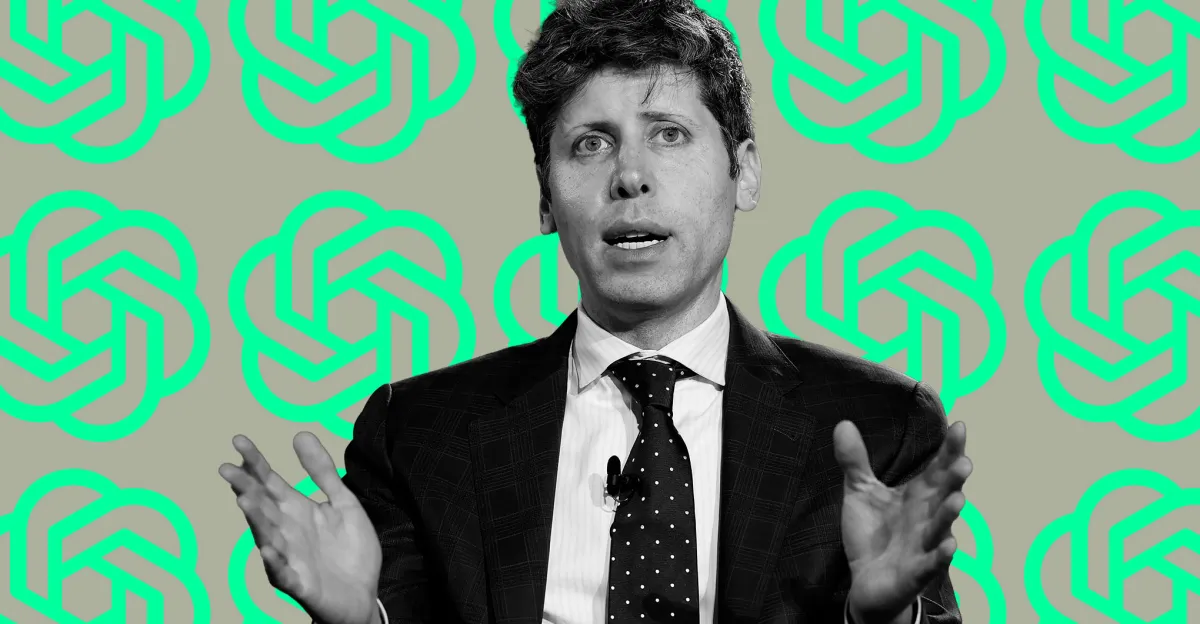
The timing is telling. Murati left OpenAI in September 2024 after helping shepherd GPT-4 and the company’s pivot toward multimodal AI. Her departure came during a turbulent period for OpenAI, following the brief ouster and reinstatement of CEO Sam Altman. She wasn’t alone – several senior technical leaders have since left to launch competing ventures, turning the AI talent exodus into something of an industry pattern.
But while others have raised massive funding rounds or rushed products to market, Thinking Machines has stayed relatively quiet until now. The company hasn’t disclosed funding details or a product timeline. Monday’s announcement reads more like a research manifesto than a product launch – laying out a technical vision without committing to specific capabilities or release dates.
That’s either disciplined restraint or a sign the technology is still early. Real-time multimodal AI is extraordinarily difficult to pull off. Google has experimented with it through Project Astra, OpenAI teased similar capabilities in GPT-4’s advanced voice mode demos, and Meta has explored it in VR contexts. None have shipped something that truly feels like continuous, natural collaboration.
The technical hurdles are massive. Processing multiple input streams simultaneously while generating coherent responses requires not just raw compute power but entirely new architectures. Latency becomes critical – any delay breaks the illusion of real-time interaction. And the models need to handle interruptions, context switches, and the messy reality of how humans actually communicate, which is nothing like the clean prompt-response pattern AI models are trained on.
Still, if anyone has the pedigree to attempt this, it’s Murati. During her tenure at OpenAI, she oversaw the development of DALL-E, GPT-4, and ChatGPT – products that fundamentally shifted what people believed AI could do. She’s also betting that the next leap forward isn’t just bigger models or more parameters, but fundamentally different ways of thinking about human-AI interaction.
The competitive landscape is crowded and getting more so. Anthropic is pushing constitutional AI and longer context windows. Google DeepMind is betting on reasoning models and multimodal integration. Microsoft-backed OpenAI continues to dominate mindshare and distribution. And a dozen well-funded startups founded by former big tech AI leaders are all chasing slightly different visions of what comes after large language models.
Thinking Machines is positioning itself as tackling something more fundamental than incremental improvements. The company’s framing suggests it sees current AI as stuck in a paradigm that’s inherently limited – and that real progress requires breaking out of that paradigm entirely, not just making it faster or more capable.
Whether that vision translates into actual products remains to be seen. The AI industry is littered with ambitious technical visions that never made it past the research phase. But Murati’s track record and the clear articulation of a specific, technically grounded problem suggest Thinking Machines isn’t just another AI startup with generic promises about transforming everything.
Murati’s announcement positions Thinking Machines as betting on a fundamentally different approach to AI – not just incremental improvements to existing chatbots, but a reimagining of how AI systems perceive and respond to the world. It’s an ambitious technical challenge that tackles one of the most obvious limitations in today’s AI interactions. But ambitious visions are cheap in the current AI landscape. The real test will be whether Thinking Machines can actually ship something that delivers on this promise, and whether developers and users will care enough about real-time interaction to adopt yet another AI platform. For now, it’s a compelling vision from someone with the credentials to potentially pull it off – but the clock is ticking as competitors race toward similar goals.









Leave a Reply