
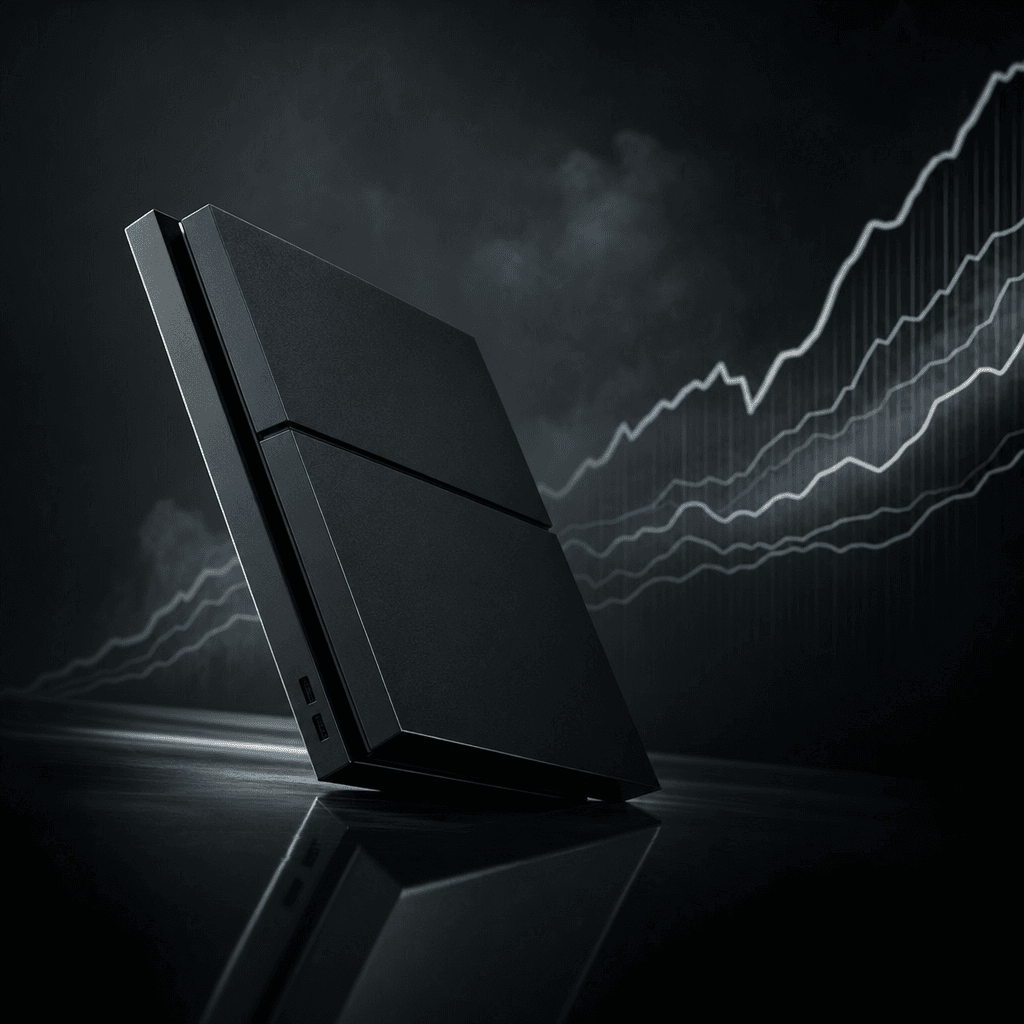
Sony just posted one of its worst quarterly performances for the PlayStation 5, with sales collapsing 46% year-over-year to just 1.5 million units in Q4. The freefall comes after the company pushed through two consecutive price hikes over the past year, driving the standard PS5 from $499.99 to a staggering $649.99. With a global memory crisis squeezing margins and gaming revenue forecast to drop 6%, Sony’s betting big that consumers will stick around despite the steepest console pricing in modern gaming history.
Sony is learning a brutal lesson about pricing elasticity in the console market. The company’s latest quarterly earnings reveal a dramatic 46% year-over-year collapse in PS5 sales, with just 1.5 million units moving in the fourth fiscal quarter. It’s the kind of drop that sends shockwaves through the gaming industry and raises serious questions about Sony’s strategy heading into what should be the PS5’s prime years.
The culprit isn’t hard to identify. Over the past year, Sony pushed through not one but two price increases on its flagship console. The standard PS5, which launched at $499.99, now carries a $649.99 price tag – a 30% jump that’s unprecedented in modern console gaming. Even the digital edition and PS5 Pro variants saw similar increases, according to previous reporting from The Verge.
Sony’s official explanation points to “continued pressures in the global economic landscape,” a phrase that does heavy lifting to cover what’s essentially a memory component supply crisis. The second price hike in March came with explicit references to an ongoing memory shortage, compounded by geopolitical instability including the war in Iran disrupting supply chains.
But here’s where it gets interesting – and concerning for Sony. The gaming division now forecasts annual gaming revenue will drop 6% going forward, and executives are being unusually candid about uncertainty. “We plan to base our PS5 hardware sales in FY26 on the volume,” the company stated in its earnings materials, a sentence that trails off but speaks volumes about how much is riding on component costs stabilizing.
The memory crisis isn’t just a Sony problem. Nvidia, Apple, and other hardware manufacturers have all felt the squeeze as DRAM and NAND flash prices spiked through late 2025 and into 2026. But Sony’s decision to pass those costs directly to consumers – twice – is proving to be a miscalculation that competitors are likely studying closely.
Consider the context: the PS5 is roughly midway through its lifecycle, the point where sales typically remain strong as the install base grows and game libraries mature. Instead, Sony’s watching demand crater precisely when it should be capitalizing on momentum. The 1.5 million units sold in Q4 represents one of the lowest quarterly totals since the console’s troubled launch period during the pandemic.
The pricing strategy stands in stark contrast to Microsoft‘s approach with Xbox, which has absorbed component cost increases rather than risk alienating its player base. While Xbox sales numbers remain murky due to Microsoft’s reporting structure, anecdotal evidence suggests the company’s holding pricing discipline is paying dividends in market share gains.
What makes Sony’s situation particularly precarious is the timing. The console market doesn’t exist in a vacuum anymore. PC gaming continues to surge, cloud gaming services are maturing, and mobile gaming eats into discretionary entertainment spending. Pricing a console at $650 pushes it into direct competition with entry-level gaming PCs, many of which offer more flexibility and a larger game library through platforms like Steam.
Sony’s also fighting against its own success with the PlayStation 4, which remains a viable gaming platform for millions of users who see little reason to upgrade at current PS5 prices. The generational leap isn’t as visually dramatic as previous console transitions, making the value proposition that much harder to justify at a $150 premium over launch pricing.
The company’s forecast that gaming revenue will decline 6% annually suggests this isn’t a short-term blip. Sony’s essentially acknowledging that hardware sales will remain depressed unless something changes – either component costs come down, or the company eats the margin hit and cuts prices. Neither scenario looks likely in the near term based on industry supply chain forecasts.
Investors are taking notice. Sony’s gaming division, once a reliable profit engine, is now a source of uncertainty heading into FY26. The company’s hedging language around basing hardware sales projections “on the volume” of component availability signals that management doesn’t have clear visibility into when this situation improves.
Sony’s walking a tightrope between protecting margins and maintaining market position. The 46% sales collapse and 6% revenue forecast decline make clear that the double price hike strategy backfired badly. With memory costs showing no signs of rapid relief and competitors holding the pricing line, Sony faces a tough choice: reverse course on pricing and take a profitability hit, or stick with premium positioning and risk ceding market share permanently. The FY26 forecast suggests management knows the current approach isn’t sustainable, but whether they’ll act decisively before the damage becomes irreversible remains the billion-dollar question for PlayStation’s future.










Leave a Reply