
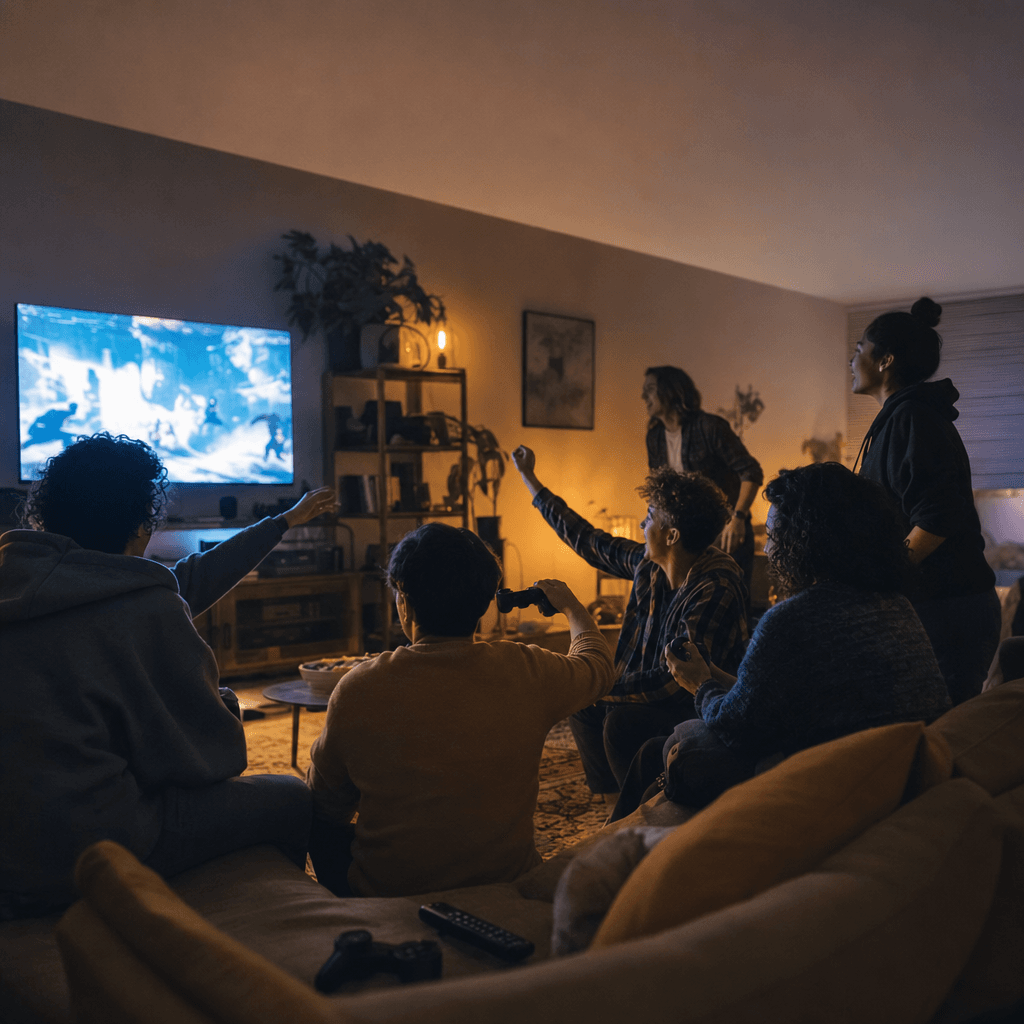
Netflix appears to have stumbled onto something significant in its long-struggling gaming division. After years of trying to crack mobile gaming with little traction, the streaming giant is seeing unexpected engagement with casual TV-based games like Boggle and Lego Party that turn solo gaming into a living room spectator sport. The shift marks a potential turning point for Netflix’s gaming ambitions, which have cost the company millions since launching in 2021 with minimal subscriber uptake.
Netflix might have finally found its gaming groove, and it wasn’t where anyone expected. While the streaming giant spent years trying to convince subscribers to download mobile games tied to hit shows like Stranger Things and The Queen’s Gambit, the real action is happening on the biggest screen in the house.
The company’s TV-based gaming strategy is quietly gaining traction, according to observations from The Verge. Games like Boggle and the recently launched Lego Party are transforming how families interact with their Netflix subscriptions, turning what used to be passive viewing sessions into active, social gaming experiences. It’s a fundamentally different approach than the mobile-first strategy Netflix initially pursued.
When Netflix first announced its gaming push back in 2021, the pitch was straightforward – mobile games tied to popular IP that subscribers could download through the Netflix app. But the execution stumbled. Adoption rates remained stubbornly low, with industry estimates suggesting less than 1% of subscribers ever downloaded a Netflix game through 2023. The problem wasn’t quality – some games earned solid reviews. The issue was friction. Users had to leave Netflix, download a separate app, and remember they even had access to games.
TV games eliminate that friction entirely. They’re right there in the Netflix interface, playable with a remote or smartphone controller. More importantly, they tap into something Netflix has always understood better than most tech companies – the shared living room experience. When one person fires up Boggle on the TV, family members naturally drift over. Someone shouts out a word. Another person asks for a turn. What started as solo entertainment becomes a group activity.
This isn’t revolutionary technology. Casual TV gaming has existed since the Xbox 360 and Nintendo Wii era. But Netflix’s timing might be perfect. The company is facing pressure to justify price increases and stem subscriber churn in mature markets. Gaming engagement provides a new metric to tout in earnings calls and a reason for households to keep their subscriptions active during content droughts between big releases.
The Lego Party launch represents Netflix doubling down on this approach. Instead of complex narratives or hardcore gaming mechanics, it’s offering exactly what works on TV – simple, accessible experiences that don’t require tutorials or gaming literacy. Anyone can understand Boggle. Everyone knows how Lego works. The barrier to entry is essentially zero.
Competitors are watching closely. Amazon has experimented with free games for Prime members. Apple continues pushing Apple Arcade. But neither has quite cracked the formula for integrating gaming into their core streaming experiences. Netflix’s advantage is its singular focus – every subscriber already has a Netflix account, already uses the Netflix interface, and already associates the brand with TV-based entertainment.
The financial implications extend beyond engagement metrics. TV gaming could open new licensing opportunities with game publishers and toy companies. Lego Party isn’t just content – it’s a partnership that benefits both brands. Netflix gets family-friendly gaming content, Lego gets exposure to millions of households. Similar deals with Hasbro, Mattel, or other entertainment brands become easier to pitch when Netflix can demonstrate actual engagement numbers.
There are still questions about sustainability. Will the novelty wear off? Can Netflix maintain a steady pipeline of compelling TV games? Does this actually reduce churn or just provide a temporary engagement boost? The company hasn’t released specific metrics about TV gaming performance, which suggests either the data isn’t impressive enough yet or Netflix wants to see more sustained trends before making bold claims.
But the early signs point to something working. When a product creates the kind of organic, unprompted behavior that Andrew Webster describes in his newsletter – family members naturally congregating around the TV, taking turns, staying engaged – that’s the kind of user behavior platforms dream about. It’s sticky in a way that downloaded mobile apps rarely achieve.
Netflix’s gaming journey illustrates a broader lesson about platform strategy. Sometimes the answer isn’t matching what competitors are doing in mobile app stores or cloud gaming. Sometimes it’s recognizing what your platform already does well – gathering people around TVs – and finding new ways to activate that core strength. After years of expensive experiments, Netflix might have finally figured that out.
Netflix’s pivot to casual TV gaming represents a rare moment of strategic clarity in the often-chaotic streaming wars. Instead of chasing mobile gaming dominance or building cloud infrastructure to compete with Xbox and PlayStation, the company is leveraging what it already owns – the living room. If Boggle and Lego Party are the blueprint, Netflix isn’t trying to replace gaming platforms. It’s creating a new category entirely, one where gaming becomes just another reason to open Netflix instead of scrolling through rivals. For a company desperate to reduce churn and increase engagement hours, that might be exactly the game-changer it needs.










Leave a Reply