
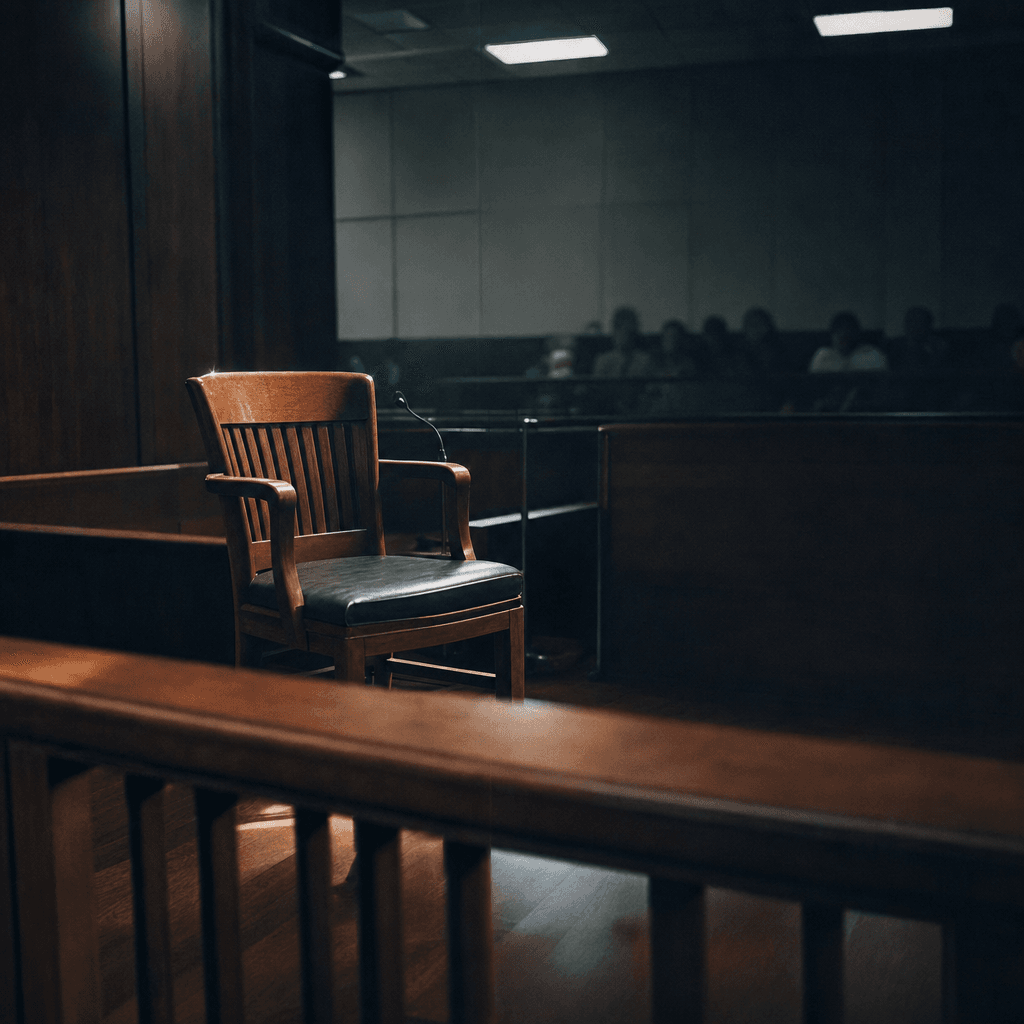
Elon Musk dominated the courtroom this week, taking the stand for three consecutive days in his blockbuster trial against OpenAI CEO Sam Altman. The world’s richest person accused Altman of betraying OpenAI’s nonprofit roots with a pointed courtroom declaration: ‘You can’t just steal a charity.’ The Oakland trial marks a dramatic escalation in the bitter feud between the two tech titans over OpenAI’s controversial shift from nonprofit AI lab to a for-profit juggernaut now valued at $157 billion.
Elon Musk spent three full days on the witness stand this week, using the Oakland courtroom as a platform to air his grievances against OpenAI and its CEO Sam Altman. His testimony wasn’t just legal strategy – it was a calculated public indictment of what he sees as Silicon Valley’s most brazen bait-and-switch.
‘You can’t just steal a charity,’ Musk declared during cross-examination, according to courtroom observers. The line cuts to the heart of his case: that Altman and OpenAI’s leadership systematically dismantled the nonprofit structure Musk helped fund and build, then reconstituted it as a capped-profit entity that now prints money for Microsoft and early investors.
The trial comes at a pivotal moment for AI. OpenAI’s ChatGPT has become the fastest-growing consumer application in history, while the company races toward artificial general intelligence – the long-sought goal of human-level machine cognition. But Musk argues the whole enterprise was built on a lie. He claims he donated roughly $50 million to OpenAI between 2015 and 2018 based on explicit promises that it would remain a nonprofit focused on developing safe AI for humanity’s benefit, not shareholder returns.
Altman’s legal team has painted Musk as a scorned founder seeking revenge after losing a power struggle. They point to Musk’s own AI venture, xAI, which raised $6 billion last year and directly competes with OpenAI. The implication: Musk wants to kneecap a rival while claiming the moral high ground. But Musk’s three days of testimony suggest he came prepared to fight on substance, not just optics.
The Tesla and SpaceX chief walked jurors through internal emails and board documents that allegedly show Altman planning OpenAI’s for-profit conversion as early as 2017 – while still soliciting donations under the nonprofit banner. Musk’s lawyers argue this constitutes fraud, breach of fiduciary duty, and misappropriation of charitable assets. If they prevail, the remedies could range from financial damages to unwinding OpenAI’s entire corporate structure.
Legal experts watching the trial say the case hinges on a surprisingly murky area of nonprofit law. While companies can convert from nonprofit to for-profit status, the process requires rigorous safeguards to ensure charitable assets aren’t diverted to private gain. Musk’s team contends OpenAI failed those tests spectacularly. OpenAI maintains it followed proper procedures and that the capped-profit structure still serves its original mission by funding safety research.
The courtroom drama also exposed personal tensions that have simmered since Musk’s 2018 departure from OpenAI’s board. He testified that Altman systematically sidelined him when he raised concerns about the company’s direction, ultimately forcing him out. Altman hasn’t taken the stand yet – his testimony is expected in week two – but pretrial filings suggest he’ll argue Musk left voluntarily after his proposal to merge OpenAI with Tesla was rejected.
Beyond the legal fireworks, the trial offers a rare window into how today’s AI giants actually operate. Musk’s testimony included details about OpenAI’s early fundraising, its relationship with Microsoft (which has invested $13 billion and owns 49% of the for-profit arm), and internal debates about AI safety that have never been publicly disclosed. For an industry that trades in opacity, the forced transparency is remarkable.
The stakes extend far beyond Musk and Altman’s egos. If Musk wins, it could chill the growing trend of AI startups launching as nonprofits to attract idealistic talent and donations, then converting to for-profit entities once the technology proves valuable. Anthropic, Cohere, and several other AI labs have employed variations of this playbook. A ruling against OpenAI might force the entire sector to rethink how it structures mission-driven work alongside commercial ambitions.
Musk’s competing AI venture, xAI, adds another layer of intrigue. He launched the company in 2023 with the stated goal of building ‘maximally truth-seeking AI’ – a direct shot at what he sees as OpenAI’s compromised mission. xAI’s Grok chatbot now powers features on X (formerly Twitter), and the company is building one of the world’s largest supercomputer clusters in Memphis. Critics say Musk’s lawsuit is just industrial sabotage dressed up as principle. His supporters counter that he’s the only tech billionaire willing to challenge AI’s consolidation into a Microsoft-backed monopoly.
The trial’s first week also featured testimony from former OpenAI employees and board members, though Musk’s presence dominated proceedings. His star power drew crowds to the Oakland courthouse and turned what could have been an arcane nonprofit governance dispute into must-watch legal theater. Whether that helps or hurts his case remains to be seen – juries can be skeptical of celebrity plaintiffs, especially ones worth north of $200 billion.
Week two promises even more drama when Altman takes the stand to defend his decisions. The OpenAI CEO has largely avoided public comment on the lawsuit, but his lawyers have signaled he’ll portray Musk as a brilliant engineer who became a vindictive adversary when he couldn’t control OpenAI’s direction. The clash between two of tech’s most influential figures could define not just this case, but the broader debate about who gets to shape humanity’s AI future.
The Musk-Altman trial isn’t just a billionaire grudge match – it’s a referendum on how AI companies balance mission and money. Musk’s three days of testimony painted OpenAI’s evolution as a cautionary tale of nonprofit ideals sacrificed for commercial gain. Altman’s counter-narrative will frame it as necessary pragmatism in an expensive, competitive field. The jury will decide who’s right legally, but the tech industry is already drawing its own conclusions about what happens when you build world-changing technology on a foundation of conflicting incentives. As AI capabilities accelerate toward AGI, the governance questions at the heart of this trial only become more urgent. Whatever the verdict, this case will shape how the next generation of AI labs structures itself – and whether anyone believes their mission statements.





Leave a Reply