
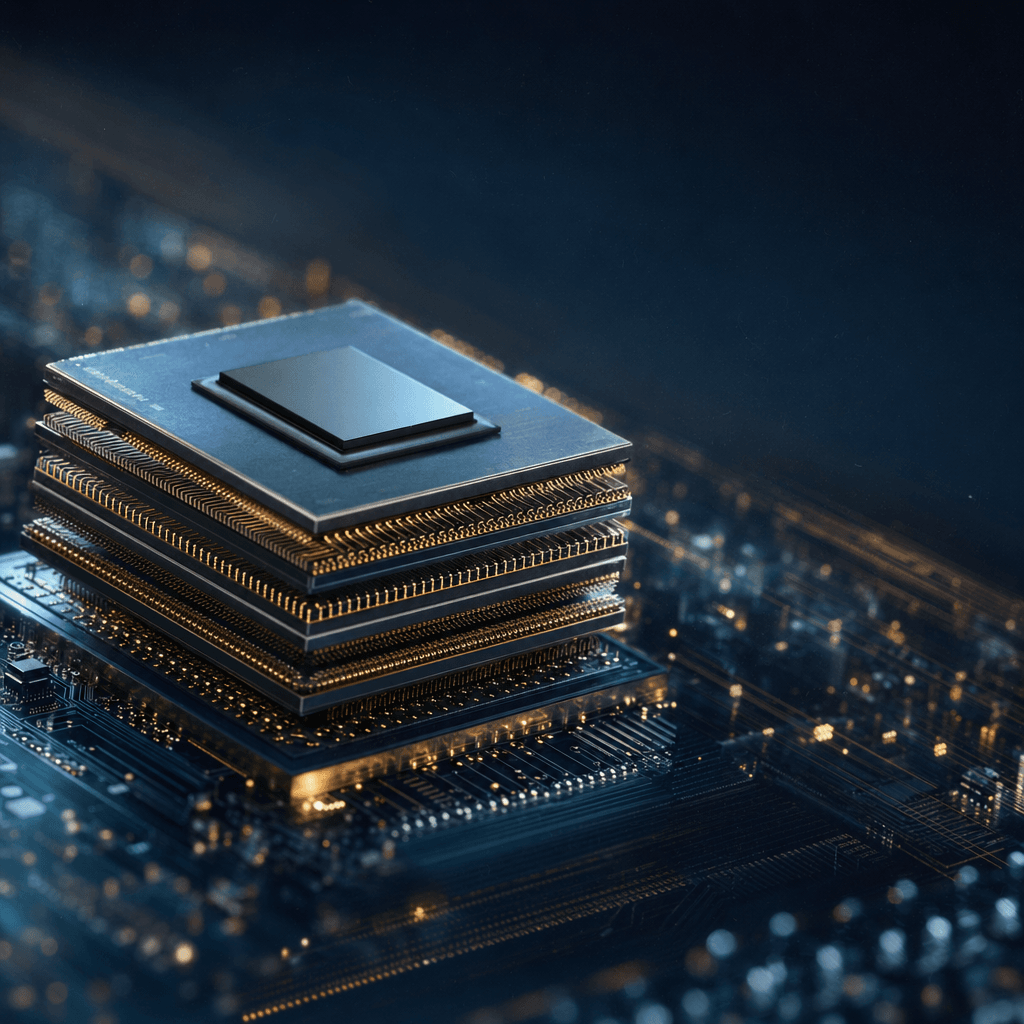
Samsung Electronics just posted the biggest quarter in its history, riding the AI infrastructure wave to record-breaking results. The Korean tech giant reported 133.9 trillion won ($100 billion) in revenue and 57.2 trillion won in operating profit for Q1 2026, with its memory division alone raking in 53.7 trillion won as it became the first to ship HBM4 chips at scale for Nvidia’s Vera Rubin platform. The 86% quarter-over-quarter revenue surge in its Device Solutions division signals how completely AI demand is reshaping the semiconductor landscape.
Samsung Electronics is printing money off the AI boom, and the numbers are staggering. The company’s Q1 2026 results, released today, show a 43% quarter-over-quarter revenue increase to 133.9 trillion won, with operating profit hitting 57.2 trillion won – both all-time records. But dig into the divisional breakdowns and the real story emerges: this is a memory chip story, pure and simple.
The Device Solutions division, which houses Samsung’s semiconductor operations, saw revenue explode 86% from the previous quarter to 81.7 trillion won. Operating profit in that division alone reached 53.7 trillion won, driven almost entirely by the Memory Business, which according to Samsung’s official earnings report “surpassed its quarterly sales record by addressing high-value-added AI demand despite limited supply availability.”
What’s driving this unprecedented growth? Samsung became the first chipmaker to ship HBM4 and SOCAMM2 memory at volume for Nvidia’s Vera Rubin platform – the latest generation of AI accelerators powering everything from ChatGPT to enterprise AI deployments. The company also rolled out PCIe Gen6 SSDs ahead of competitors, positioning itself as the go-to supplier for hyperscalers racing to build out AI infrastructure.
Industry-wide memory price increases helped, but Samsung’s technical edge is what’s really moving the needle. The company’s betting that AI infrastructure expansion won’t slow down anytime soon. In Q2 2026, Samsung plans to deliver its first HBM4E samples – an even more advanced version of high-bandwidth memory – to maintain its technology lead. The timeline suggests Samsung’s already working with Nvidia and other GPU makers on next-generation platforms set to launch in the second half of 2026.
The company’s forward guidance reveals just how bullish it is on AI demand. Samsung expects server memory demand to “remain strong as hyperscalers accommodate enterprises’ increasing adoption of AI and LLM services,” with agentic AI – systems that can act autonomously on behalf of users – expected to “accelerate growth in demand” in the second half of 2026. Translation: the current boom is just getting started.
Samsung’s also pushing into emerging AI storage markets, planning to lead the PCIe Gen6 eSSD segment with products optimized for KV cache storage – the memory systems that help large language models retrieve information quickly. It’s a smart play that positions Samsung across the entire AI memory stack, from ultra-fast HBM sitting directly on GPUs to high-performance SSDs handling inference workloads.
The foundry business tells a more complicated story. Earnings declined quarter-over-quarter due to seasonal factors, but Samsung’s maintaining design wins in high-performance computing and building out silicon photonics capabilities – critical for next-generation data center interconnects. The company plans to hit full utilization of advanced-node production lines in Q2 2026 while ramping up HBM4 base-die supply. Development of the 1.4nm process node remains on schedule, with Samsung chasing large-scale 2nm customers to compete with TSMC.
Looking to the second half of 2026, Samsung’s foundry division will begin volume production of second-generation 2nm chips for mobile products, plus 4nm memory products and LPUs (AI inference processors) for AI and HPC customers. The company’s also diversifying beyond its traditional customer base, targeting automotive and aerospace applications for its advanced processes.
But while semiconductors soar, Samsung’s consumer-facing businesses are struggling with reality. The Device Experience division – which includes smartphones and networks – posted 38.1 trillion won in revenue and just 2.8 trillion won in operating profit for Q1 2026. The mobile business achieved “single-digit profitability” through what Samsung diplomatically calls “proactive cost optimization,” facing down rising component costs and competitive pressure.
The flagship smartphone launches helped boost Q1 numbers, but Samsung’s already warning that Q2 will see quarter-over-quarter revenue declines as launch effects fade. The company’s banking on new A-series devices to drive year-over-year growth while pushing premium foldables and efficiency initiatives to protect margins. It’s a far cry from the memory division’s explosive growth.
Samsung Display managed 6.7 trillion won in revenue and 400 billion won in operating profit, with OLED gaming monitors providing some bright spots. But the display business is navigating “market uncertainty and low visibility” in small and medium panels, banking on premium products and the upcoming ramp of 8.6G IT OLED production to drive second-half growth.
The consumer electronics and Harman automotive audio businesses posted a combined 14.3 trillion won in revenue but only 200 billion won in operating profit – essentially break-even territory. Premium TV sales and sporting event demand are expected to help in Q2 2026, while Harman faces memory supply constraints affecting its automotive business. Both divisions are pursuing cost efficiency programs while trying to maintain premium positioning.
Samsung’s networks division, meanwhile, is dealing with investment headwinds in the telecom industry, seeing earnings decline both quarter-over-quarter and year-over-year. The company’s betting on vRAN, ORAN, and AI-RAN technologies to capture new markets while implementing “structural cost discipline” – corporate speak for cost cuts – to return to profitability.
The earnings report makes one thing clear: Samsung’s transformation into an AI infrastructure company is happening faster than anyone expected. The memory and foundry businesses aren’t just outperforming – they’re completely overshadowing everything else Samsung does. Consumer electronics, displays, mobile phones – they’re all sideshows now compared to the money Samsung’s making selling picks and shovels to AI gold miners.
Samsung’s Q1 2026 results are a watershed moment – proof that the AI infrastructure buildout isn’t hype, it’s reshaping the entire tech industry’s profit pools. The company’s 86% revenue jump in semiconductors, driven by first-to-market HBM4 deployment and AI-optimized storage, shows what happens when you nail the technology transitions that matter. But the earnings disparity between Samsung’s chip operations and everything else also reveals the challenge ahead: maintaining technology leadership in memory and foundry while managing lower-margin consumer businesses through cost pressures and market uncertainty. The HBM4E samples coming in Q2 2026 and the 1.4nm roadmap will determine whether Samsung can hold off competition and keep riding this wave, or whether this quarter marks peak profitability before the inevitable semiconductor cycle turns.








Leave a Reply