
- ■
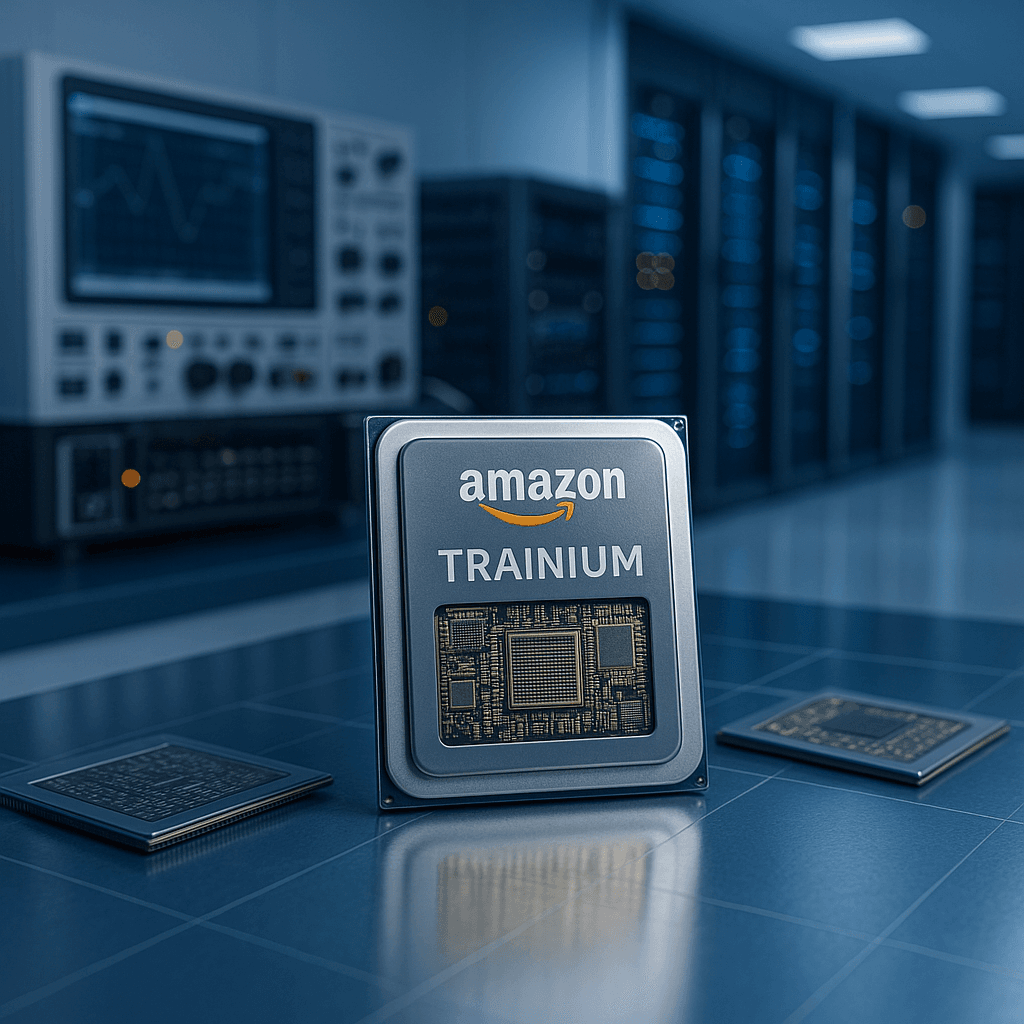
Amazon Web Services granted exclusive access to its Trainium chip lab following the announcement of a $50 billion investment in OpenAI
- ■
- ■
AWS’s proprietary silicon strategy aims to control the entire AI infrastructure stack from chips to cloud services
- ■
The partnership positions Amazon as the critical infrastructure provider for the next generation of large language models
Amazon just opened the doors to its secretive Trainium chip lab, the custom silicon facility at the center of its massive $50 billion OpenAI investment. The rare behind-the-scenes access reveals how AWS is betting its proprietary AI infrastructure can break Nvidia’s stranglehold on the AI chip market – and it’s already landed Anthropic and even Apple as customers. The move signals Amazon’s aggressive push to become the backbone of AI training, not just cloud storage.
Amazon Web Services is making its boldest play yet to own the AI infrastructure stack. Just days after announcing a staggering $50 billion investment in OpenAI, the cloud giant invited TechCrunch into the secretive chip lab where its Trainium processors are designed and tested. The facility, tucked away in AWS’s data center operations, represents Amazon’s answer to a critical question facing every AI company: how do you break free from Nvidia’s grip on AI training hardware?
The Trainium lab isn’t just about building cheaper alternatives to Nvidia’s H100 GPUs. According to engineers who walked me through the facility, these custom chips are optimized specifically for training large language models at the scale companies like OpenAI and Anthropic demand. The performance gains come from tight integration with AWS’s networking infrastructure and custom software stacks that generic GPUs can’t match.
What makes this tour particularly revealing is the timing. Amazon’s $50 billion commitment to OpenAI isn’t just a financial investment – it’s a infrastructure bet. will train its next-generation models on massive Trainium clusters, essentially making Amazon the exclusive infrastructure provider for what could be GPT-5 and beyond. That’s a significant shift from OpenAI’s previous reliance on and Nvidia hardware.










Leave a Reply