
- ■
Early AI adopters are experiencing burnout as productivity gains lead to expanded workloads instead of freed time, TechCrunch reports
- ■
Work is bleeding into lunch breaks and evenings as employees’ to-do lists grow to fill every hour automation saves
- ■
The productivity paradox reveals AI tools create expectation inflation rather than work-life balance improvements
- ■
Enterprise leaders must rethink AI deployment strategies before burnout spreads beyond early adopters
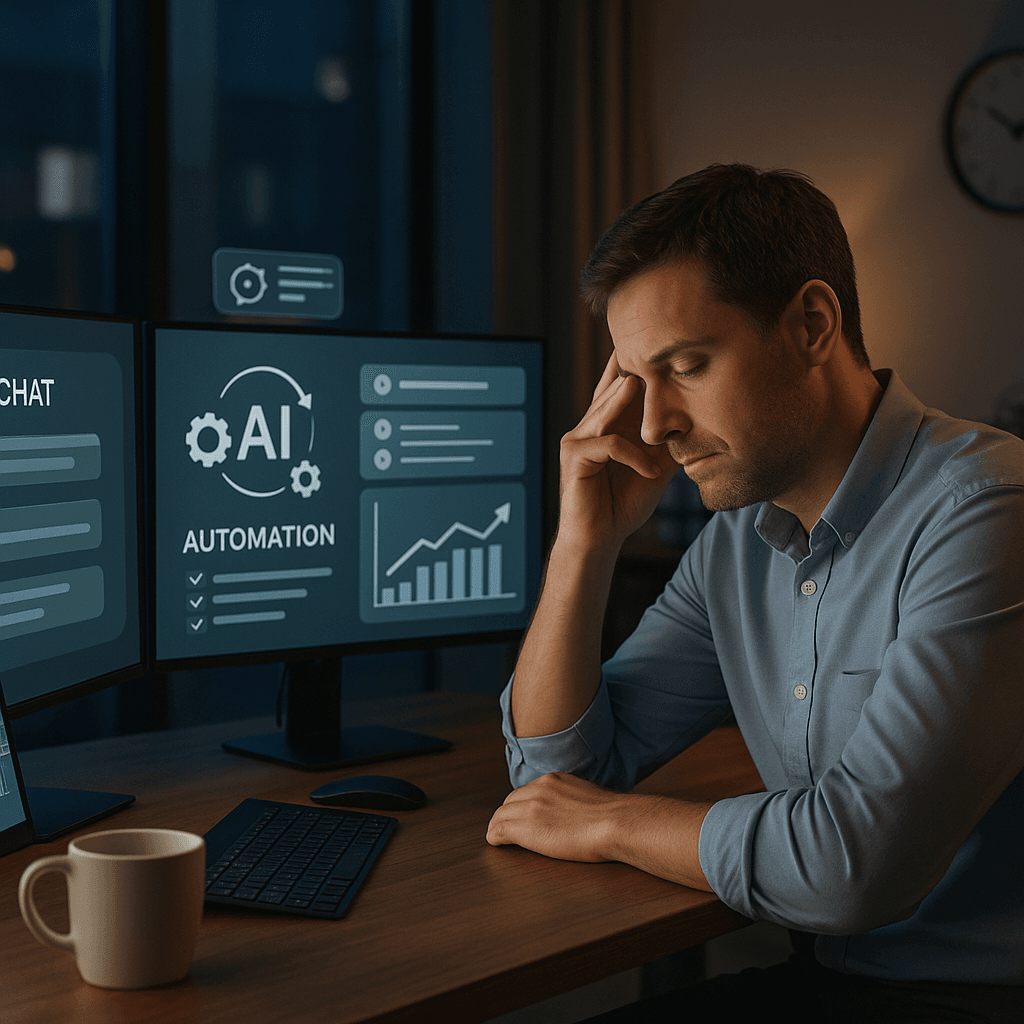
The promise of AI was supposed to give workers their time back. Instead, it’s doing the opposite. A troubling pattern is emerging across companies that embraced AI tools early – the employees who adopted automation fastest are now showing the first signs of burnout. According to TechCrunch, the paradox is simple but brutal: because employees could do more, work began bleeding into lunch breaks and late evenings, with to-do lists expanding to fill every hour AI freed up, and then kept going.
The AI productivity revolution just hit its first major roadblock, and it’s not the technology that’s failing – it’s the humans using it. Workers who jumped on AI tools like ChatGPT, Microsoft Copilot, and enterprise automation platforms are now facing an unexpected consequence: they’re burning out faster than colleagues who resisted the change.
The pattern emerging from early enterprise AI deployments tells a story Silicon Valley didn’t anticipate. When knowledge workers started using AI to write emails, generate reports, and automate routine tasks, they didn’t get afternoons off. Instead, managers saw the productivity gains and simply piled on more work. One marketing professional who adopted OpenAI’s tools told TechCrunch that her capacity to produce content tripled – and so did her quota.
This phenomenon reveals a fundamental misunderstanding about how organizations absorb new technology. The economic principle at play here isn’t new – it’s Jevons paradox, where increased efficiency leads to increased consumption rather than conservation. When steam engines became more fuel-efficient in the 1800s, coal consumption went up, not down. Now we’re seeing the same dynamic with human attention and AI.
The workplace implications are starting to worry enterprise leaders who championed AI adoption. Companies that pushed employees toward Microsoft’s Copilot or Workspace AI are noticing something troubling in their internal surveys. The most enthusiastic AI users report working longer hours, not shorter ones. Lunch breaks disappeared as employees discovered they could knock out “just one more task” with AI assistance. Evening work crept in because drafting that presentation with AI only takes 20 minutes now.




Leave a Reply