
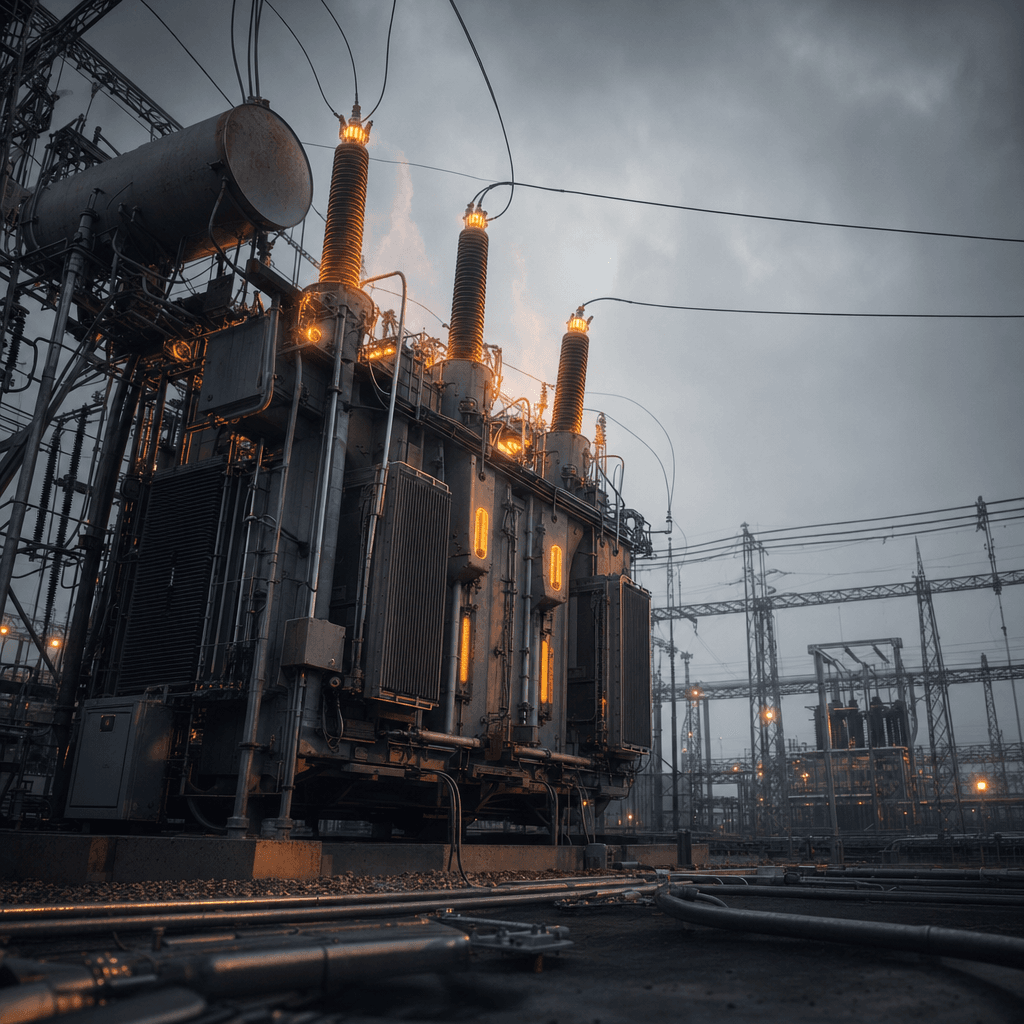
Denmark is confronting a critical infrastructure crisis as the explosive growth of AI-driven data centers threatens to overwhelm its power grid. The Scandinavian nation is now weighing unprecedented limits on new facilities, joining a growing list of governments worldwide grappling with the collision between AI ambitions and energy reality. The move signals a potential turning point for the data center industry, which has long counted on European expansion to fuel growth.
Denmark is hitting the brakes on data center expansion as the country’s power infrastructure buckles under surging demand from AI workloads. The Danish government is actively considering restrictions on new facilities, a dramatic shift for a nation that’s been courting tech investment for years.
The crisis unfolding in Denmark isn’t isolated. It’s a warning shot for the entire data center industry, which has been racing to build capacity for AI training and inference. Countries across Europe and beyond are watching closely as energy grids strain under loads that were unthinkable just three years ago.
Power consumption at data centers has skyrocketed as companies like Microsoft, Google, and Amazon pour billions into AI infrastructure. A single large language model training run can consume as much electricity as thousands of homes use in a year. Denmark’s grid operators are finding that the math simply doesn’t work anymore.
The timing couldn’t be worse for hyperscale cloud providers. Microsoft recently announced plans to invest $80 billion in AI-capable data centers this year alone. Google and Amazon have committed similar amounts. But those plans assumed governments would keep the doors open.
Denmark’s potential moratorium represents something new – regulatory pushback based purely on infrastructure capacity, not environmental concerns or land use. The country has been a renewable energy leader, but even its substantial wind and solar installations can’t keep pace with AI’s appetite.
Other European nations are watching Denmark’s next move carefully. Ireland already restricts new data center connections in Dublin due to grid constraints. The Netherlands has paused permits in Amsterdam. Singapore implemented similar limits years ago. The pattern is clear: desirable markets are closing.
The industry argues it’s investing heavily in efficiency and renewable energy. Meta says its data centers are among the most efficient in the world. Google claims it matches 100% of its electricity consumption with renewable energy purchases. But that doesn’t solve the immediate problem of physical grid capacity.
Energy experts point out that AI workloads are fundamentally different from traditional cloud computing. They run continuously at high intensity rather than fluctuating with user demand. This creates sustained baseload requirements that renewable sources alone struggle to meet without massive battery storage.
The economic implications are substantial. Data centers represent billions in investment and hundreds of high-paying jobs. Denmark has benefited from tech sector growth, but officials are now questioning whether the infrastructure costs outweigh the benefits.
Some industry observers see this as a catalyst for decentralization. If prime locations become unavailable, providers might distribute workloads across more sites in less congested regions. Others predict a return to on-premise AI infrastructure for enterprises that can’t secure cloud capacity.
The power crunch is also accelerating innovation in chip efficiency. Nvidia and competitors are racing to deliver more AI performance per watt. But even dramatic efficiency gains won’t offset the sheer scale of deployment plans.
What happens in Denmark over the next few months will reverberate through the industry. If the moratorium becomes reality, expect other nations to follow. The era of unlimited data center expansion may be ending, forcing Big Tech to make harder choices about where and how to build AI infrastructure. For an industry built on the assumption of infinite scaling, that’s a sobering new reality.
Denmark’s infrastructure crisis represents more than a local regulatory issue – it’s a bellwether for the AI industry’s collision with physical reality. As governments worldwide confront similar grid constraints, Big Tech faces a future where data center expansion can’t simply follow demand. The companies that adapt fastest, whether through efficiency innovations, distributed architectures, or strategic location choices, will maintain their AI advantages. Those that don’t may find their ambitious AI roadmaps constrained not by technology or talent, but by access to electricity itself.









Leave a Reply