
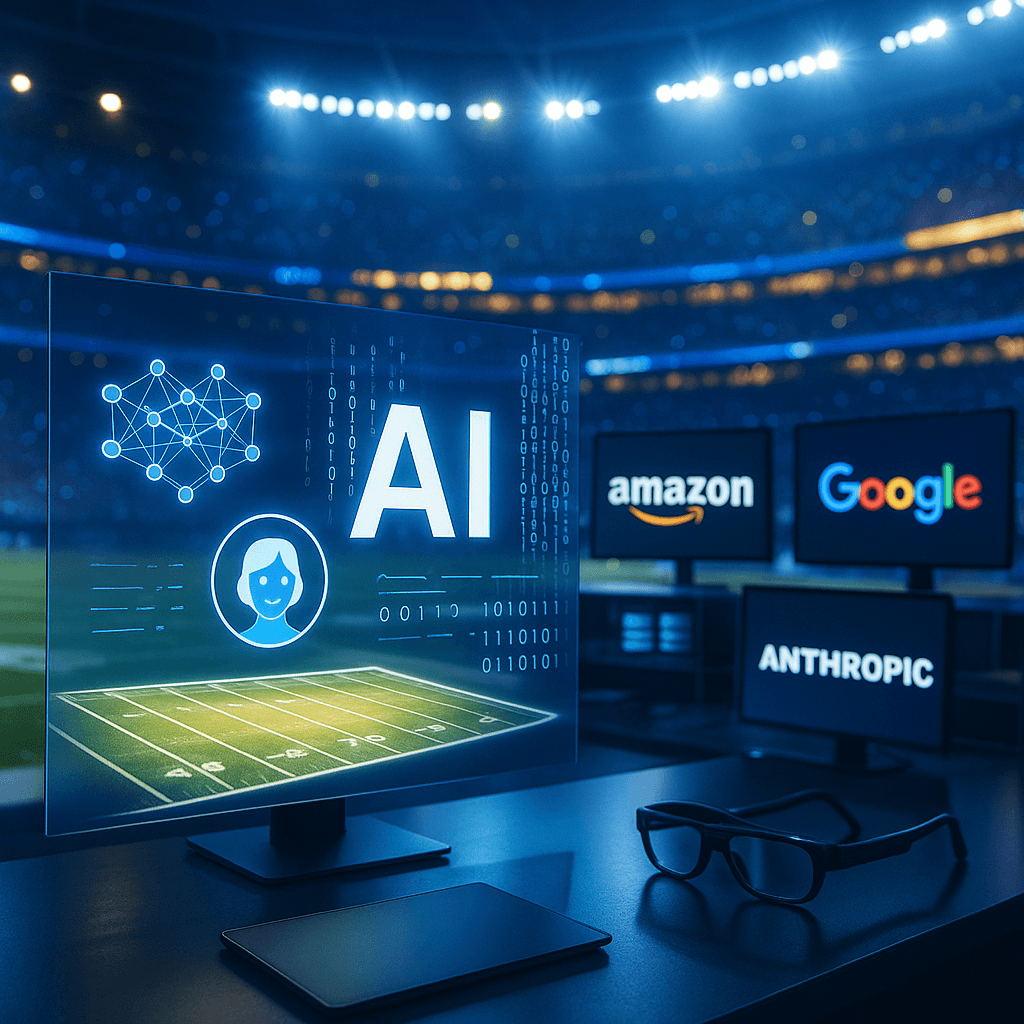
Svedka debuts first AI-generated Super Bowl ad while Anthropic throws shade at OpenAI
PUBLISHED: Fri, Feb 6, 2026, 11:38 PM UTC | UPDATED: Sat, Feb 7, 2026, 12:54 AM UTC

- ■
Svedka aired the first predominantly AI-generated Super Bowl commercial, taking four months to train AI to animate its Fembot character, according to The Wall Street Journal
- ■
- ■
- ■
The AI advertising blitz signals mainstream brands are betting big on AI adoption, even as the Svedka spot reignites debates about AI replacing creative jobs
AI just crashed the Super Bowl party in a big way. Svedka made history with what it calls the first “primarily” AI-generated national Super Bowl spot, while Anthropic used its $7 million ad slot to take a direct shot at OpenAI‘s plans to introduce ads to ChatGPT. The 2026 Big Game marked a turning point where AI wasn’t just featured in commercials – it created them, starred in them, and became the product itself. From Meta‘s AI-powered Oakley glasses to Amazon‘s darkly comedic Alexa+ debut, brands spent millions betting that AI is ready for prime time.
The Super Bowl just became AI’s coming-out party. Svedka dropped what it’s calling the first predominantly AI-generated national Super Bowl commercial, a 30-second spot featuring its robot mascot Fembot and newcomer Brobot dancing at a human party. The vodka brand partnered with Silverside AI – the same team behind those controversial AI-generated Coca-Cola commercials – and spent four months training the AI to reconstruct Fembot and mimic facial expressions and body movements, according to The Wall Street Journal.
It’s a gutsy move for an event synonymous with star-studded, high-budget productions. Svedka’s parent company Sazerac was quick to note that humans still handled key creative decisions like developing the storyline, but the heavy AI reliance is already fueling heated debates about whether the technology will replace creative jobs. When you’re spending upwards of $7 million for a 30-second spot, betting on AI-generated content instead of traditional production is either visionary or reckless – and the industry can’t decide which.
But the real drama unfolded with Anthropic. The AI startup didn’t just promote its Claude chatbot – it declared war on OpenAI. The commercial’s tagline, “Ads are coming to AI. But not to Claude,” was a direct jab at OpenAI’s recently announced plans to introduce ads to ChatGPT. Rather than showcase features, Anthropic poked fun at the idea of your helpful AI assistant suddenly hawking “Step Boost Maxx” insoles.
The shade didn’t go unnoticed. OpenAI CEO Sam Altman fired back on social media, calling the ad “clearly dishonest.” While we didn’t get another Kendrick vs. Drake rap battle this year, we got something arguably nerdier – an AI founder feud playing out during football’s biggest night. The exchange lit up tech Twitter, with some calling it the “AI, nerdy version” of hip-hop beef.
Meta took a different approach, spotlighting its Oakley-branded AI glasses designed for sports and extreme adventures. The ad featured skydivers, mountain bikers, and thrill-seekers – including YouTuber iShowSpeed and filmmaker Spike Lee – using the glasses to capture epic moments, film basketball dunks in slow motion, and post hands-free to Instagram. It’s Meta’s second consecutive Super Bowl pushing wearable AI, following last year’s Ray-Ban Meta glasses spot with Chris Pratt and Kris Jenner. The company is clearly betting that AI glasses are the next big consumer hardware play.
Amazon went for dark comedy, starring Chris Hemsworth in a satirical “AI is out to get me” storyline. The spot exaggerates common AI anxieties, with Hemsworth accusing Alexa+ of plotting against him as it closes the garage door on his head and shuts the pool cover mid-swim. Beyond the jokes, the commercial introduced the enhanced Alexa+, which had been in early access for over a year and officially launched to all U.S. users just days before the game. The ad walks a fine line between making AI feel friendly and acknowledging legitimate fears about smart home devices gone rogue.
Ring, Amazon’s home security subsidiary, highlighted its AI-powered “Search Party” feature for reuniting lost pets with owners. The commercial followed a young girl searching for her dog Milo, showing how users can upload a pet photo and tap into Ring’s community network and AI matching to track down missing animals. Ring recently opened the feature to non-Ring camera owners, and claims it’s already reuniting more than one lost dog with its owner every day.
Google showcased its Nano Banana Pro, its newest image-generation model. The ad followed a mother and son using AI to design their new home, uploading photos of bare rooms and transforming them into personalized spaces with simple prompts. It’s a more practical, relatable use case than many AI demos – though it also hints at disruption coming for interior designers and home staging professionals.
Enterprise software companies jumped in too. Ramp featured Brian Baumgartner – Kevin from “The Office” – using its AI-powered spend management platform to “multiply” himself and tackle mountains of work. The ad included a playful callback to Kevin’s infamous chili-spilling scene. Meanwhile, cloud workforce management platform Rippling made its Super Bowl debut with comedian Tim Robinson in a spot about onboarding an alien monster, poking fun at HR headaches and AI automation promises.
Website builder Wix promoted its new AI-powered Wix Harmony platform, unveiled in January, which combines AI-driven creation and “vibe coding” with visual editing. Its biggest competitor Squarespace also ran a Super Bowl ad, though with a more cinematic approach starring Emma Stone and directed by Yorgos Lanthimos.
Even health company Hims & Hers got in on the action, using its spot to address healthcare access disparities while subtly poking fun at Jeff Bezos’s Blue Origin spaceflight and Bryan Johnson’s expensive anti-aging routines. The company has been integrating AI into its platform with a “MedMatch” tool for personalized treatment recommendations.
The AI advertising blitz represents a major shift from last year’s Super Bowl, when brands were just beginning to showcase AI capabilities. This year, AI wasn’t just the supporting actor – it was the star, the director, and the product all at once.
The 2026 Super Bowl marked the moment AI moved from tech curiosity to mainstream marketing force. Between Svedka’s AI-generated production, Anthropic’s competitive jabs at OpenAI, and a parade of AI-powered products from Meta to Amazon, brands spent millions betting that consumers are ready to embrace AI in their daily lives. But the Svedka commercial also sparked uncomfortable questions about AI’s role in creative industries – a debate that’s only going to intensify as the technology improves. Whether these Super Bowl spots accelerate AI adoption or fuel backlash remains to be seen, but one thing’s clear: AI just had its biggest cultural moment yet, and the industry is watching closely to see if mainstream audiences are buying what Silicon Valley is selling.





Leave a Reply