
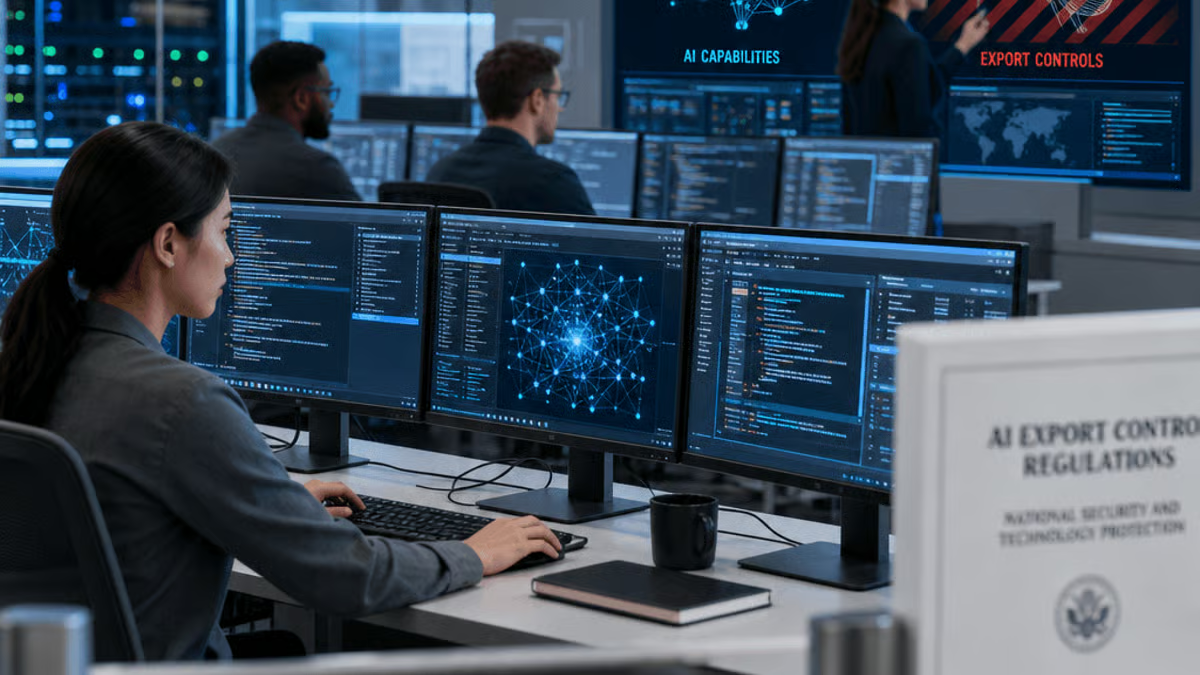
Dozens of cybersecurity veterans are pushing back against the White House’s export control restrictions on Anthropic’s most powerful AI models, Fable and Mythos. The group argues the government’s move will cripple security defenders who rely on cutting-edge AI to protect software and products from increasingly sophisticated threats. The protest adds a critical industry voice to the growing controversy over how the U.S. regulates frontier AI systems, particularly as security teams race to keep pace with AI-powered attacks.
Anthropic just became the center of a regulatory firestorm that’s pitting government security concerns against the very cybersecurity professionals tasked with defending critical systems. A coalition of dozens of industry veterans is challenging White House export control restrictions on the company’s most advanced AI models, Fable and Mythos, warning the ban could backfire catastrophically.
The protest letter, first reported by TechCrunch, argues that blocking access to these frontier models will handicap the very people who need them most – security defenders racing to counter AI-powered cyberattacks. It’s a striking reversal of the usual narrative around AI export controls, where critics typically focus on preventing adversaries from accessing powerful systems.
The timing couldn’t be more fraught. Anthropic‘s Fable and Mythos models represent the cutting edge of large language model capabilities, with performance that rivals or exceeds offerings from OpenAI and Google. Security researchers have increasingly turned to these systems for tasks like vulnerability discovery, code analysis, and threat modeling – exactly the kind of defensive work the expert group says will suffer under the restrictions.
But the White House appears to be drawing a hard line on frontier AI exports, part of a broader push to prevent China and other adversaries from accessing the most powerful systems. The controls on Anthropic’s models follow a pattern of increasingly aggressive AI export restrictions that began accelerating in early 2024, when the Commerce Department first floated comprehensive rules around advanced AI systems.
The cybersecurity veterans’ argument hinges on a crucial asymmetry: attackers don’t need export licenses. Sophisticated threat actors, whether state-sponsored groups or criminal syndicates, can access powerful AI models through black markets, leaked weights, or simply by developing their own systems. Meanwhile, legitimate security teams at U.S. companies and allied nations face bureaucratic hurdles that slow their ability to deploy defensive AI.
This creates what the group calls a “dangerous” advantage for adversaries. When defenders can’t access the same caliber of AI tools as attackers, the security gap widens. It’s the digital equivalent of requiring police to file paperwork before accessing bulletproof vests while criminals face no such constraints.
Anthropic itself has remained largely silent on the export controls, though the company has previously emphasized its commitment to AI safety and responsible deployment. The startup, founded by former OpenAI executives, has positioned itself as a leader in AI alignment research while building commercially competitive models. The export restrictions put the company in an awkward position – unable to serve international customers who might use its technology for legitimate security work.
The controversy also highlights the growing pains of AI regulation more broadly. Policymakers are trying to balance innovation, national security, and safety concerns without clear playbooks. Export controls are a blunt instrument, borrowed from decades of managing physical technology like semiconductors and weapons systems. Whether they translate effectively to AI – which can be copied, modified, and distributed with a few keystrokes – remains hotly debated.
For cybersecurity professionals, the stakes feel immediate. As AI-generated phishing attacks, automated vulnerability scanners, and machine learning-enhanced malware proliferate, defensive teams need every advantage they can get. Restricting access to the most capable AI models, they argue, is like fighting tomorrow’s wars with yesterday’s weapons.
The protest letter doesn’t just criticize – it proposes alternatives. The experts suggest more nuanced controls that distinguish between offensive and defensive use cases, expedited licensing for verified security researchers, and closer collaboration between government and industry on AI security standards. Whether the White House will listen remains to be seen.
The clash over Anthropic’s export restrictions reveals a fundamental tension in AI governance: how to protect national security without undermining the very professionals tasked with defending critical systems. As AI capabilities accelerate and cyber threats grow more sophisticated, finding the right balance isn’t just a policy question – it’s a practical necessity. The cybersecurity veterans’ protest signals that current approaches may need serious rethinking before they create more vulnerabilities than they prevent. What happens next could set precedents for how the U.S. manages AI technology for years to come.









Leave a Reply