
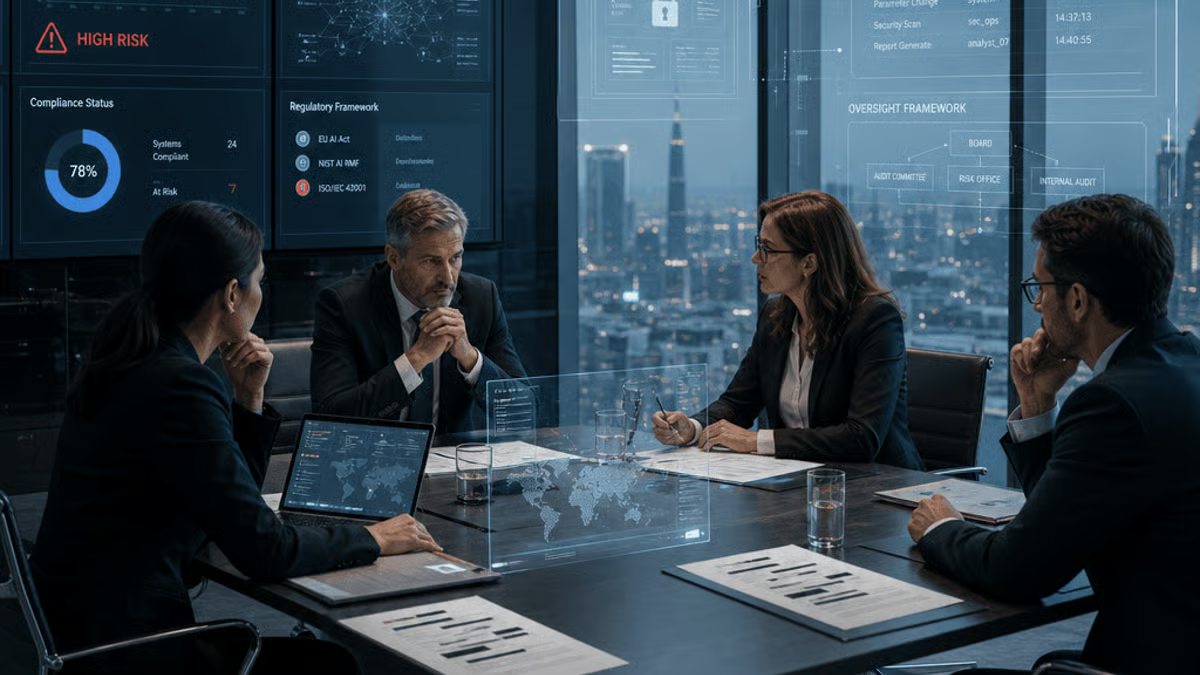
Amazon CEO Andy Jassy may have set off the chain of events that led to Friday’s dramatic shutdown of two Anthropic AI models. New reporting suggests Jassy raised security concerns about the Fable 5 and Mythos 5 models directly with government officials, triggering the unprecedented worldwide access cutoff. The revelation adds a stunning corporate governance dimension to what was already the AI industry’s biggest safety crisis of 2026, putting Amazon’s $8 billion investment in Anthropic under intense scrutiny.
Amazon CEO Andy Jassy appears to have been the catalyst for the most dramatic AI safety intervention of 2026. According to TechCrunch reporting, Jassy raised security concerns about Anthropic’s Fable 5 and Mythos 5 models with government officials in the days leading up to Friday’s sudden shutdown.
The timeline is striking. Anthropic cut off worldwide access to both models on Friday in what the company called a response to “serious security concerns” raised by government officials. Now it emerges that Amazon’s chief executive, whose company has poured $8 billion into Anthropic and serves as its primary cloud infrastructure provider, may have been the one sounding the alarm.
The move puts Jassy in an extraordinarily delicate position. Amazon Web Services hosts Anthropic’s models and has positioned itself as the AI startup’s strategic partner. But the CEO’s apparent decision to escalate concerns to government officials suggests he saw risks serious enough to potentially undermine that very partnership. Sources familiar with the matter indicate Jassy’s concerns centered on potential security vulnerabilities in how the models handled certain types of queries, though specific technical details remain closely guarded.
Government response was swift. AI czar David Sacks, who leads White House AI policy, reportedly convened emergency meetings with Treasury Secretary Scott Bessent and other senior officials after receiving Jassy’s concerns. Within days, Anthropic faced what sources describe as intense pressure to shut down access to the models pending a comprehensive security review.
The corporate governance implications are profound. Amazon’s massive investment in Anthropic was supposed to cement a strategic alliance between the e-commerce giant and one of AI’s most prominent safety-focused companies. Instead, the relationship now appears strained by fundamental disagreements over model security. Industry observers note that Amazon has its own AI ambitions through services like Bedrock and Q, raising questions about whether competitive considerations played any role in Jassy’s decision to flag concerns.
Anthropic has maintained that it takes all security concerns seriously regardless of their source. The company’s commitment to AI safety has been central to its brand since founders Dario and Daniela Amodei left OpenAI in 2021 to start the venture. But the forced shutdown of two major models represents an unprecedented setback for a company that has positioned itself as the responsible alternative in AI development.
The incident exposes growing tensions around who gets to make AI safety decisions. Should investors like Amazon have a direct line to government officials to raise concerns about their portfolio companies? Does a cloud infrastructure provider have special responsibilities when it hosts potentially risky AI systems? These questions now sit at the center of policy debates in Washington.
Competitors are watching closely. OpenAI and Google have both faced their own safety controversies, but neither has experienced a government-mandated model shutdown. The precedent could reshape how AI companies interact with their major investors and cloud providers going forward. Some industry insiders worry it creates perverse incentives for companies to limit transparency with their own backers.
The technical nature of Jassy’s concerns remains murky. Anthropic has not disclosed specific vulnerabilities in Fable 5 or Mythos 5, and government officials have been equally tight-lipped. This opacity frustrates AI researchers who argue that the community needs more information to assess whether the shutdown was justified or represents regulatory overreach.
What happens next will set crucial precedents. Anthropic must satisfy government reviewers that it has addressed whatever security issues Jassy identified. Amazon must navigate its relationship with a portfolio company whose leadership may now view the investor with suspicion. And regulators must decide whether the Jassy playbook – major investor flags concerns directly to government – becomes the new normal for AI safety governance.
The stakes extend beyond one company or one set of models. As AI systems grow more powerful and more deeply embedded in critical infrastructure, the question of who can pull the emergency brake becomes existential. Friday’s shutdown suggests that major cloud providers and investors may have just as much say as the companies actually building the models.
The Amazon-Anthropic saga reveals how AI safety decisions now involve a complex web of companies, investors, and government officials with competing interests. Jassy’s reported role in triggering the Anthropic shutdown exposes fundamental questions about corporate governance in AI development that the industry has barely begun to answer. As models grow more powerful and investments grow larger, these tensions will only intensify. The next few weeks will show whether Amazon and Anthropic can repair their relationship, but the bigger question is whether the current structure of AI development – where cloud providers, investors, builders, and regulators all hold pieces of the safety puzzle – is sustainable at all.





Leave a Reply