
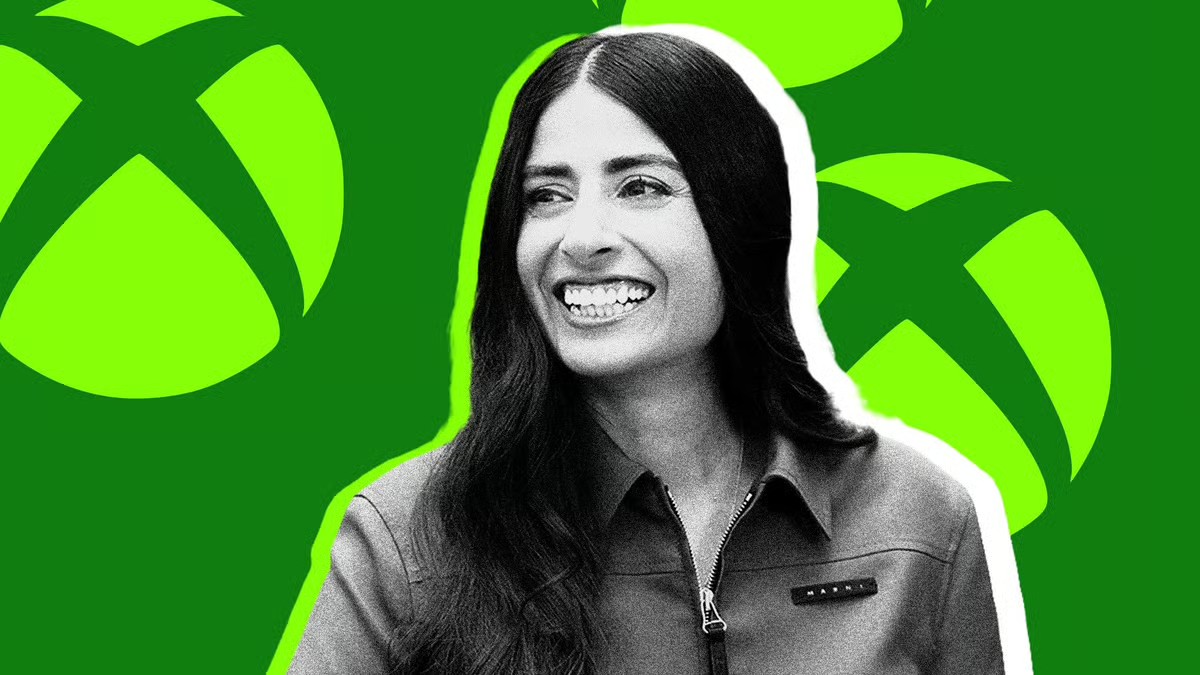
Microsoft is actively exploring a dramatic corporate restructuring that could see Xbox spun off into a separate company or even sold outright. The consideration comes as the tech giant prepares significant layoffs across its gaming division and reevaluates its next-generation console strategy, signaling that one of gaming’s biggest players might be preparing for its most consequential pivot in two decades.
Microsoft just threw the gaming world into chaos. According to a bombshell report from The Information, the tech giant has been quietly exploring options to make its Xbox division more financially sustainable – including turning it into a wholly owned subsidiary, forming a joint venture, or spinning it off entirely with the possibility of an outright sale.
The timing couldn’t be more turbulent. Microsoft is simultaneously preparing to lay off a significant chunk of its Xbox workforce while reevaluating plans for its next-generation console, codenamed Project Helix. Xbox President Asha Sharma now faces the unenviable task of steering the division through what could become its biggest transformation since Microsoft entered the console wars in 2001.
The potential spinoff represents a stunning about-face for a company that just completed its $68.7 billion acquisition of Activision Blizzard in 2023 – the largest deal in gaming history. That purchase brought Call of Duty, World of Warcraft, and Candy Crush under the Xbox umbrella, theoretically positioning Microsoft as an unstoppable force in gaming. But less than three years later, the reality has proven far more complicated.
Microsoft’s gaming struggles aren’t exactly new. The division has long operated in the shadow of Sony‘s PlayStation, which continues to dominate console sales. The Xbox Series X and Series S haven’t caught fire the way Microsoft hoped, and the company’s Game Pass subscription service – while popular among hardcore gamers – hasn’t achieved the mass-market penetration needed to justify the enormous investments.
What’s changed is Microsoft’s willingness to consider radical alternatives. The fact that executives are even discussing a spinoff suggests the current strategy isn’t delivering the returns Satya Nadella’s leadership team demands. Microsoft has poured billions into gaming over the past decade, acquiring studios like Bethesda for $7.5 billion and Mojang for $2.5 billion before the Activision megadeal. A spinoff could allow Microsoft to recoup some of that investment while refocusing on its more profitable cloud and AI businesses.
The Information’s report doesn’t indicate that any decision is imminent, but the mere consideration of these options sends a clear message: Xbox’s future within Microsoft is no longer guaranteed. A wholly owned subsidiary structure would give Xbox more operational independence while keeping it under Microsoft’s corporate umbrella. A joint venture could bring in outside capital and expertise from another gaming company or private equity firm. A full spinoff would create an entirely separate public company, potentially unlocking value that’s currently buried in Microsoft’s massive market cap.
For the gaming industry, the implications are staggering. An independent Xbox could become an acquisition target for companies like Amazon, which has struggled to break into gaming despite multiple attempts, or even Apple, which has long been rumored to have console ambitions. A joint venture might pair Xbox with a company like Tencent, the Chinese gaming giant that already owns stakes in Epic Games, Riot Games, and dozens of other studios.
The layoffs add another layer of urgency to the situation. Cutting headcount while exploring strategic alternatives typically signals that a company is preparing for significant change. Microsoft hasn’t disclosed how many jobs are at risk, but sources familiar with the matter suggest the cuts could affect thousands of employees across Xbox Game Studios, hardware development, and corporate functions.
Project Helix’s uncertain status is equally telling. Microsoft has been developing its next-generation console for years, with plans to compete against whatever Sony and Nintendo launch next. Putting those plans on hold or scaling them back dramatically would represent a fundamental shift away from the traditional console business model that’s defined Xbox since its inception.
This isn’t the first time Microsoft has questioned Xbox’s place in its portfolio. During the company’s massive restructuring in 2014, there were reports that some executives wanted to sell off the gaming division entirely. But then-CEO Nadella ultimately decided to double down on Xbox as part of a broader entertainment and services strategy. A decade later, that bet is being reevaluated.
The gaming community’s reaction has been swift and anxious. Xbox fans worry about what a spinoff could mean for Game Pass, exclusive titles, and backward compatibility. Developers at Microsoft’s 30+ gaming studios are reportedly concerned about their future, especially with layoffs already underway. Industry analysts are scrambling to model out what an independent Xbox might look like financially.
Microsoft’s consideration of spinning off Xbox marks a potential inflection point for both the company and the gaming industry. After spending over $80 billion acquiring gaming assets and positioning Xbox as central to its consumer strategy, the fact that separation is even on the table reveals just how challenging the console business has become. Whether Xbox remains part of Microsoft, becomes independent, or finds a new corporate home through a joint venture or sale, the decision will reshape the competitive landscape of gaming for years to come. For now, Xbox employees and fans alike are left waiting to see if one of gaming’s biggest brands will chart a radically different course.









Leave a Reply