
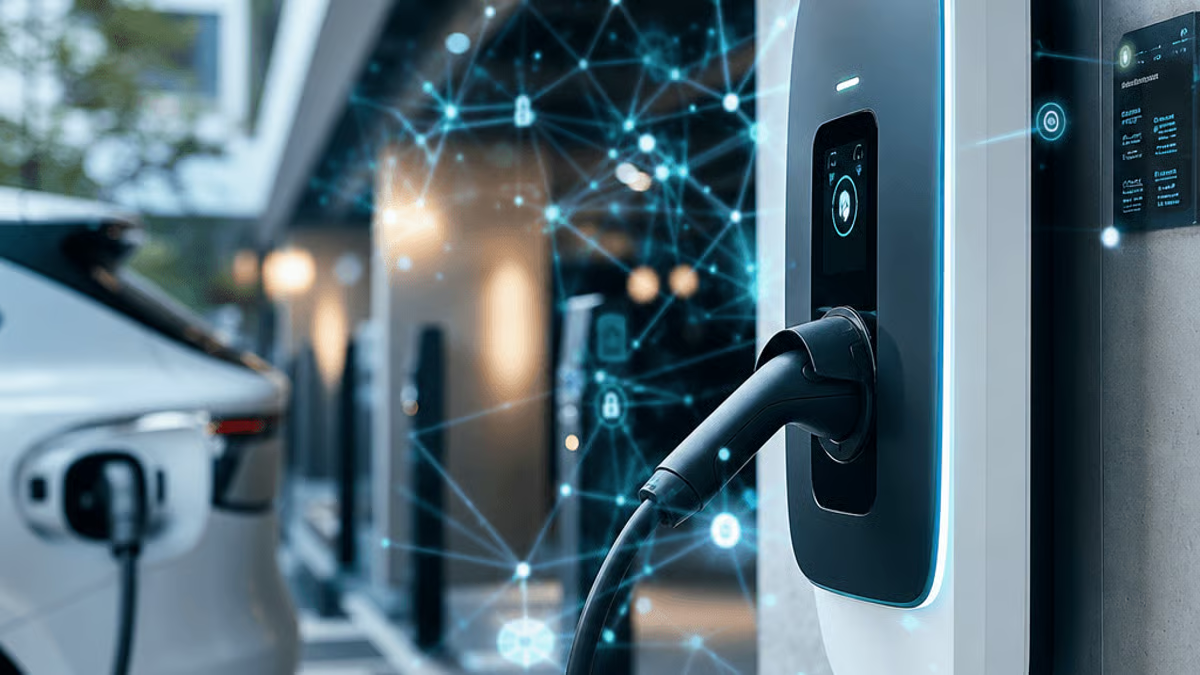
Electric vehicle charging infrastructure just got a digital bodyguard. Researchers in Spain have developed an AI agent system designed to prevent energy theft and physical damage to EV chargers, addressing a growing vulnerability as charging networks expand across Europe and North America. The research comes as vandalism and electricity theft at public charging stations have become increasingly costly problems for operators.
The charging station outside a Madrid shopping center looks ordinary enough, but it’s now monitored by something that never sleeps. A team of Spanish researchers has built an AI agent system that watches for the telltale signs of tampering, unauthorized access, and energy siphoning that have plagued EV charging networks as they’ve scaled up.
The problem is more widespread than most drivers realize. As EV adoption has surged past 10 million vehicles in Europe alone, charging infrastructure has become a target. Vandals damage connectors, thieves bypass payment systems to steal electricity, and sophisticated attacks can destabilize the grid connections that power these stations. According to industry reports, operators lose millions annually to these security breaches.
The Spanish research team’s solution deploys autonomous AI agents that continuously analyze charging patterns, electrical flows, and physical sensor data. Unlike traditional security cameras or simple anomaly detection, these agents learn normal behavior patterns for each charging station and can spot deviations that suggest theft or tampering before significant damage occurs.
What makes this approach particularly clever is how it addresses both digital and physical threats simultaneously. An energy thief might bypass the payment terminal, but the AI agent notices the mismatch between the power flowing through the station and the transaction records. A vandal might disconnect safety sensors, but the agent detects the sudden communication dropout and alerts operators immediately.
The system also protects the broader energy infrastructure behind the chargers. Fast-charging stations can draw as much power as a small factory, and unauthorized modifications or theft can create dangerous electrical surges that ripple back through local grids. The AI agents monitor these upstream connections, essentially serving as smart circuit breakers that prevent localized problems from cascading into wider outages.
This matters because charging infrastructure is becoming critical national infrastructure. Governments from California to Germany are investing billions in public charging networks as part of their climate commitments. But those investments only pay off if the chargers actually work reliably and don’t hemorrhage money through theft and vandalism.
The timing of this research is notable. Major charging network operators like Tesla and Electrify America have been quietly dealing with security issues for years, but the industry has been reluctant to discuss vulnerabilities publicly. Now, as networks expand into less-monitored rural areas and overnight parking facilities, the security challenge is becoming impossible to ignore.
The Spanish team’s work also reflects a broader trend in AI deployment. Rather than centralized cloud-based monitoring, their system uses distributed agents that can operate with limited connectivity, making decisions locally when network connections are spotty. This edge computing approach is faster and more resilient than sending every data point to a central server for analysis.
Industry observers expect commercial implementations to follow quickly. Charging network operators are under pressure to improve reliability metrics and reduce operational costs, and an AI security system that prevents theft and damage addresses both concerns simultaneously. The capital cost of deploying these agents is modest compared to the losses from even a few successful attacks.
What remains to be seen is how quickly this technology can scale across the estimated 2.9 million public charging points expected worldwide by 2030. The researchers haven’t disclosed whether they’re working with specific charging manufacturers or network operators, but the underlying technology could be adapted to existing infrastructure through software updates rather than requiring new hardware installations.
As electric vehicles shift from novelty to necessity, the infrastructure supporting them needs to be just as smart as the cars themselves. The Spanish research team’s AI agent system represents a practical solution to real operational headaches that charging network operators face daily. Whether this specific implementation becomes the industry standard or simply accelerates similar development efforts, the message is clear: the future of EV charging infrastructure includes autonomous security as a core feature, not an afterthought. For an industry racing to install millions of charging points before the decade ends, that’s not just good engineering but essential infrastructure planning.










Leave a Reply