
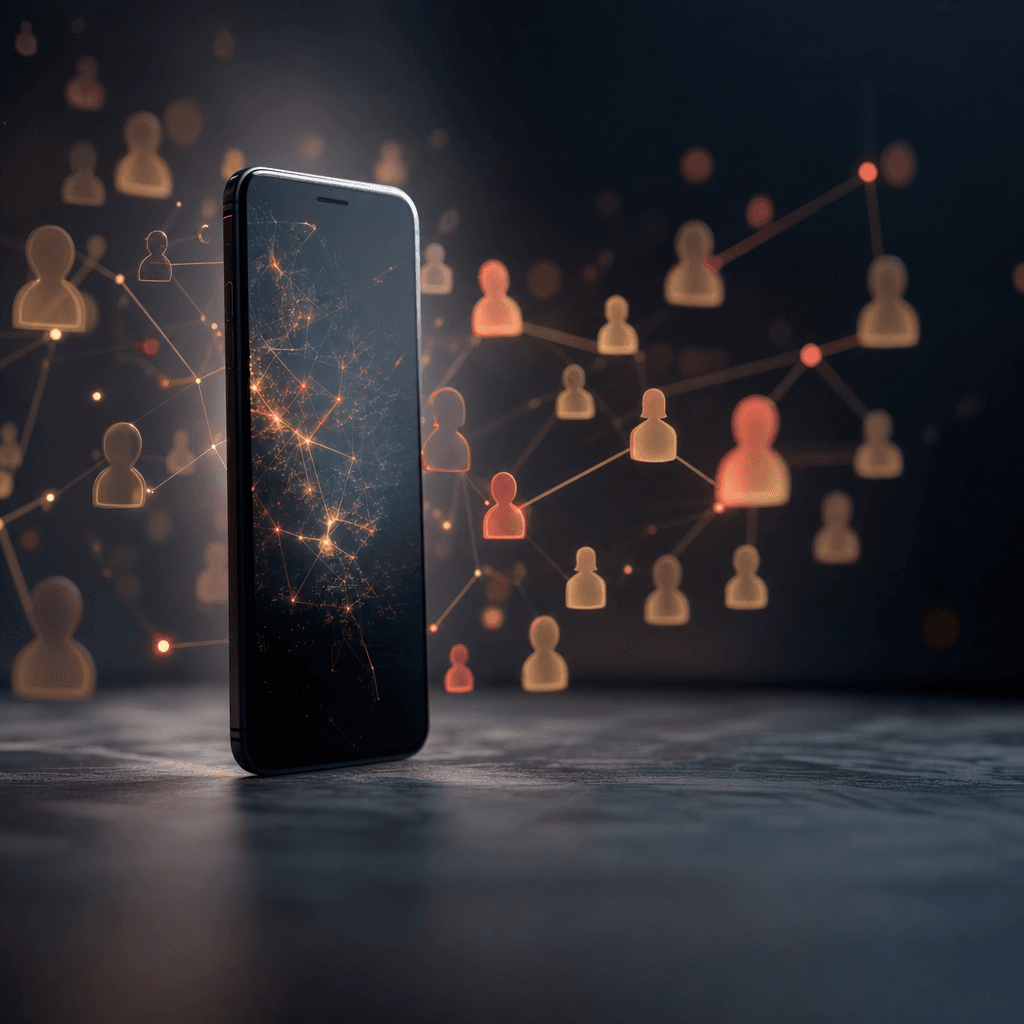
A sophisticated underground economy is turning stolen iPhones into weapons for widespread fraud. According to a new investigation by Wired, criminals are leveraging specialized tools to bypass Apple’s security measures, then weaponizing victims’ contact lists to launch phishing campaigns that drain bank accounts and compromise sensitive data. The revelation exposes a troubling gap between Apple’s security promises and the realities facing theft victims.
The moment your iPhone disappears, a clock starts ticking. But it’s not just about losing your device anymore – it’s about becoming patient zero in a sprawling fraud operation that could compromise everyone in your contact list.
Wired’s latest investigation reveals a bustling criminal marketplace where stolen iPhones aren’t just resold for parts. Instead, they’re systematically unlocked, mined for data, and transformed into phishing platforms that exploit the trust between friends, family, and colleagues. The underground ecosystem has grown sophisticated enough to challenge Apple’s security architecture, which the company has long touted as industry-leading.
The operation works with disturbing efficiency. Once a thief obtains an iPhone – whether through pickpocketing, grab-and-run tactics, or more elaborate schemes – the device enters a network of specialists. These actors use a combination of social engineering, phishing tools, and technical exploits to bypass Apple’s Activation Lock, the feature designed to render stolen devices useless. Some services advertise iPhone unlocking capabilities on encrypted messaging platforms and dark web forums, charging anywhere from $100 to $500 depending on the device model and iOS version.
But unlocking the phone is just the beginning. Once inside, criminals gain access to a treasure trove of personal information: contact lists, text message histories, email accounts, saved passwords in keychains, banking apps, and social media credentials. This data becomes ammunition for the next phase: targeted phishing attacks.
The phishing campaigns are particularly insidious because they leverage stolen trust. Recipients see messages from known contacts – a friend’s phone number, a colleague’s email address – making them far more likely to click malicious links or provide sensitive information. These attacks often impersonate banks, payment apps like Venmo or Cash App, or Apple itself, warning of suspicious activity and urging immediate action.
Security researchers have documented cases where victims not only lost their devices but watched helplessly as their entire social network became compromised. One pattern involves thieves observing victims enter their passcodes in public spaces before stealing the device, giving them full access without needing to bypass security at all. With the passcode, criminals can change Apple ID passwords, disable Find My iPhone, and lock the original owner out permanently.
The underground marketplace supporting this ecosystem includes specialized services for every step of the process. Some vendors offer SIM card cloning tools, allowing criminals to intercept two-factor authentication codes sent via text message. Others provide pre-built phishing kits designed specifically to mimic Apple login pages or banking interfaces. The division of labor mirrors legitimate tech startups, with specialists focusing on specific aspects of the operation.
Apple has implemented multiple security features aimed at preventing exactly this scenario. Activation Lock requires an Apple ID and password to reactivate a device after a factory reset. Find My iPhone allows remote location tracking and device wiping. Stolen Device Protection, introduced in recent iOS updates, adds extra biometric requirements for sensitive actions when away from trusted locations. Yet the persistence of this underground economy suggests these measures aren’t enough.
The challenge lies partly in user behavior. Many iPhone owners use simple passcodes, don’t enable all available security features, or fall victim to sophisticated social engineering before the device is even stolen. Thieves have adapted by watching targets in bars, cafes, and public transit to observe unlock patterns. Some use shoulder-surfing techniques, while others create distractions that cause victims to hand over unlocked phones.
Law enforcement agencies have struggled to combat the distributed nature of these operations. The criminals involved often operate across international borders, with phone theft occurring in one country, unlocking services based in another, and phishing attacks launched from a third location. The use of cryptocurrency for payments makes financial tracking difficult, while encrypted communications shield coordination efforts.
For iPhone users, the implications are sobering. The device in your pocket isn’t just a $1,000 piece of hardware – it’s a skeleton key to your digital life and potentially your entire social network. Security experts recommend enabling every available protection layer: complex alphanumeric passcodes instead of simple PINs, Face ID or Touch ID with attention awareness, Stolen Device Protection, and regular reviews of which apps have access to sensitive data.
The investigation also raises questions about Apple’s responsibility in this ecosystem. While the company has invested heavily in hardware security and encryption, critics argue more could be done to prevent stolen devices from being monetized. Some suggest mandatory waiting periods before Apple ID changes, more aggressive remote lock mechanisms, or even hardware-level kill switches that brick devices permanently after theft is reported.
As smartphone theft remains a persistent urban crime, the evolution from simple resale to sophisticated fraud operations marks a troubling escalation. Every stolen iPhone now represents not just one victim, but potentially dozens or hundreds as phishing attacks ripple through contact lists.
The underground iPhone hacking ecosystem represents a fundamental shift in smartphone theft – from opportunistic property crime to organized fraud infrastructure. As criminals industrialize the process of turning stolen devices into phishing platforms, the security burden falls increasingly on users to implement every available protection. For Apple, the challenge is clear: security features only work if they’re enabled by default and impossible to bypass even with a passcode. Until then, every stolen iPhone is a potential breach waiting to spread through trusted networks, turning victims into unwitting accomplices in their own friends’ compromise.









Leave a Reply