
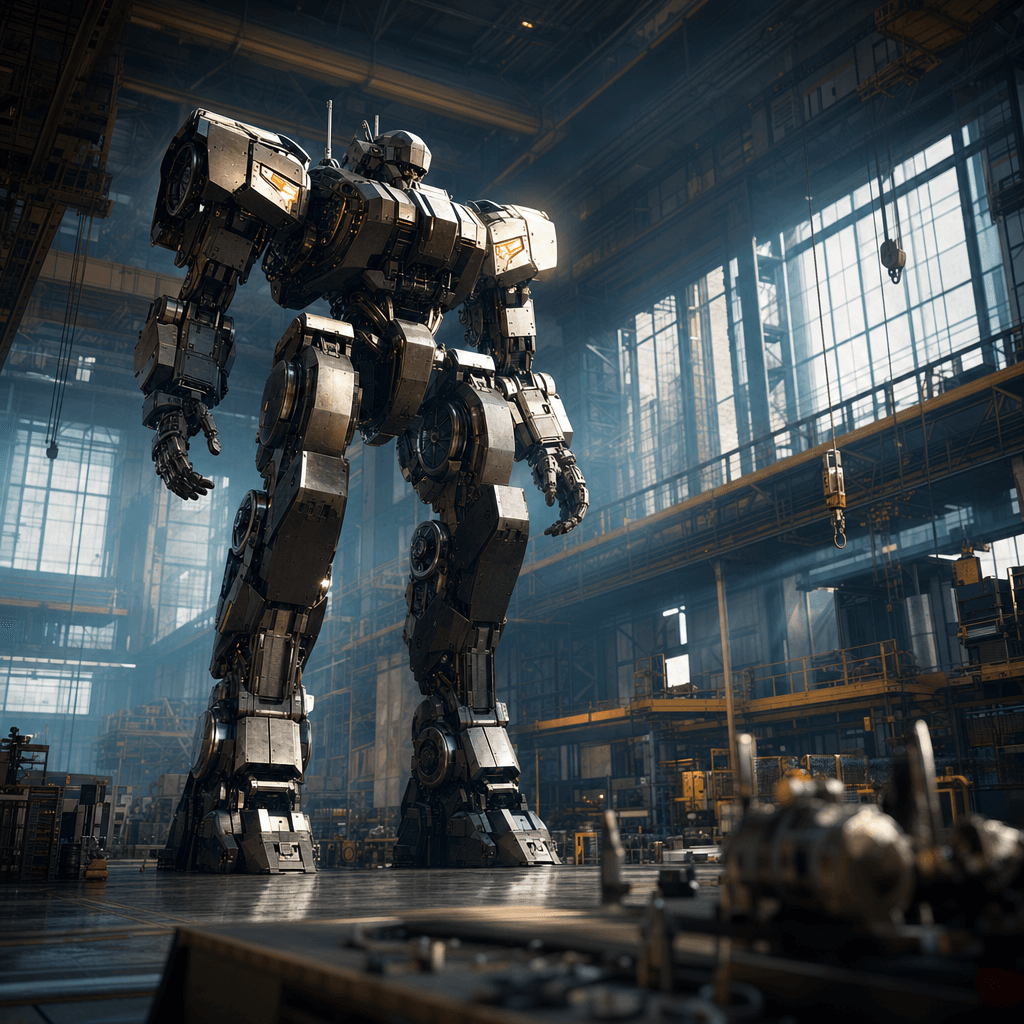
Chinese robotics company Unitree, known for producing affordable quadruped robots that dance and navigate complex terrain, is taking a bold leap into consumer mecha territory. The company just announced the GD01, a giant humanoid robot that customers can actually purchase – marking a significant shift from industrial robotics to consumer-accessible machines that look like they walked straight out of a sci-fi movie.
Unitree, the Chinese robotics manufacturer that made waves with affordable robotic dogs, is now selling something far more ambitious – a wall-smashing mecha robot you can actually buy. The GD01 represents a dramatic escalation in the company’s product lineup, moving from knee-high quadrupeds to towering humanoid machines that evoke anime fantasies and industrial power in equal measure.
The announcement, reported by Wired, positions Unitree as one of the first companies to make giant mecha-style robots commercially available to consumers rather than restricting them to industrial or military applications. While pricing and full specifications haven’t been disclosed, the move signals the company’s confidence in bringing what was once purely science fiction into the consumer marketplace.
Unitree built its reputation on democratizing robotics technology. The company’s Go series of quadruped robots undercut competitors like Boston Dynamics by thousands of dollars while still delivering impressive agility and programmability. Their robots became YouTube sensations, performing synchronized dances and navigating obstacle courses with surprising grace. But the GD01 represents an entirely different category of ambition.
The robotics industry has been steadily advancing toward more capable humanoid machines. Companies like Tesla with their Optimus robot and Figure AI with their Figure 01 have focused on practical workplace applications. But Unitree’s approach appears aimed at enthusiasts and developers who want hands-on access to large-scale robotic platforms, even if the immediate practical applications remain unclear.
What makes the GD01 particularly notable is its size and apparent strength – the “wall-smashing” capability mentioned in the announcement suggests significant force output and structural robustness. Most consumer robots prioritize safety constraints that prevent them from exerting dangerous levels of force. Unitree seems to be betting there’s a market for more powerful machines, though this will likely come with serious safety considerations and regulatory questions.
The timing of this launch intersects with broader trends in robotics and AI. As foundation models improve and robots become more capable of understanding natural language instructions, the value proposition of owning a large-scale humanoid platform increases. Developers could theoretically train these machines for complex tasks, from construction assistance to entertainment applications, though the learning curve and safety protocols would be substantial.
China’s robotics industry has been aggressively pushing into international markets, often with price points that undercut Western competitors. Unitree’s strategy has consistently focused on making advanced robotics accessible to universities, researchers, and hobbyists who couldn’t afford premium alternatives. The GD01 extends this philosophy to an extreme – bringing mecha-scale robots within reach of at least some portion of the consumer market.
The practical applications for a consumer-owned giant mecha remain speculative. Industrial settings, specialized entertainment venues, and advanced research facilities represent the most obvious markets. But Unitree’s history suggests they’re also banking on creative applications emerging once developers and enthusiasts get their hands on the hardware.
What happens when consumers can actually purchase robots of this scale remains to be seen. Questions about liability, safety certifications, operational spaces, and regulatory oversight will need answers. But Unitree has consistently pushed boundaries in making advanced robotics more accessible, and the GD01 represents their most audacious move yet into uncharted commercial territory.
Unitree’s GD01 mecha represents a fascinating test of consumer appetite for large-scale robotics platforms. While the practical applications remain unclear and questions about safety, regulation, and real-world utility loom large, the company’s track record of making advanced robotics accessible suggests they’ve identified a market others have overlooked. Whether giant consumer mechas become the next frontier in robotics or remain a niche curiosity will depend largely on what developers and enthusiasts actually do with them once they arrive.










Leave a Reply