
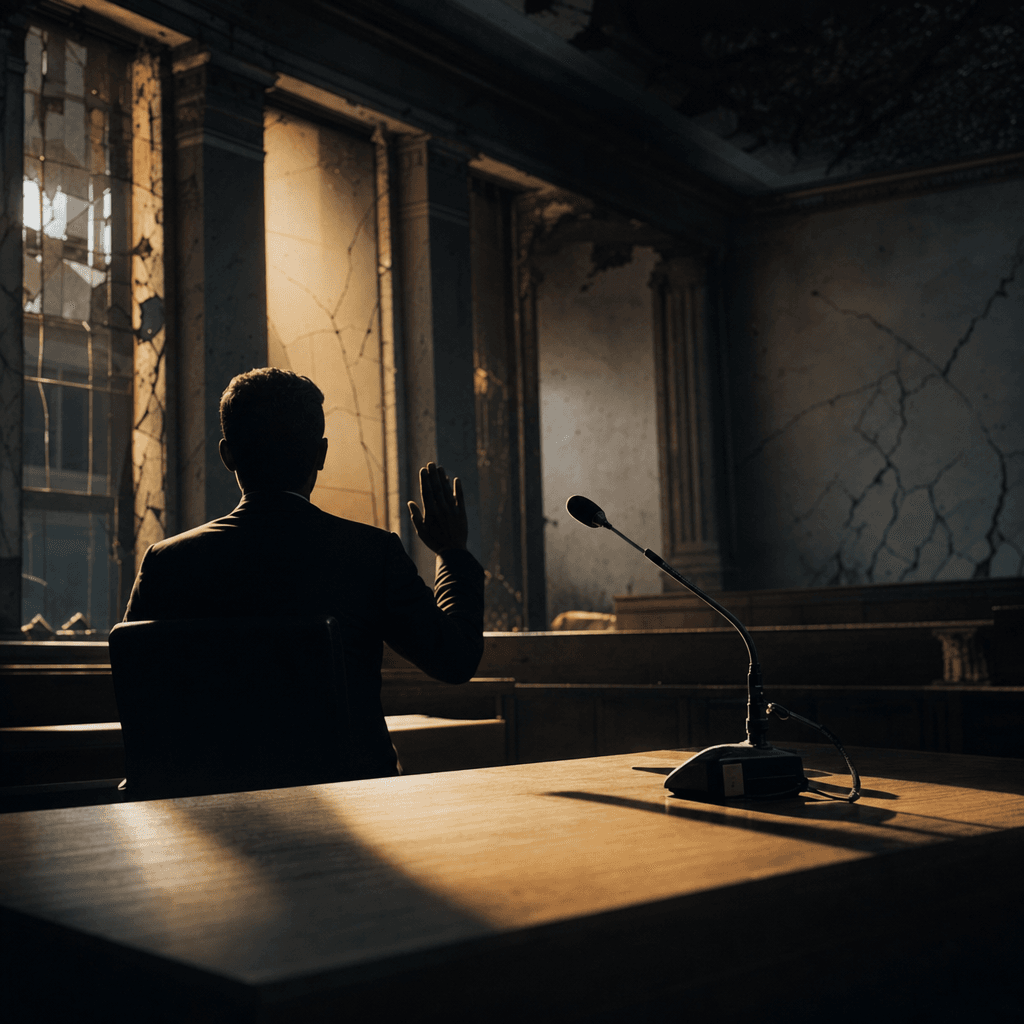
Ilya Sutskever broke his silence in dramatic fashion Monday, taking the stand in the Elon Musk v. Sam Altman trial to defend his role in last year’s shocking boardroom coup at OpenAI. The former chief scientist, who helped orchestrate Altman’s brief November 2023 ouster before reversing course, told the court he acted to protect the company from what he perceived as existential threats. ‘I didn’t want it to be destroyed,’ Sutskever testified, offering the first detailed public account of the tumultuous events that nearly tore apart the world’s most influential AI lab.
The courtroom went quiet as Ilya Sutskever took the stand Monday, marking his first major public appearance since leaving OpenAI under a cloud of controversy. The co-founder and former chief scientist, who helped build the company’s groundbreaking GPT models, came to defend both his actions and the organization he ultimately left behind.
Sutskever’s testimony centers on the chaotic November 2023 weekend when OpenAI‘s board temporarily removed CEO Sam Altman, sending shockwaves through Silicon Valley. As one of the board members who voted for Altman’s removal, Sutskever played a pivotal role in the decision – only to publicly apologize days later as employee rebellion and investor pressure forced Altman’s reinstatement.
‘I didn’t want it to be destroyed,’ Sutskever told the court, according to Wired. The statement offers a rare window into the thinking of OpenAI’s technical leadership during a crisis that exposed deep fractures over the company’s direction, safety protocols, and rapid commercialization.
The testimony comes as part of Elon Musk’s lawsuit against Altman and OpenAI, where the Tesla and SpaceX CEO alleges the company abandoned its original nonprofit mission. Musk, an early OpenAI backer who contributed roughly $44 million before departing the board in 2018, claims Altman steered the organization toward profit motives that betray its founding charter to develop artificial general intelligence for humanity’s benefit.
Sutskever’s presence on the stand is particularly striking given his estrangement from OpenAI. After the failed ouster attempt, he remained at the company in a diminished role before departing entirely in May 2024. He’s since launched Safe Superintelligence Inc., a new AI venture focused exclusively on safety – a move many interpreted as a rebuke of OpenAI’s commercial trajectory.
The internal tensions Sutskever navigated aren’t new. Since OpenAI restructured from a pure nonprofit to a capped-profit subsidiary in 2019, critics have questioned whether the company can balance its stated safety mission with the demands of building products like ChatGPT. That restructuring allowed the company to raise billions from Microsoft, which has invested over $13 billion and integrated OpenAI’s models throughout its product stack.
But the November board crisis suggested those tensions had reached a breaking point. Sutskever and other board members reportedly grew concerned about the pace of product releases and Altman’s aggressive expansion plans. Within hours of Altman’s removal, however, Microsoft CEO Satya Nadella was working to bring him back, while over 700 OpenAI employees threatened to quit unless the board reversed course.
The speed of Sutskever’s reversal – he signed the employee letter demanding Altman’s return – has fueled speculation about what exactly transpired during those 72 hours. His willingness to testify in Musk’s lawsuit, despite leaving OpenAI, suggests lingering convictions about the board’s original concerns, even if the execution failed spectacularly.
For Musk, Sutskever represents a potential star witness who can speak to OpenAI’s evolution from research lab to commercial juggernaut. The billionaire’s legal team is arguing that Altman’s leadership transformed the company into something fundamentally different from what donors like Musk supported – a transformation Sutskever’s own departure seems to validate.
OpenAI has dismissed Musk’s claims as sour grapes from a competitor who’s building his own AI company, xAI. The company argues its capped-profit structure was necessary to compete at the scale required for advanced AI development, and that its safety commitments remain intact through initiatives like its Preparedness team and recent board additions focused on AI policy.
Sutskever’s testimony could prove pivotal in determining which narrative prevails. As one of the field’s most respected researchers – he was a key figure in the deep learning revolution at Google Brain before co-founding OpenAI – his technical credibility carries weight. If he corroborates Musk’s claims about mission drift, it could complicate OpenAI’s defense.
The trial also arrives at a delicate moment for AI governance broadly. Regulators worldwide are scrambling to establish frameworks for managing increasingly powerful AI systems, while debates rage about whether leading labs are moving too fast. Sutskever’s decision to launch a safety-first company suggests he believes the current approach across the industry is insufficient.
What remains unclear is whether Sutskever’s testimony will address specific safety concerns that motivated the board’s actions, or focus more narrowly on governance and organizational structure. The former could open new lines of inquiry about what risks OpenAI’s leadership may have downplayed in pursuit of commercial success.
Sutskever’s courtroom appearance won’t resolve the fundamental tensions that fractured OpenAI’s board, but it does signal that the consequences of that weekend continue to reverberate. His defense of the decision – even after leaving the company – suggests the safety-versus-speed debate in AI development is far from settled. As OpenAI pushes toward even more capable models and deeper Microsoft integration, the questions Sutskever and the board raised about governance and mission remain uncomfortably relevant. Whether the court finds merit in Musk’s legal arguments, the trial is already serving as an unplanned audit of how the AI industry’s most prominent player evolved from idealistic nonprofit to commercial powerhouse.






Leave a Reply