
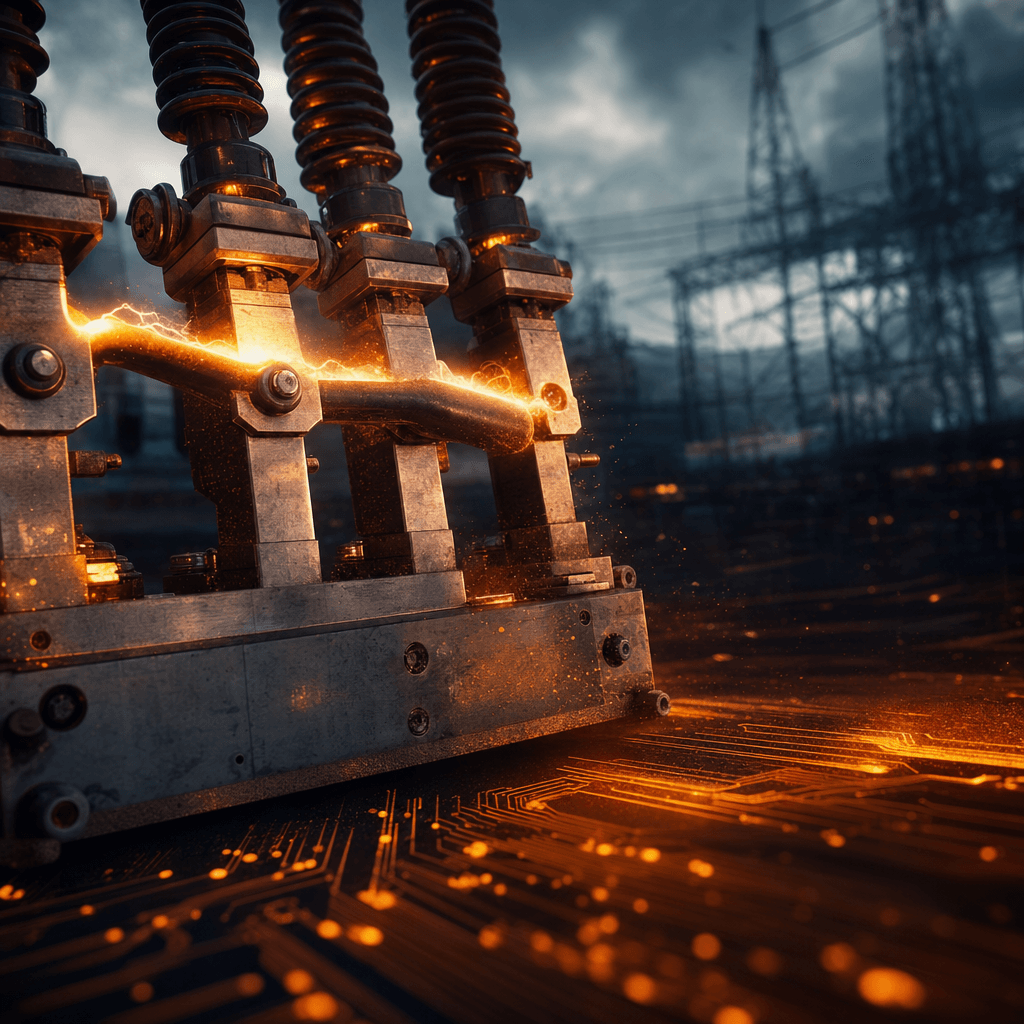
The AI revolution is hitting a hard physical limit, and it’s not chips or talent – it’s electricity. PJM Interconnection, the grid operator managing power for 65 million people across 13 states and the world’s densest concentration of data centers, is buckling under demand from AI infrastructure. The organization’s proposed overhaul has ignited a battle between tech giants hungry for power, utilities struggling to keep up, and regulators caught in the middle of America’s most critical infrastructure crisis.
The explosion in AI computing is creating an unexpected chokepoint that threatens to slow the entire industry. PJM Interconnection, which operates the electrical grid serving 65 million people from Illinois to New Jersey, just announced plans for a sweeping overhaul of how it manages power distribution. The reason? Data centers powering AI workloads are consuming electricity at rates the system was never designed to handle.
PJM’s territory includes Northern Virginia’s Data Center Alley, the single most concentrated data center market on the planet. The region hosts facilities for Amazon Web Services, Microsoft Azure, Google Cloud, and dozens of other providers. What was once farmland in Loudoun County now draws more power than entire cities, and the demand shows no signs of slowing.
The numbers tell a stark story. Data center power consumption in PJM’s service area has doubled in the past three years, driven almost entirely by AI infrastructure. Training a single large language model can consume as much electricity as hundreds of homes use in a year. When OpenAI, Meta, and other AI leaders announced plans to build even larger training clusters, grid operators realized the existing system couldn’t keep pace.
PJM’s proposed reforms would fundamentally change how new data centers connect to the grid, introducing stricter requirements for power commitments and potentially longer wait times for grid connections. The organization argues these changes are necessary to maintain reliability and prevent cascading failures that could darken entire regions. But not everyone is convinced PJM has the expertise or authority to manage such a dramatic transformation.
Utility companies are pushing back hard. They argue PJM’s proposed rules would shift too much cost onto residential and commercial customers who have nothing to do with data centers. Consumer advocacy groups echo these concerns, warning that the AI industry’s appetite for power could translate into higher electric bills for ordinary people. On the other side, data center operators and tech companies warn that overly restrictive rules could strangle AI development and push crucial infrastructure to other countries.
The conflict goes beyond regional politics. PJM’s grid is interconnected with neighboring systems, meaning problems here could ripple across the Eastern seaboard. Federal regulators are watching closely, aware that similar tensions are building in other regions. Texas, California, and the Pacific Northwest are all grappling with data center demand that outstrips grid capacity.
What makes PJM’s situation particularly acute is timing. The AI boom caught everyone off guard. Five years ago, grid planners were preparing for gradual growth in data center loads. Then ChatGPT launched, and suddenly every major tech company was racing to build AI infrastructure. The lead time to build new power plants or transmission lines measures in years. Data centers can be operational in months.
Some companies are taking matters into their own hands. Microsoft recently announced investments in small modular nuclear reactors to power its data centers directly. Google is exploring geothermal energy partnerships. Amazon has committed to matching its operations with renewable energy, but even those projects take time to come online and don’t solve the immediate grid capacity crisis.
The technical challenges are formidable. Modern AI training runs generate massive, sustained power draws that strain transformers and transmission equipment designed for more variable loads. Grid operators must balance supply and demand in real-time, and data centers that suddenly ramp up or down can destabilize entire regions. PJM’s engineers are essentially trying to retrofit a system built for 20th-century industrial loads to handle 21st-century computational demands.
Industry observers point out that this crisis was predictable but largely ignored. Energy analysts have been warning for years that data center growth would eventually hit infrastructure limits. The AI explosion simply accelerated the timeline. Now PJM finds itself trying to implement in months what should have been a decade-long planning process.
The outcome of PJM’s overhaul will likely set precedents for grid operators nationwide. If the reforms succeed in balancing reliability with growth, other regions will follow suit. If they fail – either by causing widespread outages or by choking off data center development – the consequences could reshape where and how AI infrastructure gets built. Some analysts predict a shift toward regions with excess power generation capacity, potentially moving the center of AI development away from traditional tech hubs.
What’s clear is that the AI industry can’t simply build its way out of this problem. Unlike previous technology booms that primarily required capital and talent, AI expansion is running into hard physical limits. You can’t train frontier models without electricity, and you can’t generate electricity without infrastructure that takes years to build. PJM’s struggle is the first major flashpoint in what promises to be a long-running conflict between technological ambition and infrastructure reality.
The crisis at PJM Interconnection represents more than a regional infrastructure problem – it’s a wake-up call for the entire AI industry. As companies race to build ever-larger models and deploy AI at scale, they’re discovering that electrons don’t move at the speed of software releases. The resolution of PJM’s overhaul will determine whether America’s AI ambitions can be powered sustainably or whether the industry will face rolling constraints that slow innovation to the pace of power plant construction. For tech leaders banking on AI to drive the next decade of growth, the answer can’t come soon enough.











Leave a Reply