
- ■
Cursor halted a $2B funding round mid-close after SpaceX offered $10B upfront plus a $60B acquisition pathway, per TechCrunch
- ■
The deal values the AI coding startup 30x higher than its planned funding round valuation
- ■
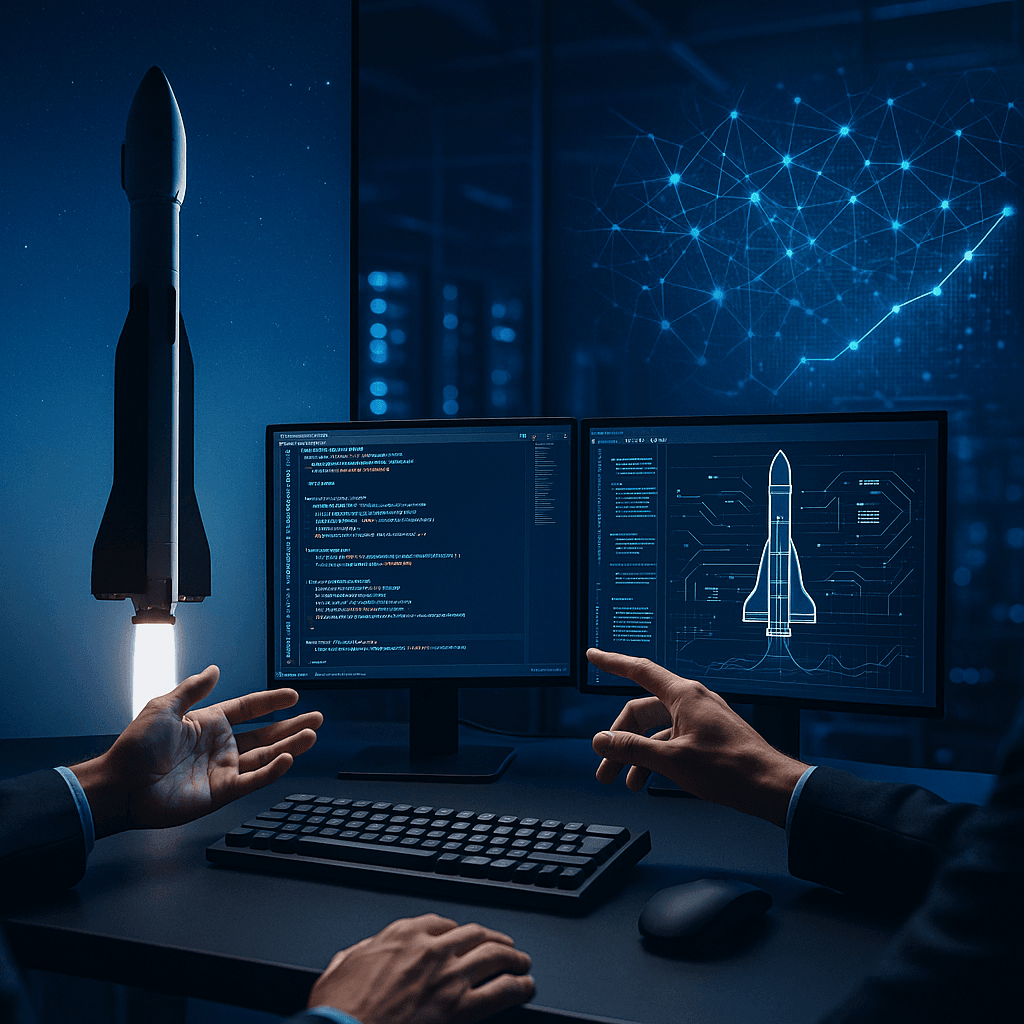
SpaceX’s surprise bid reveals its strategy to own critical AI developer tools as it scales Starship and satellite operations
- ■
Investors who spent weeks negotiating term sheets now face either walking away or joining SpaceX’s structured buyout
Cursor, the AI-powered coding assistant that’s become a developer favorite, just walked away from a $2 billion funding round that was days from closing. The reason? SpaceX showed up with a $10 billion “collaboration fee” and a path to a $60 billion full acquisition, according to TechCrunch. The move marks one of the most dramatic fundraising pivots in recent startup history and signals SpaceX’s aggressive push into AI infrastructure.
Cursor was in the final stretch. Term sheets were circulating, lead investors had committed, and the $2 billion round was set to close this week at what sources described as a “highly competitive” valuation. Then SpaceX called with an offer that made the whole thing irrelevant.
The structure is unusual even by Silicon Valley standards. SpaceX is offering $10 billion as an immediate “collaboration fee” – essentially paying Cursor to become its exclusive AI development partner – with a clear path to acquiring the entire company for $60 billion. That’s a 30x premium over the valuation Cursor was about to accept from traditional venture investors.
“We were literally reviewing final docs when this landed,” one person close to the fundraising process told TechCrunch. “It wasn’t a matter of negotiating better terms. The SpaceX offer was a completely different game.”
Cursor has quietly become essential infrastructure for software developers over the past year. The AI coding assistant uses large language models to autocomplete entire functions, debug complex systems, and translate natural language into production-ready code. Unlike earlier coding assistants, Cursor understands context across entire codebases – making it particularly valuable for the kind of massive, interconnected systems that companies like SpaceX manage.
That capability is apparently worth $10 billion upfront to Elon Musk’s rocket company. SpaceX is simultaneously scaling Starship production, managing the world’s largest satellite constellation through Starlink, and building out AI-powered autonomous systems for spacecraft navigation. Having exclusive access to Cursor’s technology could accelerate development across all three.
The timing reveals how quickly AI tooling has become a competitive battleground. Just six months ago, Microsoft-backed GitHub Copilot dominated the AI coding space. But Cursor’s more sophisticated context awareness and its ability to handle proprietary codebases has made it the preferred choice for companies managing complex systems. SpaceX apparently decided it couldn’t risk Cursor falling into a competitor’s hands or remaining independent with divided attention.
For Cursor’s existing investors, the situation is complicated. Those who were about to lead the $2 billion round now face a choice: accept minority positions in what becomes a SpaceX subsidiary, or exit entirely. The $60 billion eventual acquisition price is attractive, but it comes with strings – namely, Cursor’s immediate pivot to prioritizing SpaceX’s needs.
“This is what happens when strategic value eclipses financial value,” one venture investor not involved in the deal explained. “SpaceX isn’t buying Cursor to generate SaaS revenue. They’re buying it because the next 10 years of their product roadmap depends on AI-accelerated development.”
The deal structure also sidesteps some of the regulatory scrutiny that might accompany a straight $60 billion acquisition. By starting with a collaboration fee and phased integration, SpaceX can begin leveraging Cursor’s technology immediately while the formal acquisition works through approvals. It’s a playbook that echoes Meta’s approach to AI acquisitions, though at a far larger scale.
Cursor’s founders haven’t commented publicly, but people familiar with their thinking say the SpaceX offer was impossible to refuse – not just financially, but strategically. Being deeply embedded in SpaceX’s infrastructure gives Cursor access to some of the most challenging engineering problems on the planet. That data and those use cases could make Cursor’s AI models dramatically more capable.
The scramble this creates in the AI coding space is already visible. Anthropic, OpenAI, and other foundation model companies have spent the past year courting Cursor as a key distribution partner. Now they’re watching their most promising coding interface get locked up by a company that increasingly builds its own AI infrastructure.
For developers who’ve come to rely on Cursor, the question is what happens to the product. SpaceX has indicated the tool will remain available, but with the company’s engineering priorities driving the roadmap. Features that help aerospace engineers debug flight control systems will likely get more attention than tools for web developers building consumer apps.
The fundraising disruption also sends a signal to other AI infrastructure startups: strategic acquirers are willing to pay extraordinary premiums to lock up critical tools. That could accelerate M&A across the sector as companies like Amazon, Google, and Apple move to secure their own AI development advantages.
The Cursor-SpaceX deal rewrites the rules for AI startup exits. When strategic buyers are willing to pay 30x premiums and derail active funding rounds with billion-dollar collaboration fees, the traditional VC playbook stops working. For founders building critical AI infrastructure, the calculation has shifted – independence might be worth less than deep integration with a company solving frontier problems. And for Big Tech watching from the sidelines, the message is clear: the battle for AI tooling supremacy is moving faster than anyone expected, and sitting out the M&A arms race might mean losing access to the tools that determine who wins the next decade of product development.







Leave a Reply