
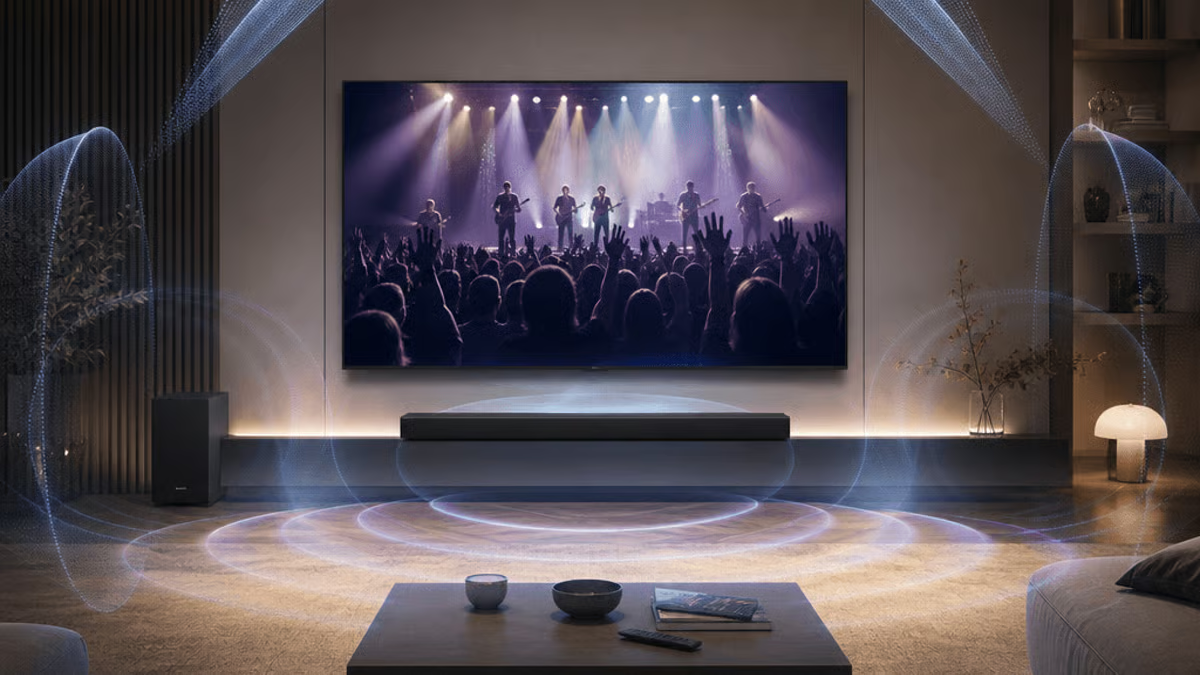
Samsung just launched Eclipsa Audio on Samsung TV Plus, bringing concert-hall acoustics into living rooms. Developed jointly with Google, the 3D spatial audio technology uses the open IAMF standard to position sound in three dimensions – from center-stage vocals to audience cheers surrounding the viewer. Woohyun Nam, Head of Samsung Research’s Display Innovation Lab, and Joonhun Choi, Head of Samsung TV Plus, revealed how the tech survived a 280-seat live venue test and now powers musicals, concerts, and sports on the free streaming service.
Samsung is betting that spatial audio can turn streaming into something closer to a front-row seat. The company just integrated Eclipsa Audio – a 3D sound technology developed with Google – across Samsung TV Plus, its free ad-supported streaming service. The move puts concert-hall acoustics within reach of anyone with a compatible Samsung TV.
Eclipsa Audio doesn’t just pump sound through left and right channels. It reconstructs where sounds originated in physical space – center stage for a performer’s voice, surrounding the viewer for orchestra sections, emanating from behind for audience applause. The tech is built on Immersive Audio Model and Formats (IAMF), an open 3D audio standard independent of proprietary codecs or licensing fees.
“People can now enjoy the excitement of musicals and live performances from home,” Joonhun Choi, Head of Samsung TV Plus, told Samsung Newsroom. “While Samsung TV Plus makes this content more accessible, Eclipsa Audio recreates the rich, immersive sound of the venue in the living room.”
The technology emerged from Samsung Research, which spent months developing IAMF-based spatial audio metadata, encoding systems, and playback architecture. Woohyun Nam, who heads the Display Innovation Lab at Samsung Research, explained that the team prioritized device compatibility – ensuring content plays in full spatial audio on supported TVs and soundbars while automatically falling back to stereo on older hardware.
But the real validation came during a live test. Samsung Research partnered with a professional sound engineering company to capture spatial audio at a 280-seat concert venue. They converted the live performance to Eclipsa Audio, streamed it through a Samsung TV Plus channel, and played it back on a Samsung TV in real time. “We verified that the music, vocals, audience reactions and venue acoustics were recreated accurately,” Nam said in the interview.
The technology tackles a problem unique to free streaming services – transitioning between immersive audio content and stereo advertisements without disrupting playback. Samsung TV Plus is a FAST platform, meaning spatial audio musicals must seamlessly switch to standard stereo ads mid-stream. Choi noted that maintaining audio-video synchronization during these format shifts required Samsung Research and the Visual Display Business to align on transition policies that kept playback stable.
Early user feedback suggests the tech delivers. “Users said they felt as though they were sitting in the audience at a live performance,” Choi shared. “Some even said that certain scenes were more satisfying than watching from a small theater.” Viewers noticed a clear difference compared to non-Eclipsa content and requested more compatible programming.
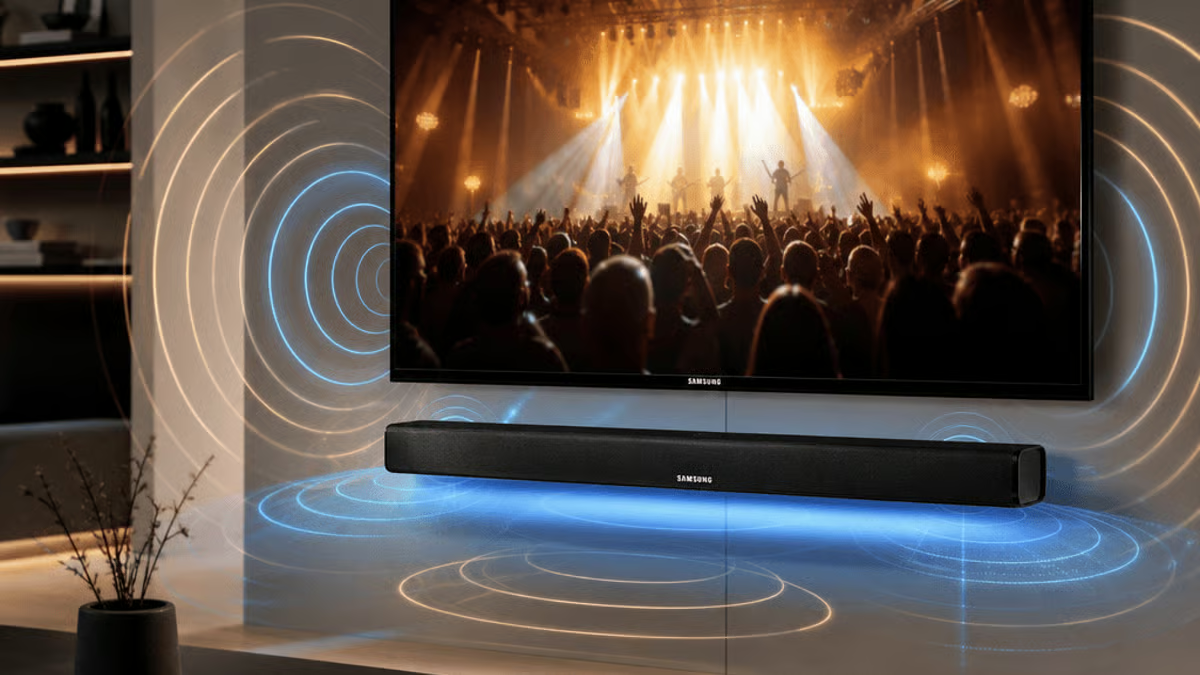
For the best experience, Samsung recommends pairing a TV with a Samsung soundbar. The combination unlocks multi-channel audio that enhances spatial depth, letting viewers distinguish between performers’ voices, orchestral sections, and audience reactions. The service also supports Multi-Cam switching, allowing viewers to toggle between wide-stage and close-up views during key moments.
Samsung’s ambitions extend beyond musicals. Choi confirmed plans to expand Eclipsa Audio to K-pop concerts, classical performances, movies, and sports. The vision is to make Samsung TV Plus a hub for live entertainment accessible to anyone, anytime, anywhere. Nam envisions personalized audio profiles where viewers can emphasize vocals over instruments in music or choose between commentary and venue sound during sports.
“Our vision is ‘Spatial Audio for Everyone,’ where anyone can enjoy Eclipsa Audio through Samsung TV Plus,” Nam stated. The goal is to make the technology invisible – viewers simply turn on their TV and feel transported to a live venue or stadium.
Because IAMF is an open standard, Eclipsa Audio can scale across content types and devices without licensing barriers. This positions Samsung to extend the tech beyond its own ecosystem, though the company hasn’t announced partnerships with other manufacturers. For now, the focus remains on building a content library that justifies the spatial audio investment.
The timing aligns with broader industry momentum around immersive audio. Apple has pushed Spatial Audio with Dolby Atmos across Apple Music and Apple TV+, while Netflix and Disney+ have expanded Atmos-supported titles. Samsung’s IAMF-based approach offers a royalty-free alternative, potentially lowering barriers for content creators and streaming platforms.
What remains unclear is how quickly content partners will adopt Eclipsa Audio workflows. Choi acknowledged that spatial audio was unfamiliar to many production companies, requiring Samsung to demonstrate the viewer experience and reach benefits. The company has begun onboarding partners, but the pace of content expansion will determine whether Eclipsa Audio becomes a differentiator or a niche feature.
Samsung Research and the Visual Display Business collaborated across the entire pipeline – from core audio processing to content delivery infrastructure. This tight integration allowed them to solve technical challenges like device compatibility and format transitions that could have derailed the launch. The approach mirrors Samsung’s broader strategy of vertically integrating hardware, software, and services to create experiences competitors can’t easily replicate.
Samsung’s Eclipsa Audio launch represents a calculated bet that spatial audio can differentiate free streaming in an increasingly crowded market. By building on the open IAMF standard and tight integration between Samsung Research and the Visual Display Business, the company created a system that scales across device configurations while maintaining immersive audio quality. The real test comes next – whether content partners adopt the technology fast enough and viewers notice the difference enough to make Samsung TV Plus a destination for live entertainment. If Samsung executes, spatial audio could shift from premium feature to table stakes for streaming services.









Leave a Reply