
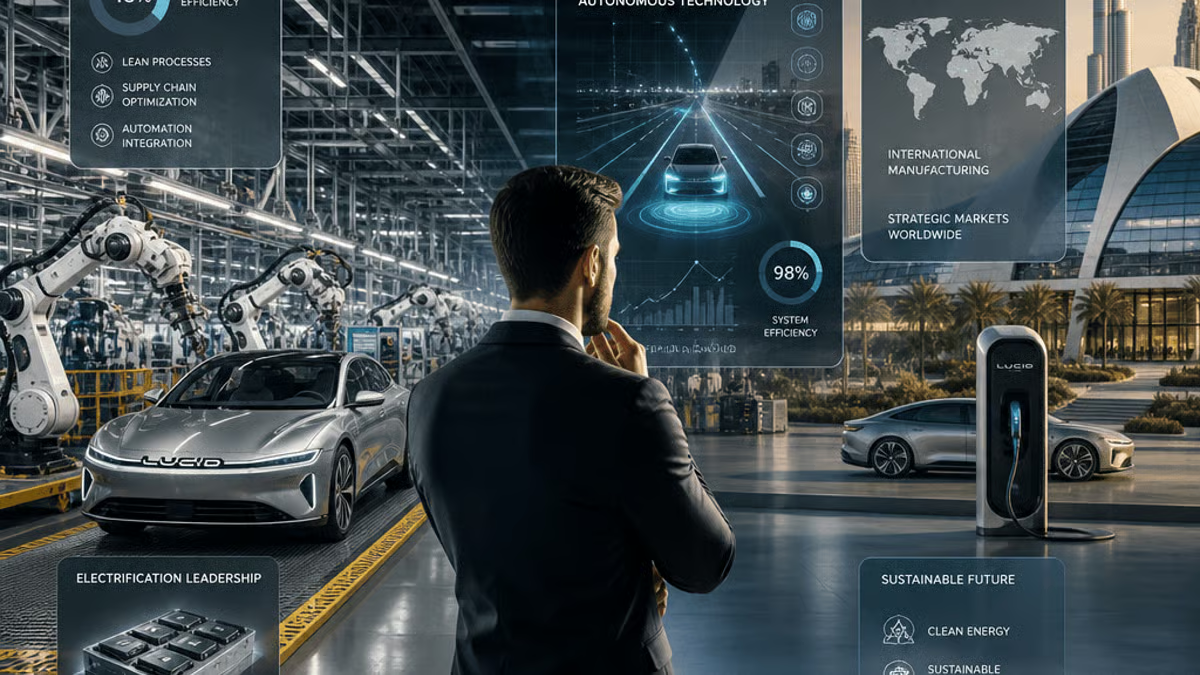
Lucid Motors just laid out its survival playbook. New CEO Silvio Napoli revealed a sweeping turnaround plan anchored by $1.4 billion in cost savings and an ambitious pivot into robotaxis, signaling the struggling EV maker’s most dramatic strategic shift since its 2021 debut. The four-point plan also includes launching a midsize electric vehicle and completing a Saudi Arabian factory as the company races to stem cash burn and compete with rivals like Tesla and emerging Chinese EV makers.
Lucid Motors is betting its future on a radical transformation. The electric vehicle maker’s newly appointed CEO Silvio Napoli just unveiled what he’s calling four “must-win priorities” that could determine whether the company survives or becomes another cautionary tale in the EV shakeout.
The centerpiece is a staggering $1.4 billion in cost reductions, a figure that represents one of the most aggressive restructuring efforts in the EV sector this year. According to TechCrunch, Napoli presented the plan as the company confronts mounting pressure from investors and a increasingly competitive market where cash-burning startups are running out of runway.
But cost-cutting alone won’t save Lucid. The company is making a surprising bet on robotaxis, marking its first serious push into autonomous vehicles. This move puts Lucid on a collision course with Tesla‘s long-promised robotaxi service and Waymo‘s existing operations. It’s a bold gamble for a company that’s struggled to scale production of its luxury Air sedan, let alone master the complex technology required for self-driving vehicles.
The timing reveals just how desperate the situation has become. Lucid delivered fewer than 10,000 vehicles last year while burning through cash at an alarming rate. The company’s stock has cratered from its SPAC-fueled highs, and its survival increasingly depends on continued backing from Saudi Arabia’s Public Investment Fund, which owns roughly 60% of the company.
That Saudi connection explains the second priority – completing a manufacturing facility in the kingdom. The plant represents both a lifeline and a strategic necessity, giving Lucid access to Middle Eastern markets while cementing its relationship with its primary benefactor. Construction timelines and production targets remain unclear, but the factory is viewed internally as critical to achieving the scale needed for profitability.
The third pillar is launching a midsize electric vehicle, a move that puts Lucid in direct competition with Tesla‘s Model 3 and Model Y, which dominate the segment. The yet-to-be-named model will need to hit a much lower price point than the $80,000-plus Air sedan while maintaining the premium quality and efficiency that Lucid has built its brand around. It’s a delicate balance that other EV startups like Fisker failed to achieve before collapsing earlier this year.
Napoli’s appointment itself signals a shift in strategy. Unlike predecessor Peter Rawlinson, who came from a product development background, Napoli brings operational expertise from his years at industrial companies. That experience could prove crucial as Lucid tries to transform from a low-volume luxury brand into a scaled manufacturer capable of competing with established automakers.
The robotaxi bet is the wildcard. While it could differentiate Lucid from pure manufacturing plays, it also diverts resources and attention from the core mission of building and selling cars profitably. Cruise and others have already discovered how difficult and expensive autonomous vehicle development can be, with Cruise pulling back operations after safety incidents forced a strategic reset.
Industry analysts are skeptical about whether Lucid can execute on all four priorities simultaneously. The company has missed production targets repeatedly, and adding autonomous technology development to an already stretched organization seems optimistic at best. One bright spot is Lucid’s battery technology, which remains among the most efficient in the industry and could provide a competitive advantage if the company can leverage it across a broader product lineup.
The $1.4 billion in savings will likely come from headcount reductions, supply chain optimization, and scaling back some of the premium features that made the Air sedan expensive to produce. But cuts of that magnitude risk undermining product quality and the brand cachet that Lucid has worked to establish among luxury EV buyers.
What’s notably absent from the plan is any mention of potential partnerships or technology licensing deals that could provide additional revenue streams. Rivian has pursued software licensing, while Polestar benefits from Volvo and Geely manufacturing synergies. Lucid appears to be going it alone, a risky proposition given the capital intensity of the auto business.
The Saudi factory and midsize vehicle launch are traditional auto industry moves – expand capacity, chase volume, drive down per-unit costs. The robotaxi play is pure Silicon Valley ambition. Whether Napoli can balance both approaches while executing the largest cost reduction in company history will determine if Lucid survives to see 2027.
Napoli’s four-point plan represents Lucid’s most consequential strategic moment since going public. The $1.4 billion in cost cuts might buy time, but the real test is whether the company can simultaneously launch a mass-market EV, complete international expansion, and break into autonomous vehicles – all while competitors like Tesla and Chinese EV makers continue gaining ground. The robotaxi bet is particularly high-stakes, offering either differentiation that could save the company or a costly distraction from fixing the core business. With Saudi backing providing a financial cushion that most EV startups lack, Lucid has a chance that others don’t, but execution has been its Achilles heel. The next 12 months will reveal whether Napoli’s turnaround is visionary or too ambitious for a company still struggling with the basics of manufacturing at scale.








Leave a Reply