
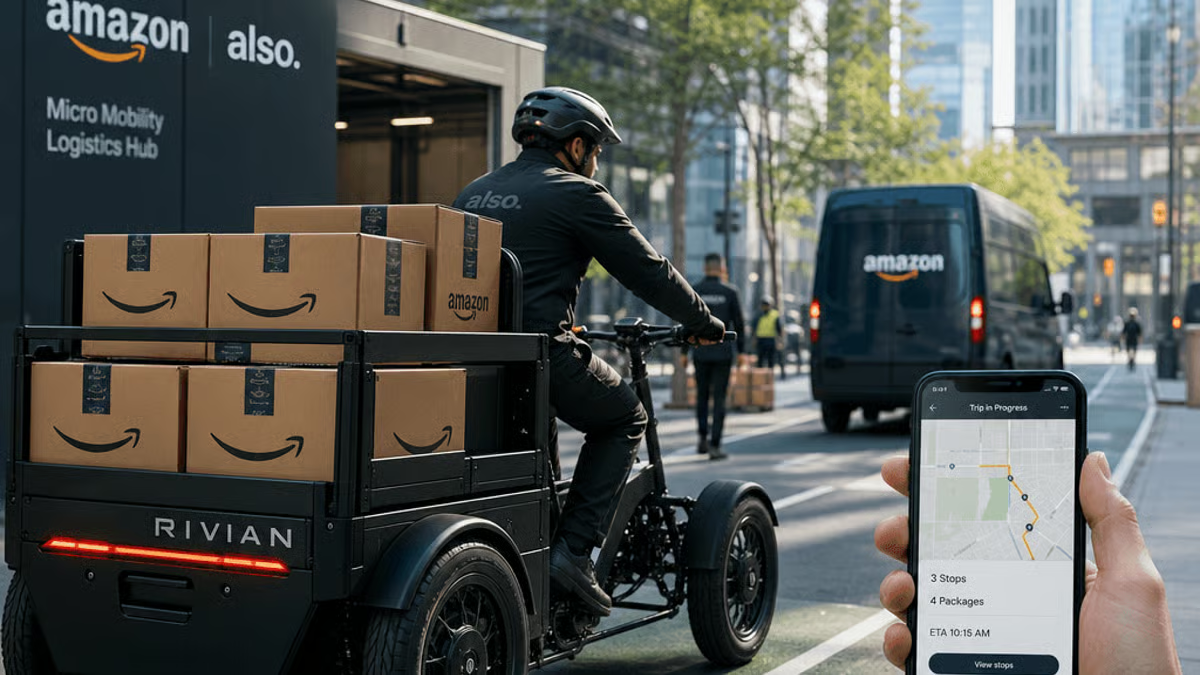
Rivian‘s spinoff Also is finally shipping its TM-B e-bikes after months of delays, marking a crucial milestone for the nascent micromobility startup. But the real story isn’t just about catching up on backorders – it’s about what comes next. According to TechCrunch, Also is positioning itself as a “vehicle company” with plans to build four-wheel pedal-assist cargo vehicles specifically for Amazon, potentially disrupting last-mile delivery before most people even know the company exists.
The e-bikes are shipping, but that’s just the opening act. Rivian‘s spinoff Also is finally making good on delayed TM-B deliveries, but the startup’s real ambition stretches far beyond consumer two-wheelers. The company is quietly building four-wheel pedal-assist cargo vehicles designed specifically for Amazon‘s sprawling delivery network, according to TechCrunch.
It’s a strategic pivot that makes sense when you connect the dots. Rivian built its business partly on the back of Amazon’s massive electric van order – 100,000 vehicles by 2030. Now Also appears positioned to tackle the even thornier last-mile problem with human-powered cargo solutions that could navigate dense urban cores where even electric vans struggle.
The TM-B e-bike delays weren’t ideal, but they’re table stakes for hardware startups navigating supply chain chaos and manufacturing scale-up. What matters more is how Also frames itself. The company “mostly refers to itself as a ‘vehicle’ company,” deliberately sidestepping the e-bike label that might box it into a crowded consumer market already dominated by established players.
That positioning hints at enterprise ambitions from day one. While companies like Rad Power Bikes and VanMoof chase recreational riders and commuters, Also seems focused on commercial fleets and logistics infrastructure. The Amazon cargo vehicle project represents exactly that kind of B2B play – less sexy than consumer hardware, but potentially more lucrative and defensible.
The timing aligns with broader shifts in urban logistics. Cities worldwide are tightening emissions regulations and restricting vehicle access to downtown cores. Paris banned through-traffic. London expanded its Ultra Low Emission Zone. New York is piloting car-free zones. Four-wheel pedal-assist cargo vehicles could slip through these restrictions while handling heavier loads than traditional e-bikes or cargo bikes.
Amazon has been experimenting with alternative delivery methods for years – sidewalk robots, electric rickshaws in India, even drones. But none have scaled meaningfully in dense U.S. cities where most packages still arrive via diesel vans idling in bike lanes. Pedal-assist cargo vehicles occupy an interesting middle ground: human-powered enough to access bike infrastructure, substantial enough to carry serious payload.
The Rivian connection provides Also with manufacturing expertise and potentially shared supply chains, but it’s unclear how much operational overlap exists. Rivian has faced its own production challenges and burned through cash while ramping up its R1T truck and R1S SUV. Spinning off Also might insulate the experimental micromobility unit from Rivian’s core EV pressures while maintaining strategic ties.
For Amazon, backing multiple horse in the last-mile race makes sense. The company’s shipping costs topped $84 billion in 2023, and labor represents a huge chunk of that. Pedal-assist vehicles could reduce driver fatigue, extend range versus purely human-powered options, and cost less than electric vans for hyper-local routes. If Also can deliver reliable hardware at scale – still a big if – Amazon has the distribution network to deploy it immediately.
The micromobility market has been brutal for startups. Bird and Lime pioneered scooter-sharing, then barely survived consolidation. VanMoof filed for bankruptcy despite raising over $180 million. Consumer e-bike companies struggle with thin margins, warranty costs, and fickle buyers. Pivoting to enterprise customers with long-term contracts offers a more sustainable path, if Also can execute.
What remains unclear is timeline and scale. TechCrunch’s report confirms the Amazon cargo vehicle plans but doesn’t specify production targets or deployment dates. Also hasn’t publicly announced pricing for the TM-B e-bikes now shipping, nor detailed specs for the four-wheel cargo platform. That opacity is typical for early-stage hardware, but it makes evaluating the company’s actual progress difficult.
Also’s e-bike deliveries matter less than the strategic direction they reveal. By positioning as a vehicle company with enterprise cargo ambitions and Amazon backing, the Rivian spinoff is betting on B2B micromobility rather than crowded consumer markets. If the four-wheel cargo vehicles materialize and scale, Also could define a new category in urban logistics – but that’s still several chapters ahead of finally shipping delayed e-bikes. For now, the story is about potential and positioning, with execution still to be proven. Watch how quickly those Amazon cargo prototypes move from concept to street deployment. That timeline will tell you everything about whether Also is building real infrastructure or just another hardware dream.











Leave a Reply