

Anthropic just closed a major platform gap. The AI company quietly rolled out an official Linux desktop client for Claude, marking the first time developers and enterprise users on the open-source OS can access the chatbot natively. It’s a win for the Linux community that’s been asking for this since the Mac and Windows versions dropped, but early testing reveals the app stumbles where it matters most for power users: running local AI models. According to hands-on testing from ZDNet, the experience is solid for cloud-based tasks but hits friction when developers try to leverage on-device processing.
Anthropic is betting Linux users want native access to Claude, and they’re not wrong. The company’s new desktop client brings the full Claude experience to Ubuntu, Fedora, and other major distributions, ending months of requests from developers who’ve watched Mac and Windows users get dedicated apps while they made do with browser tabs.
The timing isn’t accidental. Linux dominates server environments and developer workstations, especially in AI and machine learning shops where Claude’s coding capabilities shine. By going native on Linux, Anthropic is planting a flag in territory where OpenAI and Microsoft have been relatively slow to establish desktop presence. It’s a smart land grab for enterprise adoption.
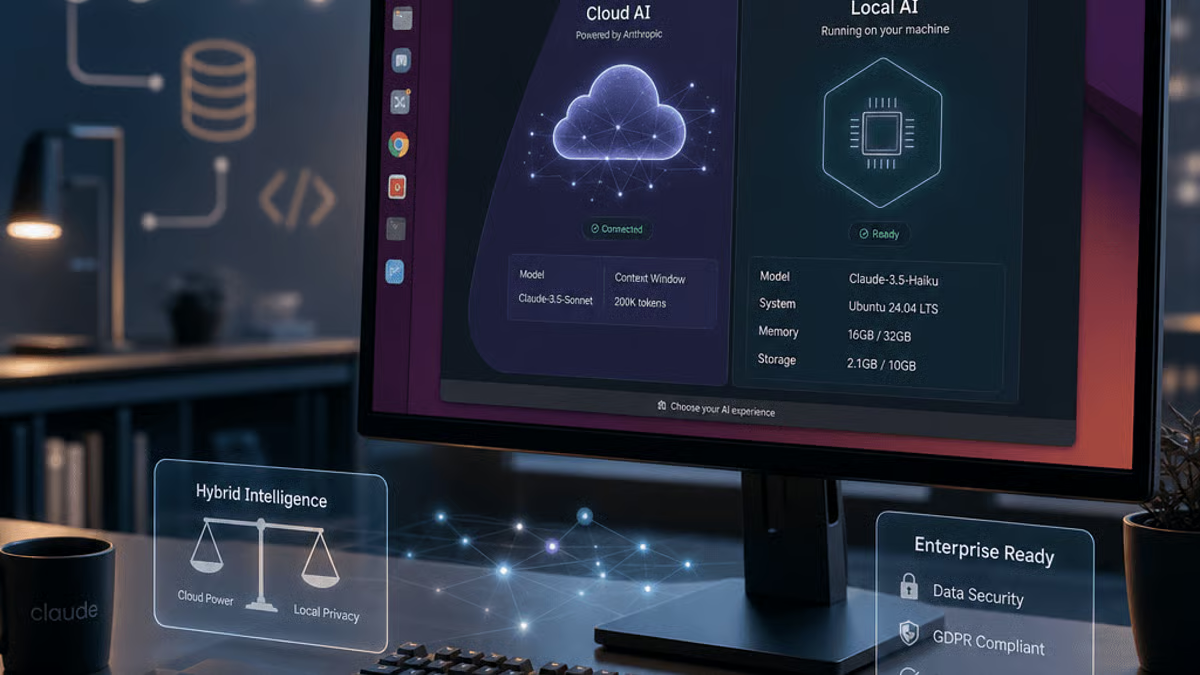
But there’s a catch. According to ZDNet’s testing, the app hits walls when users try to run local AI models – a feature that’s become table stakes for developers who want to keep sensitive code on-premises or work offline. The cloud-based functionality works as expected, delivering the same Claude 3.5 Sonnet and Claude 3 Opus models available elsewhere, but the local processing story remains underbaked.
That’s a problem because Linux users are exactly the crowd that cares most about local deployment. These are developers running Ollama instances, experimenting with quantized models, and building AI features that can’t phone home to Anthropic’s servers. Competitors like LM Studio and even OpenAI’s experimental desktop builds have made local model support a priority.
The architecture tells the story. Claude Desktop on Linux appears to be primarily an Electron wrapper around the web interface, optimized for cloud API calls rather than local inference. That’s fine for most use cases – chatting with Claude, analyzing documents, writing code with cloud-based suggestions – but it misses the mark for teams building air-gapped systems or processing regulated data that can’t leave the network.
Enterprise buyers are watching this closely. Linux desktop adoption in corporate environments has been climbing, especially in tech companies where developers demand it. Google, Meta, and major banks run massive Linux desktop fleets. If Anthropic wants those contracts, local model support isn’t optional – it’s a security and compliance requirement.
The competitive landscape is heating up fast. Microsoft is pushing Copilot across Windows and increasingly into cross-platform territory. Google has Gemini embedded in Chrome and Android. OpenAI is experimenting with desktop experiences. Anthropic needs differentiation beyond just “we’re on Linux now.”
What the app does well is integration with the broader Claude ecosystem. Users get access to Projects, the conversation history sync that made the Mac app popular, and artifact rendering that displays code and documents inline. The UI follows native Linux design patterns more closely than Electron apps typically do, which matters to users who care about desktop consistency.
The local AI gap isn’t necessarily permanent. Anthropic has been iterating fast on Claude’s capabilities, and desktop features tend to evolve quickly once the foundation is laid. But right now, Linux users evaluating AI desktop clients have to choose between Claude’s superior reasoning and rivals’ local deployment flexibility. That’s a trade-off Anthropic probably doesn’t want to force.
Anthropic’s Linux launch plugs an important platform gap, but it’s an incomplete victory. The app delivers on cloud-based AI interactions where Claude already excels, making it a solid choice for developers who live in the terminal and want native access to the chatbot. But the lack of robust local AI support is a missed opportunity in a market that values on-premises deployment. For teams that can run everything in the cloud, Claude Desktop on Linux is ready now. For shops that need air-gapped AI or edge processing, the wait continues. Anthropic has the foundation in place – now it needs to build the features that make Linux users feel like first-class citizens, not afterthoughts.








Leave a Reply