
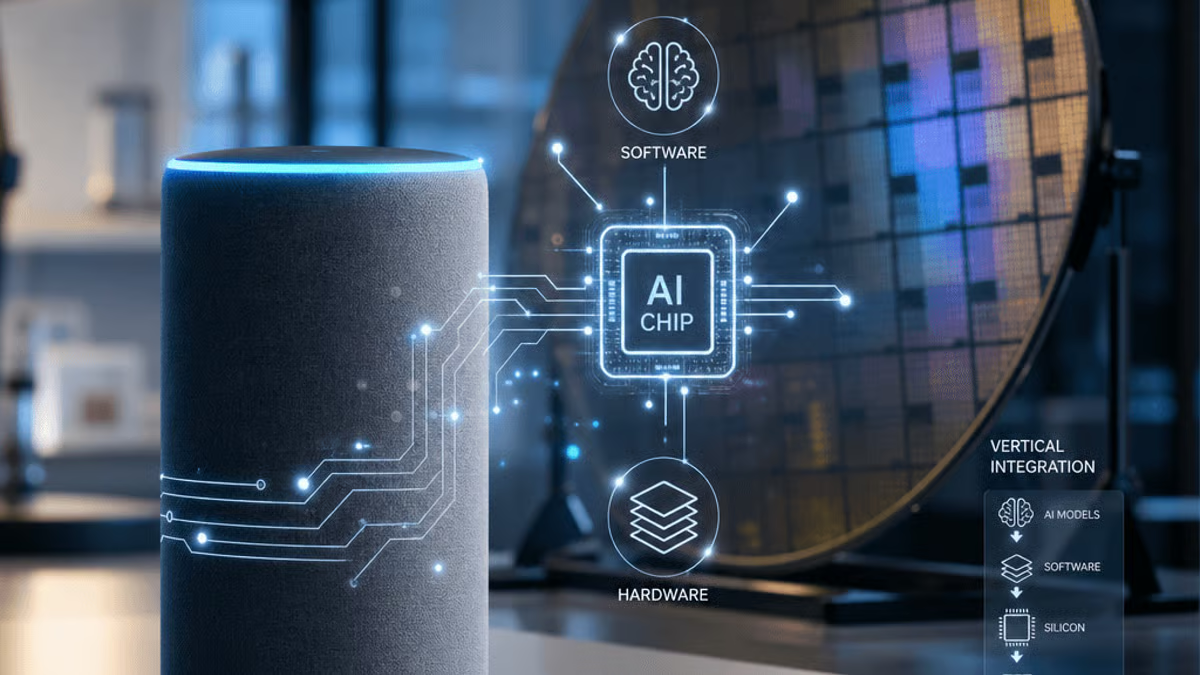
Amazon is designing custom AI chips for its Echo smart speakers and Fire TV devices, marking a major shift in the company’s hardware strategy. Hardware chief Panos Panay confirmed the move to CNBC, signaling Amazon’s intent to follow Apple’s playbook of vertical integration for AI-powered consumer products. The decision puts Amazon on a collision course with traditional chip suppliers and positions the retail giant to control both the software and silicon powering its next generation of smart home devices.
Amazon just threw down the gauntlet in the AI chip wars. The company’s hardware chief Panos Panay revealed to CNBC that Amazon is designing custom silicon specifically for its Echo smart speakers and Fire TV streaming devices, a strategic pivot that puts the e-commerce giant squarely in competition with chipmakers while chasing Apple’s proven vertical integration playbook.
The announcement comes as Amazon experiments with AI-powered gadgets across its consumer hardware lineup. Custom chips would give Amazon direct control over performance, power efficiency, and AI capabilities in devices that sit in millions of homes – a stark departure from relying on off-the-shelf processors from suppliers like Qualcomm or MediaTek.
Panay’s confirmation to CNBC marks the first public acknowledgment of Amazon’s consumer chip ambitions, though the company has been building cloud-focused silicon for years. Amazon Web Services already runs on custom Graviton processors and Trainium chips designed for AI training workloads. Now that expertise is coming home to consumer products.
The timing isn’t coincidental. On-device AI processing has become the battleground for smart home dominance. Apple redesigned its entire product line around custom silicon starting with the M1 chip in 2020, enabling privacy-focused AI features that process locally rather than in the cloud. Google followed with its Tensor chips for Pixel phones. Amazon’s move suggests it sees custom chips as table stakes for competing in AI-first consumer devices.
For Echo and Fire TV, custom silicon could unlock faster voice processing, better contextual understanding, and more sophisticated AI features without constantly pinging Amazon’s servers. That means quicker responses, improved privacy, and lower cloud computing costs – a win across the board for both users and Amazon’s bottom line.
The competitive implications ripple beyond smart speakers. Amazon’s Ring doorbells, Kindle e-readers, and rumored AI gadgets all become candidates for custom chip integration. Vertical integration gives Amazon the flexibility to optimize hardware and software together, potentially creating stickier ecosystems that keep customers locked into Amazon services.
But designing chips is expensive and risky. Apple spent over a decade and billions of dollars perfecting its silicon strategy. Amazon’s attempting to replicate that success while simultaneously competing in cloud infrastructure, consumer devices, and now semiconductor design – a massive technical and financial bet.
The move also pressures Amazon’s existing chip suppliers. Companies like Qualcomm and MediaTek have powered Fire TV devices for years. If Amazon successfully transitions to in-house silicon, it joins Apple, Google, and Tesla in the exclusive club of tech giants building their own processors – a trend that’s steadily eroding traditional chipmakers’ dominance in consumer electronics.
What remains unclear is the timeline. Panay didn’t specify when Amazon’s custom chips will debut in Echo or Fire TV products, nor which AI features will launch first. But the strategic direction is unmistakable: Amazon’s betting that owning the silicon layer is essential for winning the AI hardware race.
Industry watchers should pay attention to Amazon’s next hardware event. If the company shows off Echo devices with custom AI chips delivering noticeably better performance or new capabilities, it validates the vertical integration thesis and likely accelerates similar moves from competitors like Samsung and potentially even Meta for its Portal devices.
Amazon’s push into custom AI chips for Echo and Fire TV isn’t just about better gadgets – it’s about control. By owning the silicon, Amazon can optimize AI performance, cut cloud costs, and create proprietary features competitors can’t easily copy. The move validates what Apple proved years ago: in the AI era, controlling the full stack from chips to software is the only way to compete at the highest level. Watch for Amazon’s next hardware event to reveal just how far along this custom silicon strategy has progressed, and whether the chips deliver enough differentiation to justify the massive investment. For traditional chipmakers, the message is clear – another major customer is bringing design in-house.







Leave a Reply