

Investors just hit the brakes on South Korea’s chip ambitions. Samsung Electronics and SK Hynix saw their shares plunge Monday after reports emerged that both companies are preparing to unveil investment plans totaling a staggering $1.3 trillion. The market’s harsh reaction signals growing concern that the AI memory boom might be turning into a capital-intensive arms race that could squeeze returns for years to come.
Samsung Electronics and SK Hynix just gave investors a reality check on what it actually costs to power the AI revolution. Shares of both South Korean memory giants tumbled in Monday trading after reports surfaced that the companies are preparing to announce investment plans worth a combined $1.3 trillion, a figure that would represent one of the largest capital commitments in semiconductor history.
The market reaction was swift and brutal. Investors who’ve been riding the AI chip wave suddenly found themselves staring at the price tag for staying competitive in advanced memory manufacturing. While demand for high-bandwidth memory (HBM) chips continues to skyrocket thanks to AI training needs, the cost of building out the fab capacity to meet that demand is proving steeper than many anticipated.
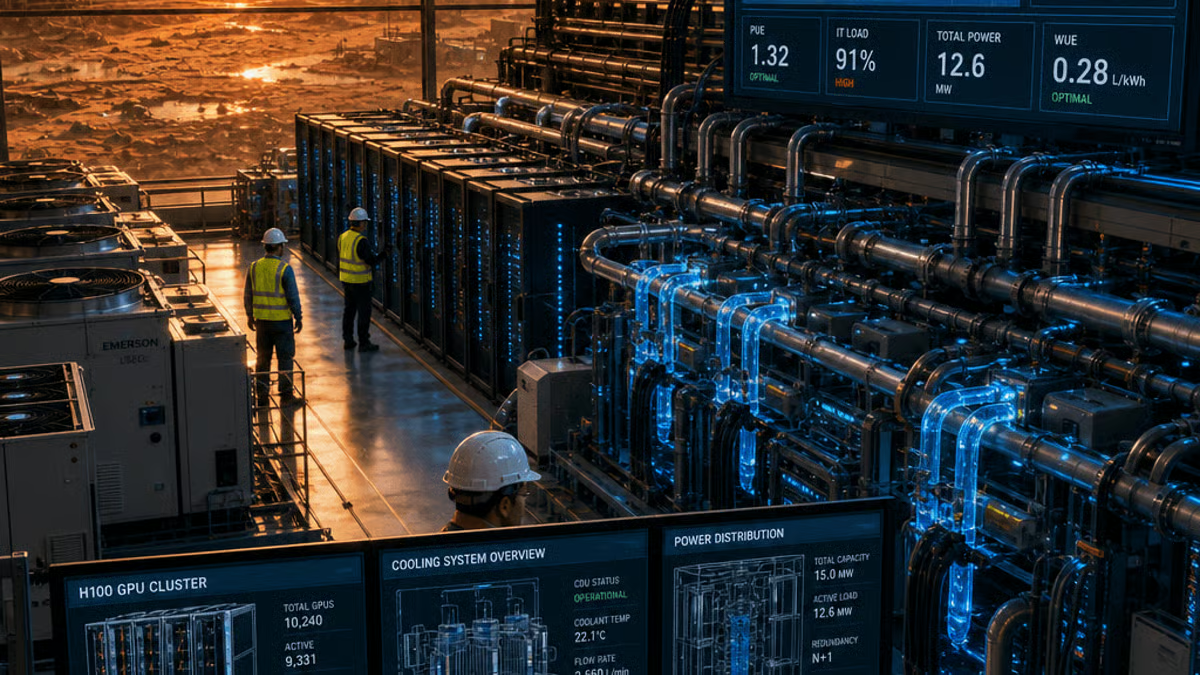
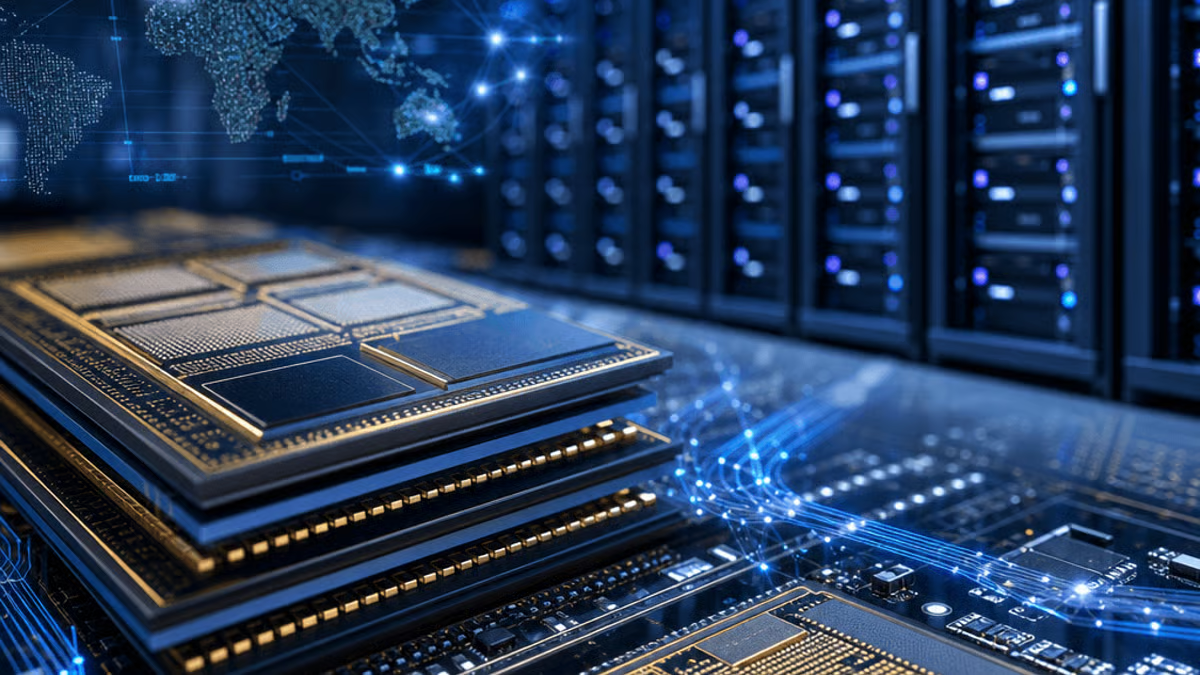
This isn’t just about building a few new factories. The reported spending plans would fund a multi-year buildout of cutting-edge manufacturing facilities capable of producing the most advanced memory chips on the planet. Both companies are racing to expand their HBM production capacity, which has become the lifeblood of AI data centers powering everything from OpenAI’s GPT models to Google’s Gemini infrastructure.
But here’s where it gets tricky – the semiconductor industry has seen spending cycles before, and they don’t always end well for shareholders. The concern rippling through trading desks is that Samsung and SK Hynix might be locked into a classic prisoner’s dilemma. Neither can afford to fall behind in capacity, but both committing massive capital simultaneously could flood the market and compress margins just as these expensive new fabs come online.
SK Hynix has been the early winner in the HBM race, securing major supply deals with Nvidia and establishing itself as the go-to provider for AI accelerators. The company’s HBM3E chips are already shipping in volume, and demand has been so intense that SK Hynix has struggled to keep up. That success story is precisely what’s driving these massive investment plans – but it’s also what’s making investors nervous about overbuilding.
Samsung, meanwhile, has been playing catch-up in the HBM market after initially focusing on other memory segments. The company’s later entry meant watching SK Hynix capture premium pricing and strategic partnerships. These reported investment plans suggest Samsung is preparing to spend its way back into contention, a strategy that’s worked for the conglomerate before but one that typically involves years of margin pressure.
The timing adds another layer of complexity. The global semiconductor industry is still digesting the impact of massive government subsidies flowing through the U.S. CHIPS Act and similar programs in Europe and Asia. Every major chipmaker is simultaneously expanding capacity, raising questions about whether aggregate supply might overshoot demand by the end of the decade – even with AI growth factored in.
Memory chips are notoriously cyclical, and industry veterans remember the brutal downturns that followed previous building sprees. The 2018-2019 memory crash sent Samsung and SK Hynix profits plummeting after years of expansion. This time around, companies are betting that AI represents a structural shift rather than a temporary spike. But $1.3 trillion is a very expensive bet to get wrong.
What makes this spending cycle different is the technical complexity involved. Advanced HBM production requires not just new factories but entirely new process technologies, specialized equipment, and manufacturing techniques that didn’t exist a few years ago. The capital intensity per wafer is significantly higher than traditional DRAM, which means the financial stakes are amplified.
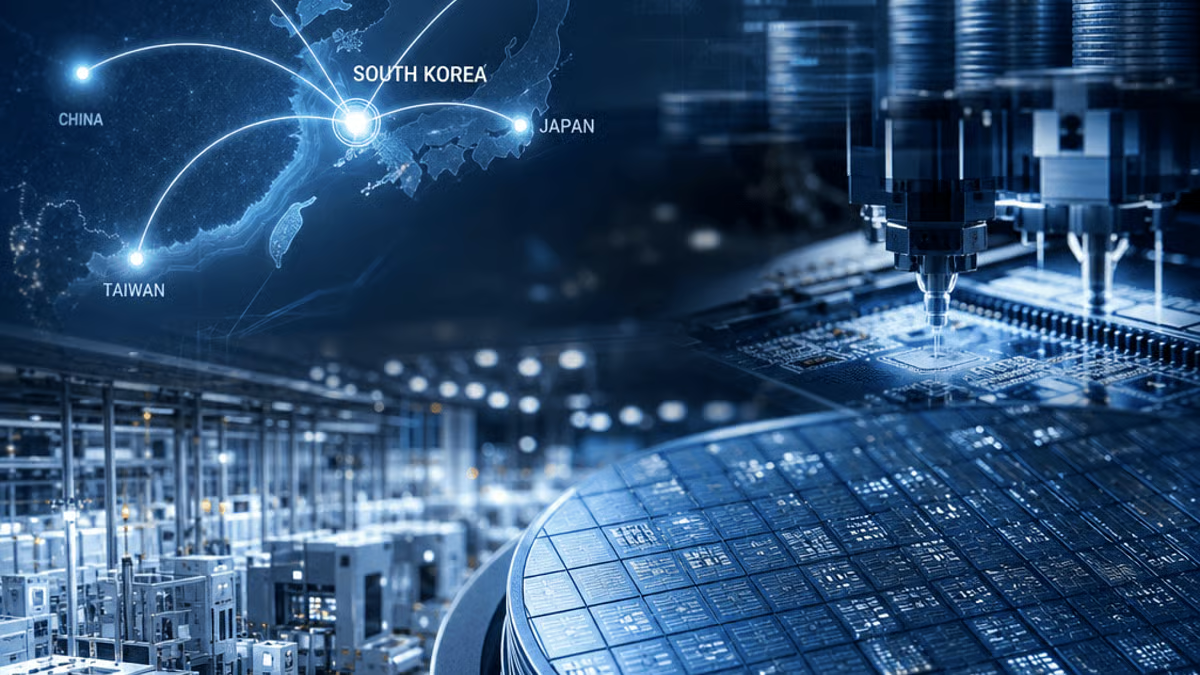
Investors are also weighing geopolitical risks. South Korea’s chip industry sits at the center of U.S.-China tech tensions, and both Samsung and SK Hynix have had to navigate increasingly complex export restrictions while maintaining their manufacturing footprints across multiple countries. Massive capital commitments lock in strategic decisions that could look very different depending on how trade policies evolve over the next decade.
The market’s skeptical reaction doesn’t mean these investments are wrong – it means investors are demanding proof that returns will justify the outlay. In the near term, expect both companies to face pressure to provide detailed roadmaps showing how this capital translates into sustainable margin expansion rather than a race to the bottom on pricing.
The stock selloff reflects a fundamental tension in the AI chip market – explosive demand meets eye-watering capital requirements. Samsung and SK Hynix are betting that dominating the AI memory market justifies spending amounts that would fund entire national infrastructure programs. Whether investors come around depends on both companies proving they can turn fab capacity into sustainable profits without triggering the industry’s boom-bust curse. For now, the market is voting with its feet, and the verdict is that $1.3 trillion buys a lot of uncertainty along with the opportunity.




Leave a Reply