
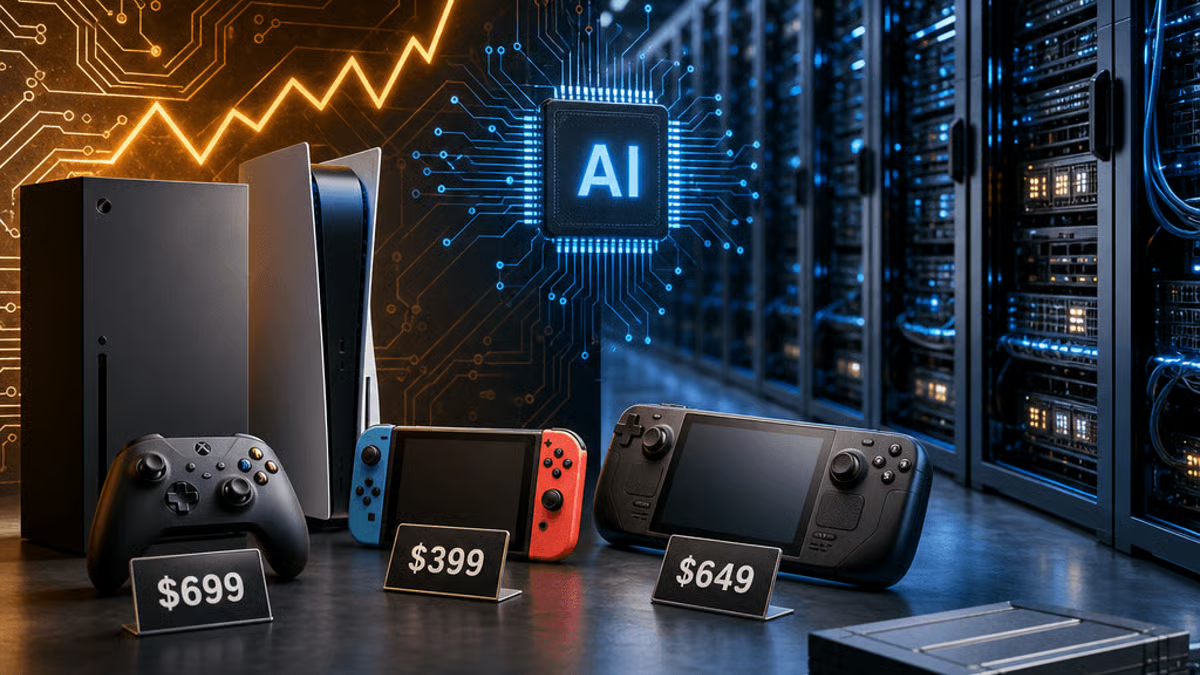
Gaming just got more expensive, and Microsoft, Nintendo, and Valve are all pointing fingers at the same culprit: AI. A wave of price increases hit consumer gaming hardware this month, with Xbox consoles, the newly launched Switch 2, and Steam Deck all seeing their MSRPs jump by double-digit percentages. The companies say they’re caught in a squeeze as data center operators and AI chipmakers outbid them for the same semiconductor components, creating a supply crunch that’s now hitting everyday gamers’ wallets.
Microsoft just raised Xbox console prices for the second time this year, and the gaming giant isn’t alone in passing costs onto consumers. Nintendo’s highly anticipated Switch 2 launched at a premium that surprised analysts, while Valve quietly bumped Steam Deck pricing across all tiers. According to BBC reporting, all three companies are citing the same pressure point – an AI-fueled component shortage that’s reshaping the entire consumer electronics landscape.
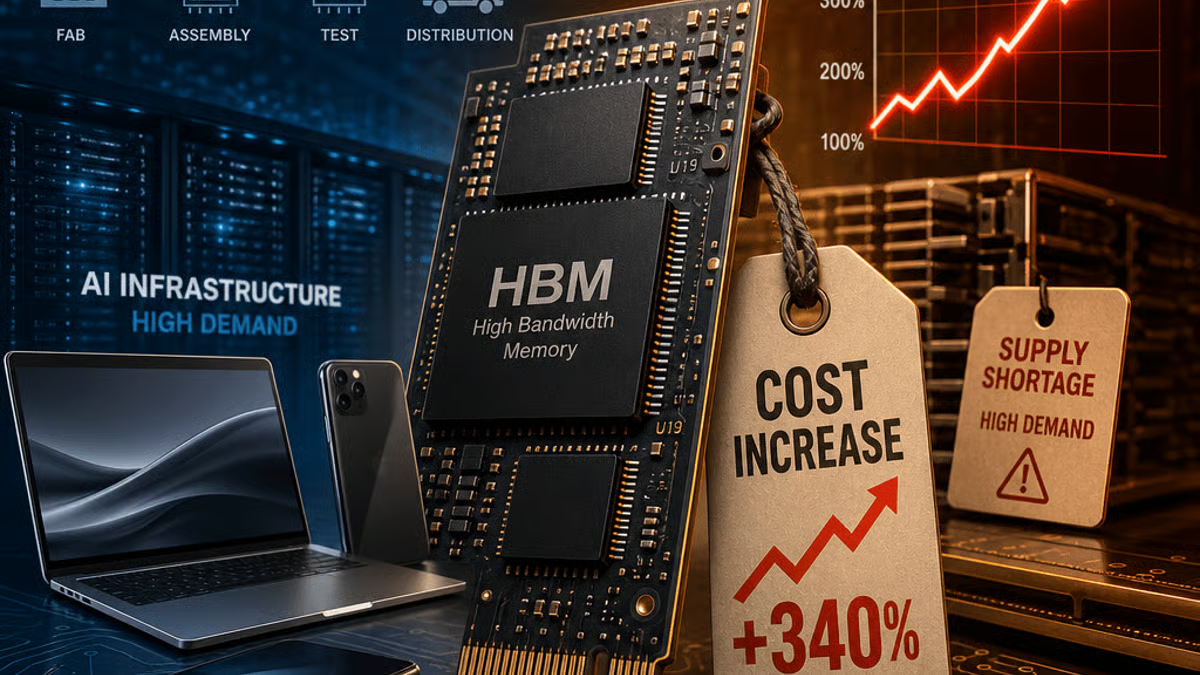
The culprit isn’t a traditional supply chain disruption. Instead, it’s a fundamental shift in semiconductor allocation. Data center operators building out AI infrastructure are willing to pay premium prices for the same memory chips, processors, and power management components that go into gaming consoles. When Microsoft and Nvidia compete for the same GDDR6 memory modules, the data center side wins on margin every time. That reality is now trickling down to retail pricing.
Nintendo positioned the Switch 2 as a next-generation leap, but the launch price raised eyebrows across the gaming community. Industry watchers expected a modest bump over the original Switch, but the final number came in significantly higher. Behind the scenes, component costs tell the story. The custom Nvidia chip powering the Switch 2 shares manufacturing capacity with AI accelerators, and foundry allocation has tilted heavily toward higher-margin enterprise products.
The Steam Deck, meanwhile, occupies an awkward middle ground. Valve built the handheld gaming PC as a loss leader to drive Steam software sales, but rising component costs are testing that strategy. The company’s recent price adjustments suggest it can’t absorb the squeeze indefinitely. Custom AMD APUs and high-speed storage – both critical to the Steam Deck experience – are the same components getting redirected to AI training rigs and cloud gaming infrastructure.
This isn’t just about gaming consoles. The pattern mirrors broader trends hitting consumer tech. Laptop manufacturers, smartphone makers, and even smart TV producers are navigating the same component allocation challenges. AI workloads require massive amounts of fast memory and advanced processors, creating unprecedented demand that’s outpacing supply expansion. When hyperscalers order chips by the millions for new data centers, consumer device makers end up at the back of the line.
The timing couldn’t be worse for the gaming industry. Microsoft is pushing its Xbox platform against stiff competition from Sony’s PlayStation ecosystem, while Nintendo needs the Switch 2 to sustain momentum as its predecessor ages. Price increases risk dampening consumer enthusiasm right when these platforms need to build install bases. But the companies appear to have little choice – eating the costs would hammer already thin hardware margins.
What makes this squeeze particularly challenging is its duration. Unlike pandemic-era chip shortages that eventually resolved, AI demand shows no signs of slowing. OpenAI, Anthropic, and enterprise AI deployments are all scaling up, not down. Every new large language model training run requires more GPUs, more memory, and more supporting infrastructure. That appetite is fundamentally changing how semiconductor manufacturers allocate production capacity.
Gaming hardware makers are exploring alternatives. Some are negotiating longer-term supply agreements to lock in allocation, even if it means accepting higher base costs. Others are redesigning products to use less contested components, though that risks performance compromises consumers won’t accept. A few are betting on next-generation chip technologies that might ease current bottlenecks, but those solutions remain years away from volume production.
Consumers are caught in the middle. The gaming community that already weathered pandemic pricing and scalper markets now faces structural price increases driven by enterprise technology trends. Social media reactions suggest frustration is mounting, with many questioning why they should subsidize the AI boom through higher console prices. But market dynamics leave little room for consumer pressure to change the equation – as long as AI infrastructure spending remains red hot, component allocation will favor those higher-margin customers.
The collision between consumer gaming and enterprise AI is rewriting pricing expectations across the hardware industry. What started as component competition has become a structural shift that’s forcing gaming companies to choose between margin compression and alienating price-sensitive customers. As AI infrastructure spending accelerates through 2026 and beyond, gaming hardware makers face a tough reality – they’re no longer the premium customers driving semiconductor roadmaps. For consumers, that means adjusting to a new normal where gaming hardware carries a premium driven not by innovation, but by competition for the components that power it. The question isn’t whether prices will stabilize, but how long the gaming industry can sustain growth while fighting an uphill battle for chip allocation.







Leave a Reply