
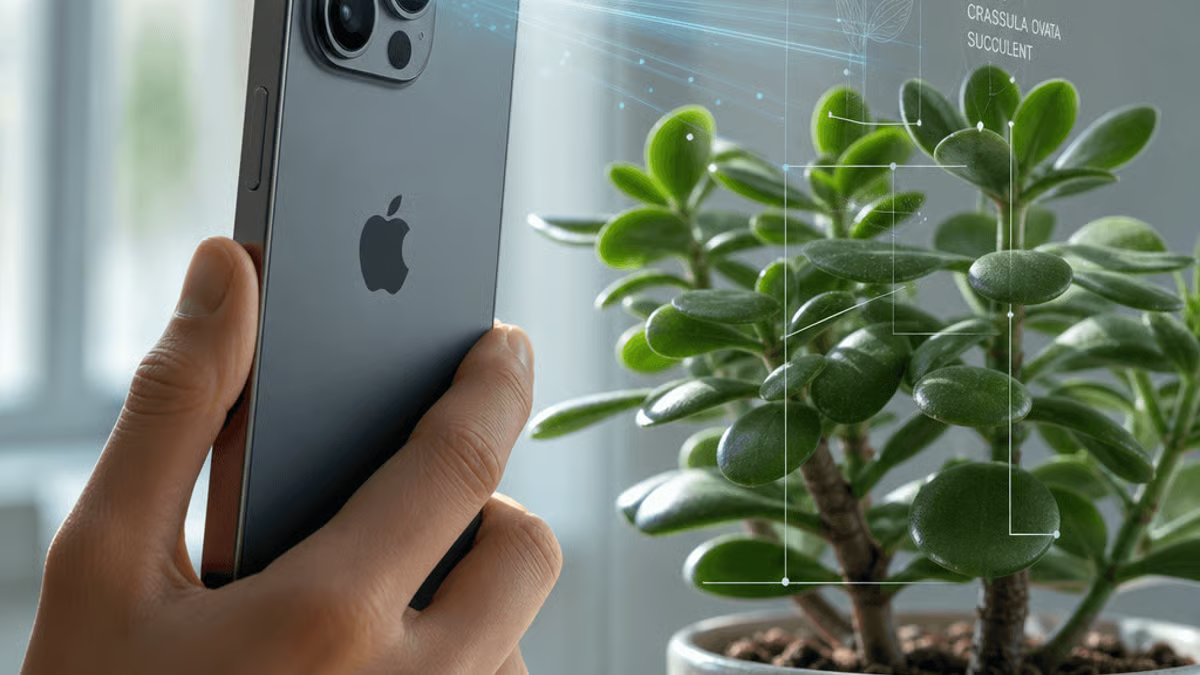
Apple just turned its Camera app into a visual AI assistant. The iOS 27 developer beta, released today, adds a new Siri mode that lets users point their iPhone at anything and ask questions about it in real-time. It’s Apple’s most aggressive push yet into multimodal AI, directly challenging Google Lens and signaling how the company plans to make AI feel native to everyday tasks rather than bolted-on features.
Apple isn’t waiting for standalone AI apps to define its intelligence strategy. The company’s iOS 27 developer beta, which dropped this morning, embeds AI-powered visual question-answering directly into the Camera app through a new Siri mode, according to hands-on coverage from ZDNet.
The feature works exactly how you’d expect: open the Camera app, switch to Siri mode, point at something, and ask questions. The system processes what’s in frame and delivers contextual answers through Siri’s interface. It’s not a separate app or a clunky workflow buried in settings – it’s baked into the tool iPhone users already open dozens of times daily.
That integration strategy reveals Apple’s philosophy on consumer AI. While competitors build standalone experiences, Apple’s betting that AI should feel invisible, embedded into existing behaviors rather than creating new ones. The Camera app already has millions of daily active users, which means this feature gets distribution most AI startups would kill for.
The timing matters too. Google Lens has dominated visual search since its 2017 launch, processing billions of queries and setting user expectations for what phone cameras should do beyond taking photos. Amazon has visual search in its shopping app. Samsung built Bixby Vision years ago. Apple’s been conspicuously absent from this race, even as its hardware – the camera systems, the Neural Engine chips – has been capable for years.
Now that absence looks deliberate. Rather than rushing out a half-baked feature, Apple waited until it could deliver something that feels native to iOS. The developer beta release suggests the feature’s stable enough for outside testing but needs refinement before consumer launch, likely timed for the public iOS 27 release this fall.
The technical implementation raises questions Apple hasn’t answered yet. Is the processing happening on-device using the Neural Engine, or does it require cloud connectivity? What’s the latency between pointing and getting answers? How does it handle privacy for sensitive documents or information captured in frame? These details will matter enormously for adoption, especially given Apple’s privacy-first branding.
Competitive pressure’s mounting from every direction. Google keeps expanding Lens capabilities across Search, Maps, and Photos. Meta is embedding visual AI into Ray-Ban smart glasses. Microsoft has Copilot vision features in testing. The entire industry’s racing toward multimodal AI that can see, hear, and respond naturally.
For developers, the beta access means time to prepare. Apps that rely on camera functionality will need to consider how Siri mode changes user workflows. There’s potential for API access down the line, letting third-party apps tap into the same visual understanding capabilities, though Apple hasn’t announced anything official.
The feature also signals where Siri’s headed. Apple’s voice assistant has lagged behind Google Assistant and Amazon Alexa in capability and accuracy for years. Adding visual understanding gives Siri a new input method and makes it genuinely useful for tasks voice alone couldn’t handle – identifying plants, translating signs, getting product information, answering questions about physical objects.
What’s notable is what Apple isn’t doing. There’s no separate AI branding, no ChatGPT-style chat interface, no marketing around large language models. The company’s keeping AI capabilities hidden behind familiar interfaces like Siri and Camera. That’s either brilliant understatement or a miscalculation in a market where AI branding drives user excitement and investor attention.
Developers interested in testing need access to Apple’s developer program and a compatible device. The beta’s available now through the standard developer channels, with public beta likely following in a few weeks based on Apple’s typical release patterns.
Apple’s Camera Siri mode represents a calculated bet that AI wins by disappearing into familiar interfaces rather than announcing itself loudly. Whether that strategy resonates with consumers who’ve been trained to expect dedicated AI experiences remains to be seen. But the developer beta release starts the clock on a fall launch that could redefine what millions of iPhone users expect their cameras to do beyond just capturing images. The question isn’t whether visual AI matters – Google Lens already proved that. It’s whether Apple’s integration-first approach can beat Google’s five-year head start in a market where user habits are already formed.











Leave a Reply