
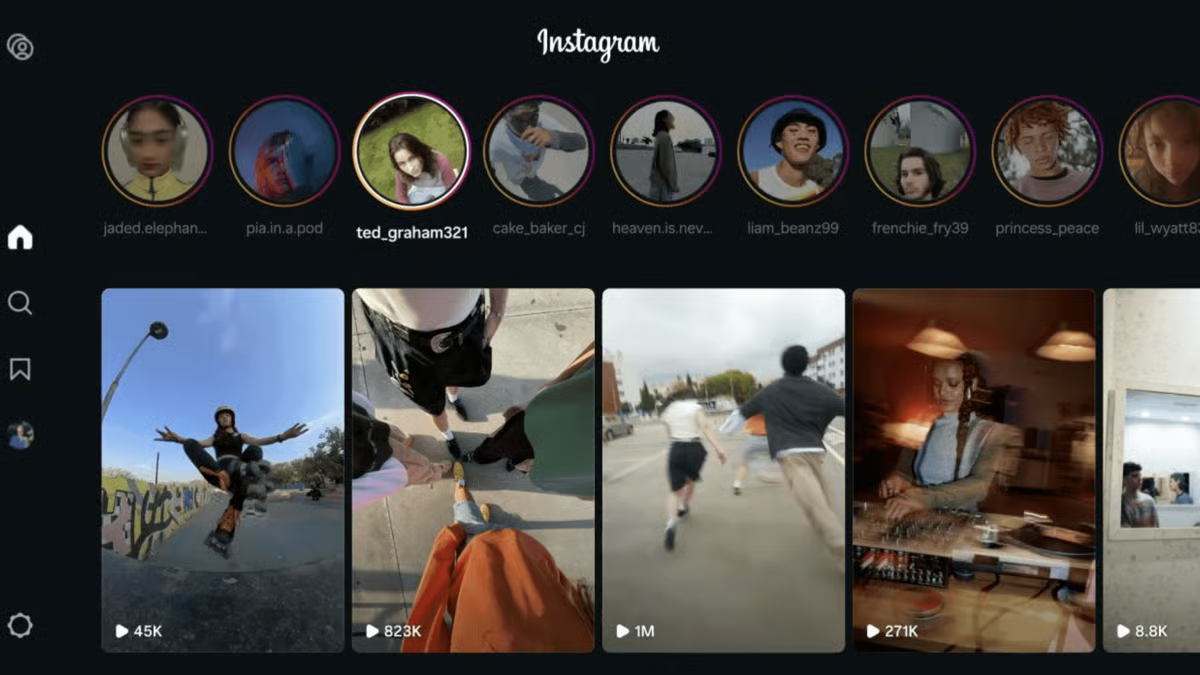
Meta is making its boldest play yet for your living room screen time. This week, Instagram rolled out a suite of features for its smart TV app that signals a direct assault on YouTube’s dominance in longform video. The expansion, now live across Amazon Fire TV, Google TV, and Samsung Smart TVs, adds horizontal video support, disappearing Stories viewing, and promises episodic content that could reshape how creators monetize their audiences. It’s a strategic pivot that puts Meta squarely in competition with YouTube for the trillion-dollar attention economy.
Meta just opened a new front in the streaming wars, and this time it’s coming for the biggest screen in your house. Instagram quietly rolled out a major update to its smart TV app this week that transforms the platform from a mobile-first short-form video hub into a legitimate competitor for YouTube’s living room throne.
The update brings horizontal video support to Instagram for TV – a format shift that might seem minor but represents a fundamental acknowledgment that vertical Reels alone won’t capture the lean-back viewing experience that dominates evening streaming habits. According to The Verge’s coverage, users on Amazon Fire TV, Google TV, and Samsung Smart TVs can now watch disappearing Stories and horizontal videos with aspect ratios that mirror traditional YouTube content.
But the real story isn’t what launched this week – it’s what’s coming next. Meta is telegraphing a major push into longform, episodic content and “TV-focused live creator experiences,” according to the company’s announcement. That language is deliberate. Episodic content means serialized shows with recurring audiences. Live creator experiences means interactive broadcasts that keep viewers glued to Instagram instead of switching to Twitch or YouTube Live.
The timing couldn’t be more strategic. YouTube has spent years building an unassailable position in longform video, with creators earning billions through AdSense and channel memberships. But Instagram brings something YouTube can’t easily replicate – 2 billion monthly active users already trained to discover content through algorithmic feeds rather than search and subscriptions. If Meta can convince creators that Instagram’s discovery engine will drive more eyeballs to their longform content, the entire creator economy could splinter.
The competitive dynamics get even more interesting when you consider the platforms Meta is leveraging. By launching on Fire TV, Google TV, and Samsung devices, Instagram instantly reaches hundreds of millions of living rooms without building its own hardware. Amazon and Samsung both have massive installed bases in the U.S. streaming market, while Google TV powers countless third-party devices. It’s a distribution strategy that mirrors how Instagram grew on mobile – meet users where they already are.
This expansion represents a sharp departure from Instagram’s previous TV ambitions. The platform experimented with IGTV in 2018, a vertical video hub that never gained traction and was eventually folded back into the main app. That failure taught Meta an important lesson: you can’t force new viewing behaviors. This time, Instagram is adapting to how people actually use their TVs, with horizontal formats and longform content designed for multi-hour viewing sessions.
For creators, the calculus is complicated. YouTube’s Partner Program offers transparent revenue sharing and a mature ecosystem of tools for audience building. Instagram has historically been opaque about creator payouts and focused on driving engagement rather than direct monetization. But Instagram’s recommendation algorithm is arguably more aggressive at surfacing new content to cold audiences, which could help emerging creators break through faster than YouTube’s search-dependent discovery model.
The microdramas angle is particularly intriguing. Short-form serialized content has exploded in Asia, with platforms like Douyin (TikTok’s Chinese sister app) generating massive engagement through bite-sized narrative arcs. If Instagram can transplant that format to Western markets through its TV app, it could create a new content category that sits between TikTok’s ultra-short clips and YouTube’s 10-30 minute videos.
Wall Street is paying attention. Meta’s stock has been on a tear, driven largely by AI investments and cost-cutting measures. But the company’s core social platforms need to keep users engaged as competition intensifies from TikTok, YouTube Shorts, and emerging platforms. Owning more of the living room experience would give Meta leverage in negotiations with advertisers who increasingly want to reach cord-cutters in premium environments.
The biggest question is whether Meta will open the wallet to secure exclusive content. Netflix and Apple TV+ have spent billions on original programming. YouTube has backed away from premium content after expensive experiments with YouTube Red originals. If Instagram wants to be taken seriously as a TV platform, it may need to fund marquee shows or sign exclusive deals with top creators – investments that could run into the hundreds of millions.
For now, Meta seems to be testing the waters, using existing content from creators who are already uploading horizontal videos to Instagram. But the company’s track record shows it’s willing to spend aggressively when it sees existential threats. The question is whether YouTube’s living room dominance qualifies as that kind of threat.
Meta’s Instagram TV expansion isn’t just another product update – it’s a calculated strike at YouTube’s most profitable real estate. By bringing horizontal video, Stories, and soon episodic content to the living room, Instagram is betting it can leverage its massive mobile audience and algorithmic discovery to carve out a new revenue stream. The real battle will be fought over creator loyalty, and that comes down to dollars. If Meta can prove Instagram TV drives meaningful income for creators, YouTube’s decade-long dominance in longform video suddenly looks vulnerable. For viewers, more competition could mean better content and more choices. For creators, it means navigating yet another platform while trying to figure out where to focus their limited production resources. The streaming wars just got a lot more crowded.









Leave a Reply