
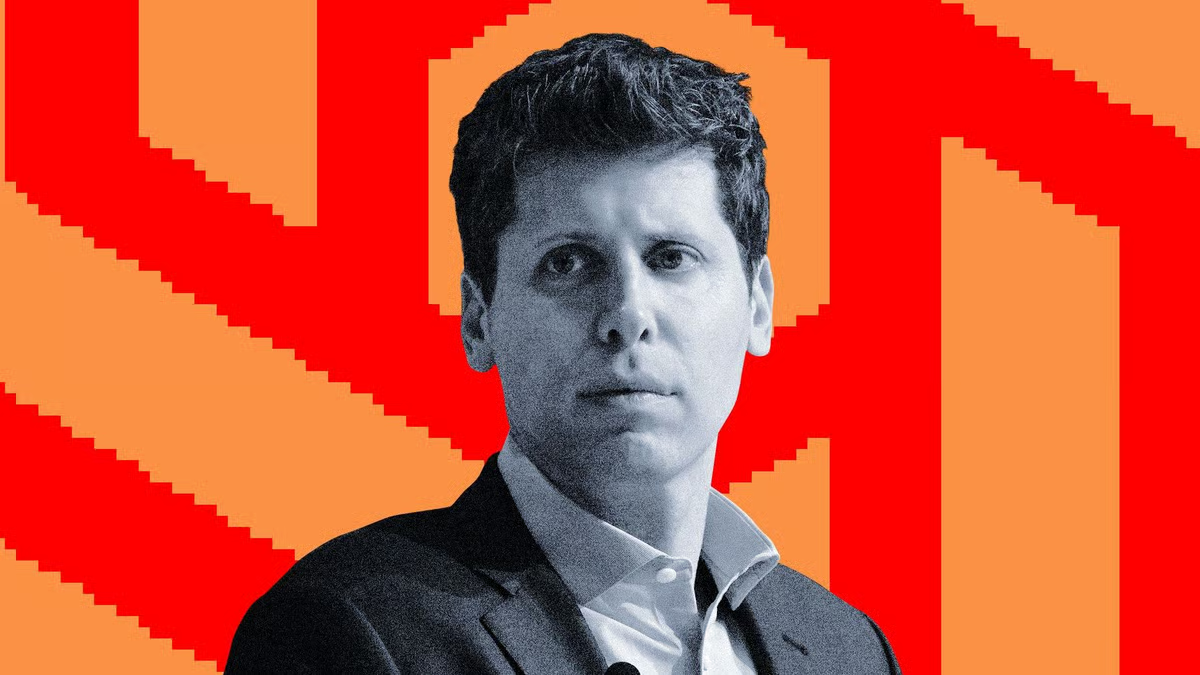
Hollywood’s cold feet are showing. Netflix, A24, Focus Features, and Warner Bros.’ Clockwork have all passed on distributing ‘Artificial,’ Luca Guadagnino’s nearly-finished biographical drama about OpenAI CEO Sam Altman, according to reports from Variety. The unexpected rejections come just days after Amazon MGM abruptly dropped the project despite being in late-stage postproduction, raising questions about whether the entertainment industry has the nerve to tell critical stories about Big Tech anymore.
Amazon MGM pulled the plug on ‘Artificial’ last week, and now Hollywood’s biggest players are following suit. The Luca Guadagnino-directed film, which chronicles OpenAI cofounder Sam Altman’s dramatic 2023 ouster and rapid reinstatement, was nearly ready for release when Amazon unexpectedly backed out. According to Variety’s sources, four major distributors have now declined to pick up the project.
The timing couldn’t be more awkward. Guadagnino, known for prestige films like ‘Call Me by Your Name’ and ‘Challengers,’ had wrapped principal photography and was deep into postproduction when the dominoes started falling. Netflix, which has aggressively pursued AI partnerships for content creation, passed first. Then came A24, the indie darling that’s built its brand on edgy, risk-taking films. Focus Features and Warner Bros.’ Clockwork followed.
Only Neon and Mubi, two smaller independent distributors, are reportedly still circling the project. The contrast is striking – and revealing. Major studios with sprawling business interests and tech partnerships are stepping back, while pure-play indie distributors show interest.
The film’s subject matter hits close to home for Big Tech. Altman’s November 2023 removal by OpenAI’s board, followed by his triumphant return just five days later after employee revolt and investor pressure, was one of the most dramatic boardroom sagas in Silicon Valley history. The episode exposed tensions between OpenAI’s nonprofit mission and its for-profit ambitions, raised questions about AI safety governance, and revealed the immense power wielded by a small circle of tech leaders.
Amazon’s retreat from the project is particularly telling. The e-commerce giant has invested heavily in AI infrastructure and partnerships, including backing Anthropic with $4 billion. The company’s AWS division provides cloud computing for countless AI startups. Releasing a potentially critical film about the industry’s most prominent figure could complicate those relationships.
Netflix faces similar pressures. The streaming platform has announced multiple AI initiatives for content recommendation, thumbnail generation, and production tools. A critical examination of AI leadership might not align with the company’s efforts to court technology partners and position itself as AI-forward.
The situation echoes broader concerns about corporate consolidation’s impact on storytelling. When entertainment companies have sprawling business interests that intersect with their subjects, editorial independence suffers. Meta owns Instagram and Facebook, Apple produces documentaries while operating app stores that govern media distribution, and Amazon controls both streaming content and the web infrastructure powering much of the internet.
“This situation makes it seem like Hollywood no longer has the courage to tell critical stories about Big Tech,” wrote The Verge’s Charles Pulliam-Moore in his initial report on the studio rejections.
The film industry has a complicated history with stories about powerful living figures. Biopics about controversial tech leaders – from ‘The Social Network’ about Meta’s Mark Zuckerberg to ‘Steve Jobs’ – have historically performed well critically but faced resistance during production and distribution. But those films ultimately found major studio backing. The difference now may be the scale of Big Tech’s influence.
AI companies wield unprecedented power over multiple sectors simultaneously. They control infrastructure, shape public discourse through platforms, influence media through partnerships and advertising, and increasingly fund entertainment through content deals and investments. That creates multiple pressure points that didn’t exist during earlier tech boom cycles.
For independent distributors like Neon and Mubi, the calculus is different. Without massive tech partnerships or cloud computing divisions to protect, they can afford to take on controversial subjects. Neon previously distributed ‘Parasite’ and has built its brand on bold, culturally significant films. Mubi caters to cinephiles willing to engage with challenging content.
But the fact that only indie players remain interested raises uncomfortable questions. If major studios won’t distribute a finished film by an acclaimed director about one of the most important business stories of the decade, what else won’t they touch? As AI reshapes industries from healthcare to transportation, critical examination of its leaders becomes more important, not less.
The ‘Artificial’ saga also highlights the vulnerability of creative projects to corporate whims. Filmmakers, crew members, and investors poured resources into a project that appeared to have solid backing, only to watch it become a distribution orphan at the eleventh hour. That uncertainty could have chilling effects on future projects tackling sensitive tech topics.
Guadagnino hasn’t publicly commented on the distribution challenges beyond acknowledging the Amazon exit. The director’s representatives are presumably working to finalize a deal with remaining suitors. But regardless of where ‘Artificial’ lands, the damage to Hollywood’s reputation for editorial courage is done.
The retreat of major studios from ‘Artificial’ represents more than one film’s distribution troubles – it’s a canary in the coal mine for Big Tech’s growing influence over entertainment narratives. When Amazon, Netflix, A24, and Warner Bros. all pass on a prestigious director’s nearly-completed project about one of the decade’s biggest business stories, it suggests corporate interests are overriding editorial judgment. If only independent distributors have the appetite for critical examinations of AI leadership, Hollywood’s ability to serve as a check on tech power is severely compromised. The question isn’t just whether ‘Artificial’ finds a home, but whether the next critical story about Big Tech will even get greenlit.






Leave a Reply